
Weight Loss

All Treatments
Resources


All Treatments
Weight Loss Treatments
Tirzepatide
Semaglutide
Wegovy Pill
Resources
Healthi App
Blog
Member Meetings
Recipes
Podcast
Patient Sign in



Fuel your focus, boost your energy, and sharpen your clarity. With HealthiCare Mind, you get science-backed support for a brain that keeps up with your life.
Brain fog treatment usually begins with a question most people skip right past: what is causing the fog?
Brain fog is a common, usually temporary drop in mental clarity. Cleveland Clinic's overview of brain fog calls it cognitive impairment that clouds focus, memory, and attention. You know the feeling well. You walk into a room, and the reason you came in is just gone.
Brain fog shows up differently for each person. Most people notice one or more of these:
One rough day is normal, and everybody has them. Symptoms that stick around for weeks, or that start getting in the way of your work and home life, are the ones worth a closer look.
Picture your mind buffering, like a video stuck loading on weak wifi (Cleveland Clinic uses that same image). You know the answer is in there. Getting to it takes far longer than it should, and the delay wears on you. That lag? Pure fog.
Brain fog has many possible causes, and they tend to fall into one of five groups:
Pregnancy, perimenopause, and menopause all change how you think and remember. Plenty of women might even experience the onset of brain fog and hot flashes in the same month. If that sounds like you, hormone-related care may matter far more than any supplement, and it is what HealthiCare's menopause treatment program is built to handle.
Brain fog is common after COVID. A 2023 University of Pennsylvania study in Cell tied it to lower serotonin, driven by leftover virus in the gut (about a third of the patients they checked). The finding is early, and researchers are still working out what it means for treatment.
Some medicines cloud thinking on their own. The usual suspects are older antihistamines, certain sleep aids, and a few antidepressants. Worth reviewing your list with a provider.
There is no single test for brain fog. There are tests for the things that cause it, though. A provider might run bloodwork for B12, iron, thyroid, and blood sugar (a simple blood draw covers most of it). For memory and attention, a short in-office screen like the Montreal Cognitive Assessment can help.
One caution we give often: do not start a stack of supplements before you know what is considered low. Taking B12 when your level is already fine does little, and the NIH's vitamin B12 fact sheet notes no clear thinking benefit without a real deficiency.
Test first. Then treat what the test finds.
For a lot of people, the fog lifts once the basics are steady. None of these are fancy. They work because they feed the systems your brain leans on every day.
Give these a few weeks to work. Cleveland Clinic lists this same lifestyle-first plan as the starting point for most brain fog, and it is where I start too. If the fog holds after that, you have your signal to look deeper.
Sometimes the basics are not enough. The next step is treating a cause your provider can name, and that is where medical care earns its place:
Cleveland Clinic is clear that no single approved drug treats brain fog itself. A provider treats the cause, and may add medication for specific symptoms when it makes sense.
So how do you choose between them? For most people, the answer draws on both. You start at home, and you bring in a provider once the fog turns stubborn or severe. Here is the way I frame that choice with patients.
Some brain fog comes down to how well your cells make and use energy. Your brain is a hungry organ. When that energy runs low, thinking slips first. HealthiCare Mind is built around that one piece, for people who cleared the basics and still feel foggy.
Every plan starts with a licensed Beluga Health provider, who reviews your intake before anything gets prescribed. HealthiCare's personalized formulations are not FDA-approved. A licensed pharmacy prepares them from your individual prescription. Results vary widely from one person to the next, and no single option fixes every cause of fog.
A prescribed, personalized B12 injection gives your body a form it takes up directly. Low B12 is a documented, testable cause of fatigue and mental fog. If a blood test shows you are low, correcting it can genuinely help. If your B12 already sits in the normal range, your provider will say so plainly and point you elsewhere. Best for people with a confirmed deficiency who want a direct form.
The NAD+ option is a personalized nasal spray that absorbs quickly and skips digestion. NAD+ is a coenzyme your cells use for energy metabolism and repair, and it feeds the mitochondria that power your cells, as a Cell Metabolism review of NAD+ lays out. Some patients report steadier focus once they start it. The research on NAD+ for everyday brain fog is still young, so we set honest expectations up front. Best for people who want a quick option, no needle involved.
The third option is a personalized methylene blue capsule, prescribed only after a telehealth visit. Methylene blue has a long history in medicine, and researchers now study its role in cellular energy and focus. There is a real safety catch, though. The FDA's methylene blue labeling warns it can cause serotonin syndrome with certain antidepressants and other serotonergic drugs. So your provider reviews every medication you take first. Best for people steady on the basics who want physician oversight and take no interacting medications.
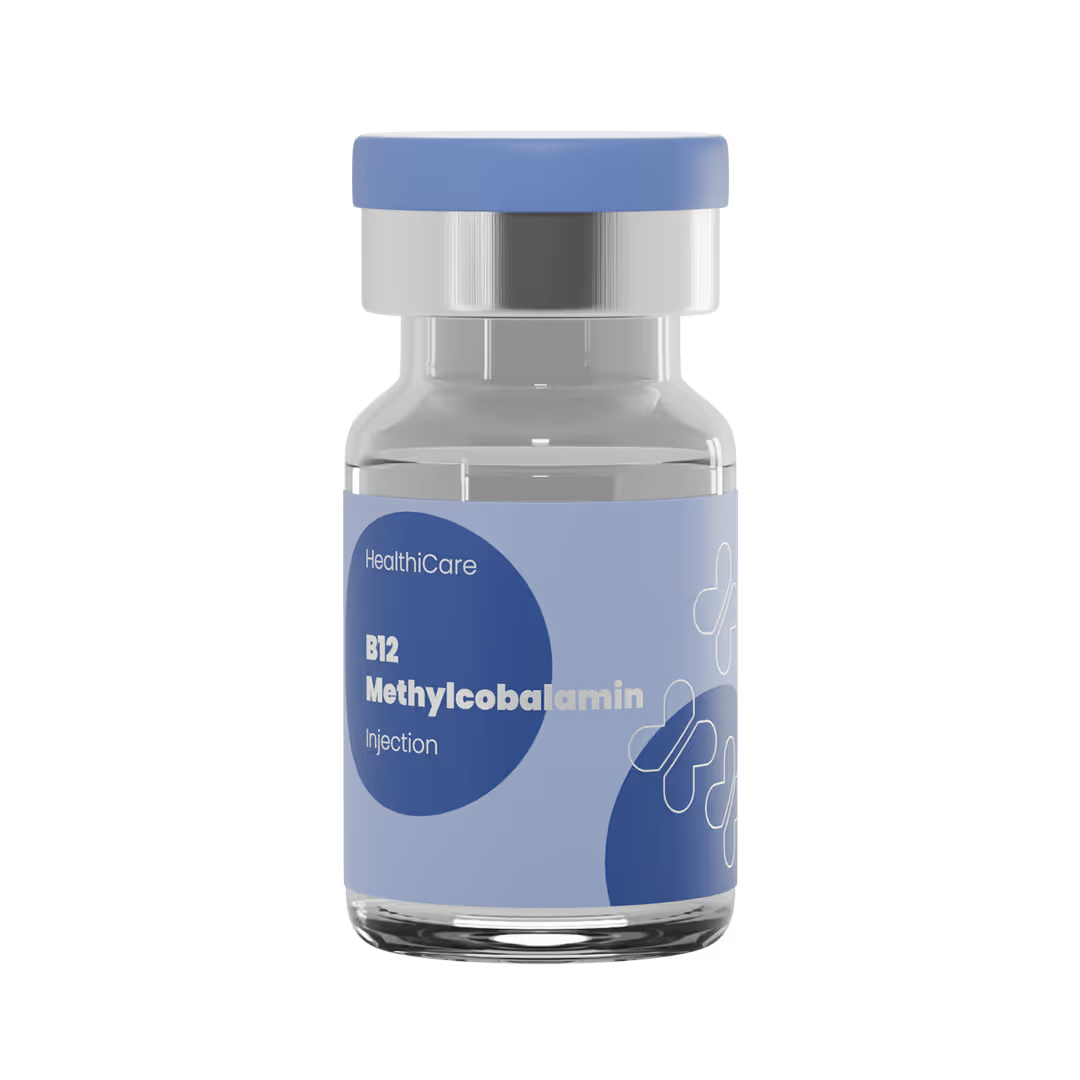 Injection
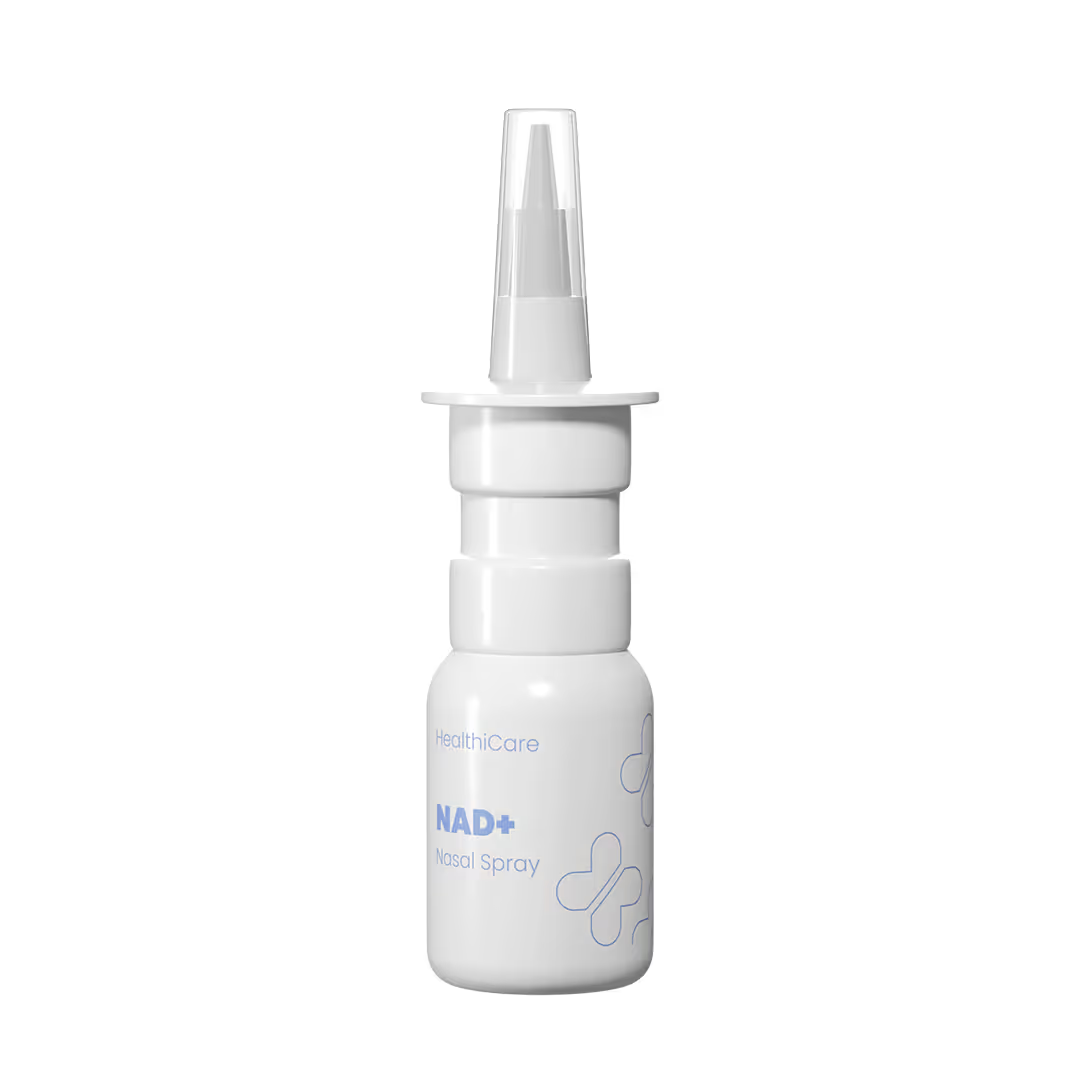 Nasal spray
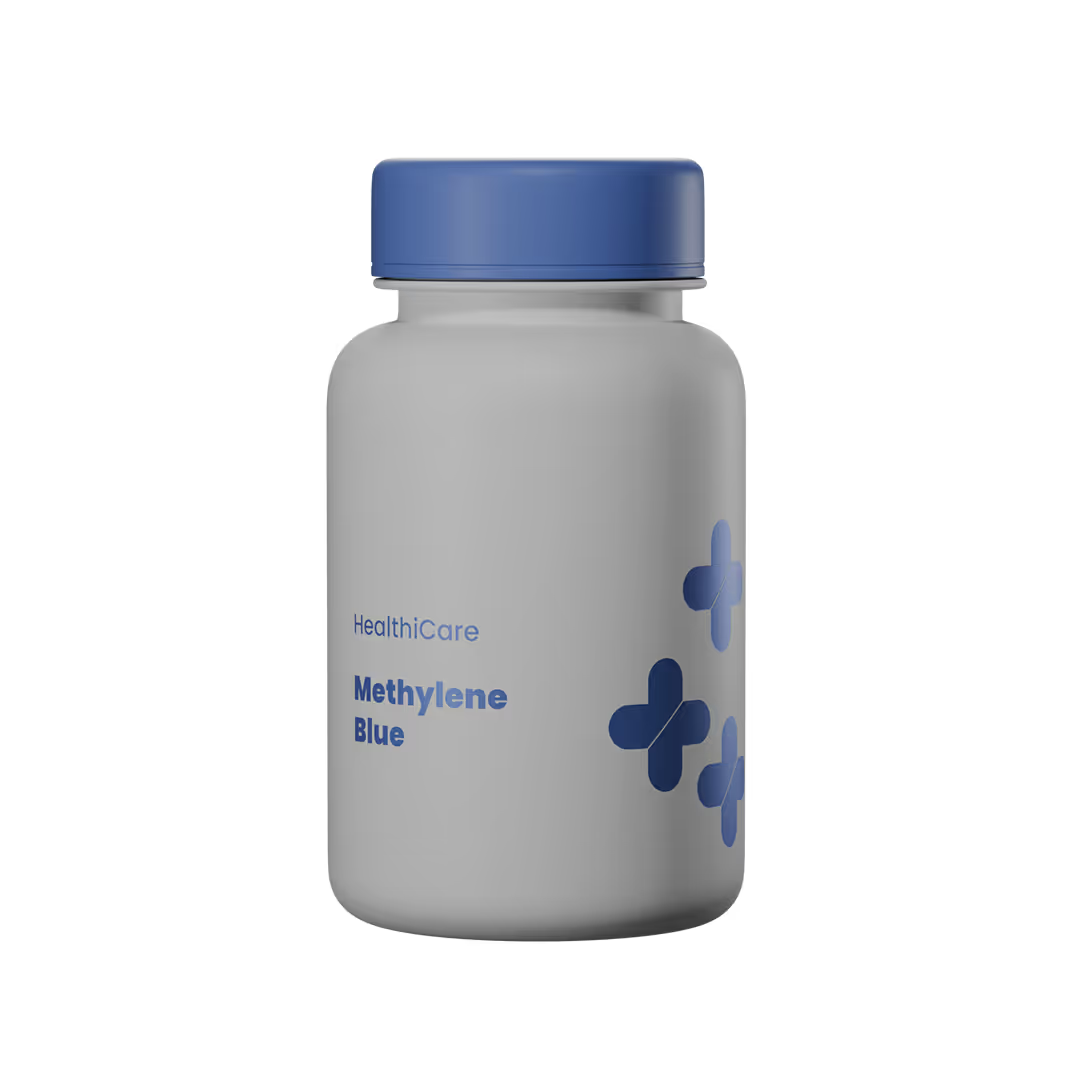 Capsule
Availability depends on your state. The intake checks that before anything ships. If you want the fuller picture on how cellular-energy care fits with peptides and longevity, HealthiCare's body and peptide guide goes deeper.
Brain fog is frustrating because the usual advice does not always fix it. The real move is finding what sits behind yours, then matching the treatment to it. Start at home. Sleep, food, movement, and stress, given a few honest weeks, clear the fog for a lot of people.
If you have handled the basics and the fog is still there, that is worth a real conversation with a provider. Another supplement guess will not get you there. HealthiCare Mind starts every plan with a Beluga Health provider who reviews your intake first. The pricing is itemized and holds at every dose, with no membership fee. When you want to see what a physician-guided plan looks like, you can start your HealthiCare Mind intake and go from there.
Completing the online intake takes a few minutes, and most patients hear back from a provider within a day or two. From there, your prescription ships from a US-based, FDA-registered pharmacy with free expedited shipping.
Yes - low B12 is a documented, testable cause of fatigue, memory issues, and mental fog, and it's one of the easier things a provider can check for and treat.
It depends on what else you're taking. Methylene Blue can interact with certain antidepressants and other serotonergic medications, so it's important to share your full medication list with your provider during the consultation - this is exactly why HealthiCare Mind requires a physician review before prescribing it, rather than selling it as an over-the-counter supplement.
This varies by person. Some patients report noticing a change in focus within the first couple of weeks, while others take longer. Your provider can help you set realistic expectations based on your intake.
Injections and nasal sprays bypass digestion, so more of the active ingredient reaches your bloodstream compared to an oral pill. That's part of why HealthiCare Mind offers B12 as an injection rather than a capsule.
No. You'll complete an intake questionnaire and have a telehealth consultation, and your provider will determine whether a personalized prescription is appropriate for you based on that conversation.
August 21, 2026