Weight Loss

All Treatments
Resources


All Treatments
Weight Loss Treatments
Tirzepatide
Semaglutide
Wegovy Pill
Resources
Healthi App
Blog
Member Meetings
Recipes
Podcast
Patient Sign in
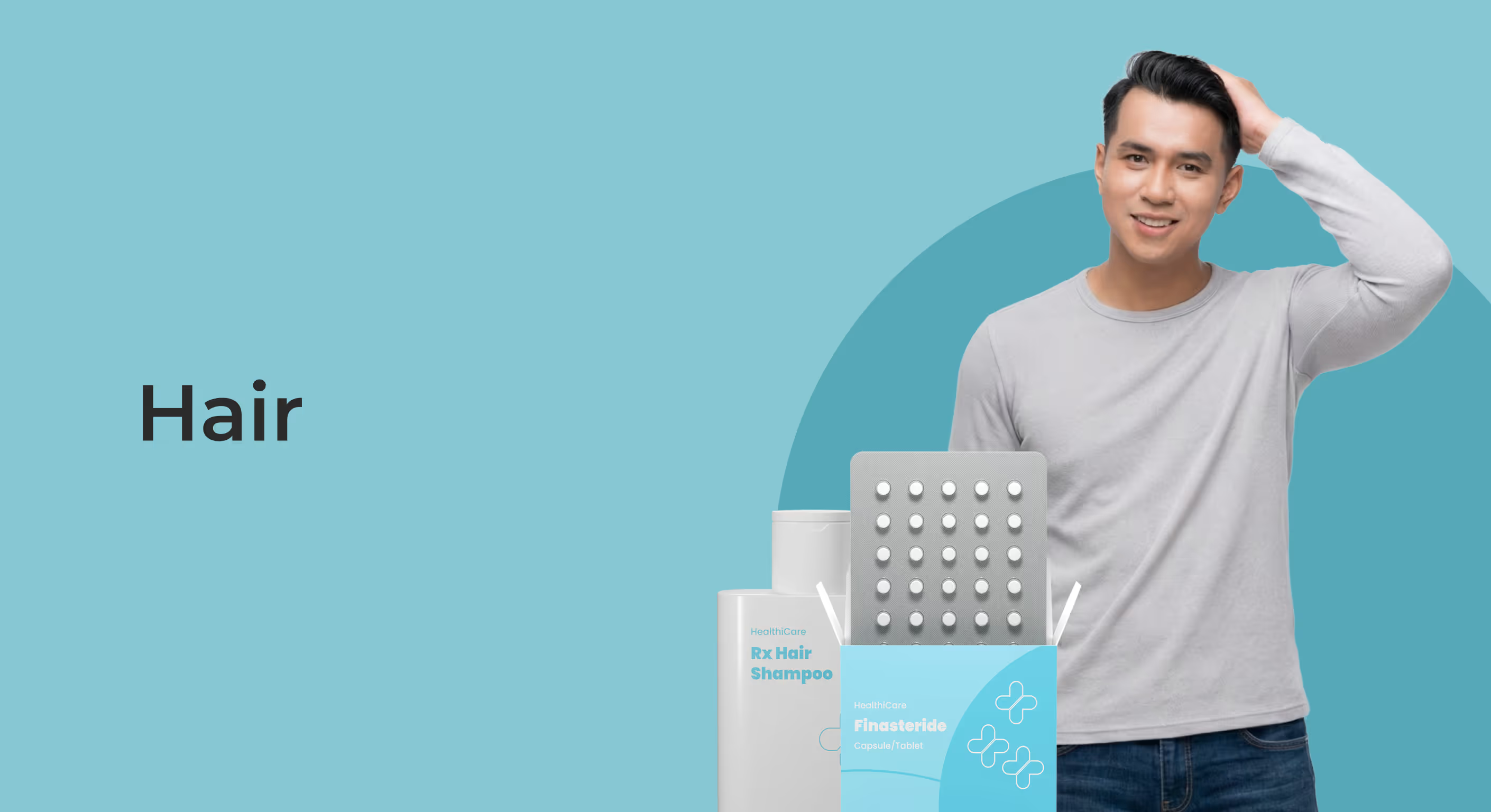


Learn how finasteride works for men and women, what results to expect, and how HealthiCare delivers prescription hair loss treatment online.
HealthiCare Medical Team
Hair loss is one of the most common medical concerns in the country - and one of the most under-treated. Millions of men and women watch their hair thin, shed, or recede without ever getting a clear explanation or a real prescription plan. The problem is not a lack of products. It is a lack of access to evidence-based care that addresses the root cause.
HealthiCare Hair exists to close that gap. Through a simple telehealth process, you connect with a licensed provider, get a personalized prescription, and have treatment delivered to your door - no membership fees, no office waiting rooms. This guide walks you through how hair loss works, what the medication does and does not do, how it differs for men and women, and how HealthiCare supports you at every step.
Most hair loss in adults - in both men and women - traces back to a hormone called dihydrotestosterone, or DHT. Your body produces DHT as a byproduct when testosterone interacts with an enzyme called 5-alpha reductase. In people who are genetically sensitive to DHT, this hormone binds to hair follicles and causes them to shrink over time. Strands grow thinner, cycles shorten, and eventually follicles stop producing hair at all.
This process is called androgenetic alopecia - commonly known as male or female pattern hair loss. It is not caused by stress, poor nutrition, or bad shampoo, though those factors can accelerate shedding. The root cause is hormonal and genetic, which is why the most effective treatments work at the hormonal level.
Finasteride works by blocking 5-alpha reductase, reducing DHT levels in the scalp. Lower DHT means follicles stop shrinking, giving existing hair a chance to recover and new strands a chance to grow. Multiple long-term clinical trials - including research published by the National Institutes of Health - have confirmed finasteride's effectiveness for reducing hair loss and supporting regrowth over periods of three to five years.
Male pattern hair loss is the most studied form of androgenetic alopecia. It typically begins at the temples or crown and progresses outward. The pattern is predictable, which makes it one of the most treatable forms of hair loss when addressed early.
For men, oral finasteride at 1 mg daily is FDA-approved and has decades of clinical evidence behind it. Studies consistently show that it slows or stops hair loss in the vast majority of men who take it consistently, and roughly two-thirds see some degree of regrowth. The key is consistency - the medication requires daily use, and results build over months, not weeks.
HealthiCare offers oral finasteride tablets through an online visit with a licensed provider. Your prescription comes after a telehealth consultation, with no existing prescription needed to start treatment. For men who want a more targeted approach, the Finasteride Topical Solution combines finasteride with minoxidil and retinoic acid, delivering the active ingredients directly to the scalp while minimizing systemic absorption.
Women experience hair loss differently than men - and they are underserved by most hair loss content and treatment conversations. Female pattern hair loss typically shows as a widening part line or diffuse thinning across the crown, rather than a receding hairline. The emotional weight of this is real, and it deserves a real response.
The causes are more varied in women. Hormonal shifts - perimenopause, menopause, thyroid changes, and postpartum estrogen drops - all play a role alongside genetic sensitivity to androgens. This is why treatment decisions for women need more nuance and a provider who understands the full picture.
Finasteride is not FDA-approved for women, but it is sometimes prescribed off-label for postmenopausal women with androgenetic alopecia under medical supervision. It must never be used by women who are pregnant or could become pregnant due to the risk of birth defects. For women who need a different approach, HealthiCare offers the Personalized Oral Hair Loss Treatment for Women - a formulation containing minoxidil, vitamin E, and biotin designed for women's hormonal and nutritional needs.
As estrogen levels drop during perimenopause and menopause, the relative influence of androgens like DHT increases - even if androgen levels themselves have not changed. This shift can trigger or accelerate female pattern hair loss in women who were genetically predisposed but had been protected by estrogen.
The result is often gradual but distressing. Diffuse thinning across the scalp, slower regrowth, strands that feel finer or more fragile. Many women notice it first in their ponytail circumference or in the shower drain - and feel confused because nothing else in their health seems to have changed.
Research from Harvard Health reinforces that early, consistent treatment produces better outcomes than waiting. Understanding what is happening biologically makes it easier to act with confidence rather than frustration.
One of the most common questions when starting treatment is whether oral tablets or a topical solution makes more sense. The answer depends on your goals, your sensitivity to side effects, and how you want to integrate treatment into daily life.
Many people find that combining both approaches - the oral tablet alongside a topical solution - gives broader coverage. Your HealthiCare provider can help you decide what fits best based on your hair loss pattern and medical history.
Finasteride works gradually. Most people do not see visible changes in the first one to three months - during this period the medication is stabilizing the hair cycle and reducing DHT at the follicle level. That is not a sign it is not working. Follicle biology simply takes time.
Results vary between individuals. The consistent pattern across research is that people who stay with treatment long-term preserve significantly more hair than those who stop early.
Finasteride's side effects are discussed more than almost any other aspect of the medication - often in ways that overstate the risk. Here is what the clinical data actually shows.
In large clinical trials, sexual side effects - reduced libido, erectile dysfunction, or changes in ejaculation - were reported in roughly 2 to 4% of men taking oral finasteride at 1 mg daily. In most cases these resolved after stopping the medication. Topical finasteride, by delivering the drug locally, appears to lower systemic DHT reduction significantly - which may reduce the likelihood of sexual side effects while still protecting the scalp.
For women, the main safety concern is different. Finasteride poses a serious risk of birth defects and must never be used by women who are pregnant or trying to conceive. Postmenopausal women under medical supervision have a different risk profile, which is why provider involvement matters.
If you experience any side effects after starting treatment through HealthiCare, your provider is available to adjust your plan. Unlimited clinical support is included in your HealthiCare program.
HealthiCare connects you with licensed medical providers for prescription hair loss treatment - without in-person appointments, long waits, or surprise fees. Here is how it goes:
All programs include telehealth consultations, a personalized plan, monthly prescription delivery, and email and phone support.
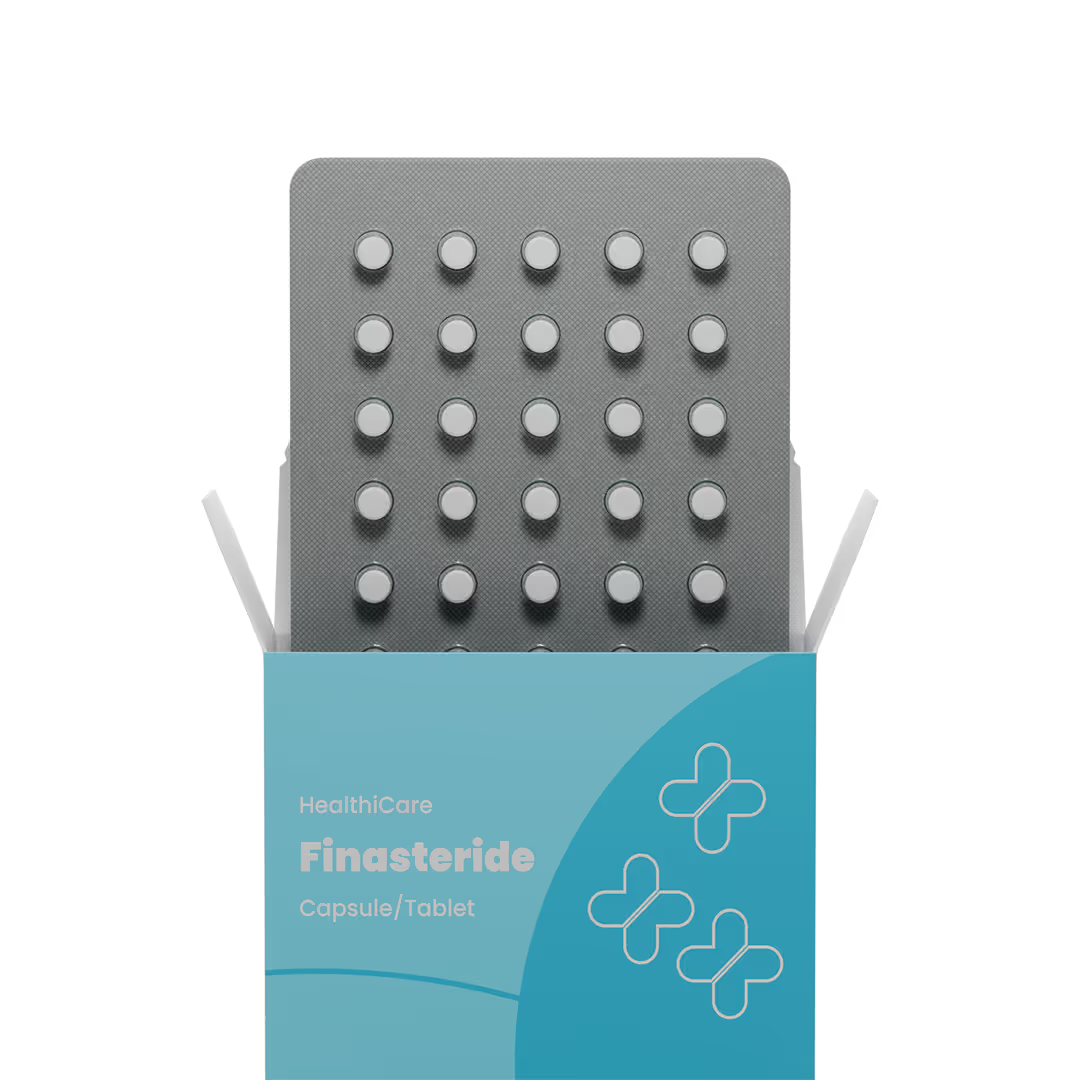
Finasteride Tablets
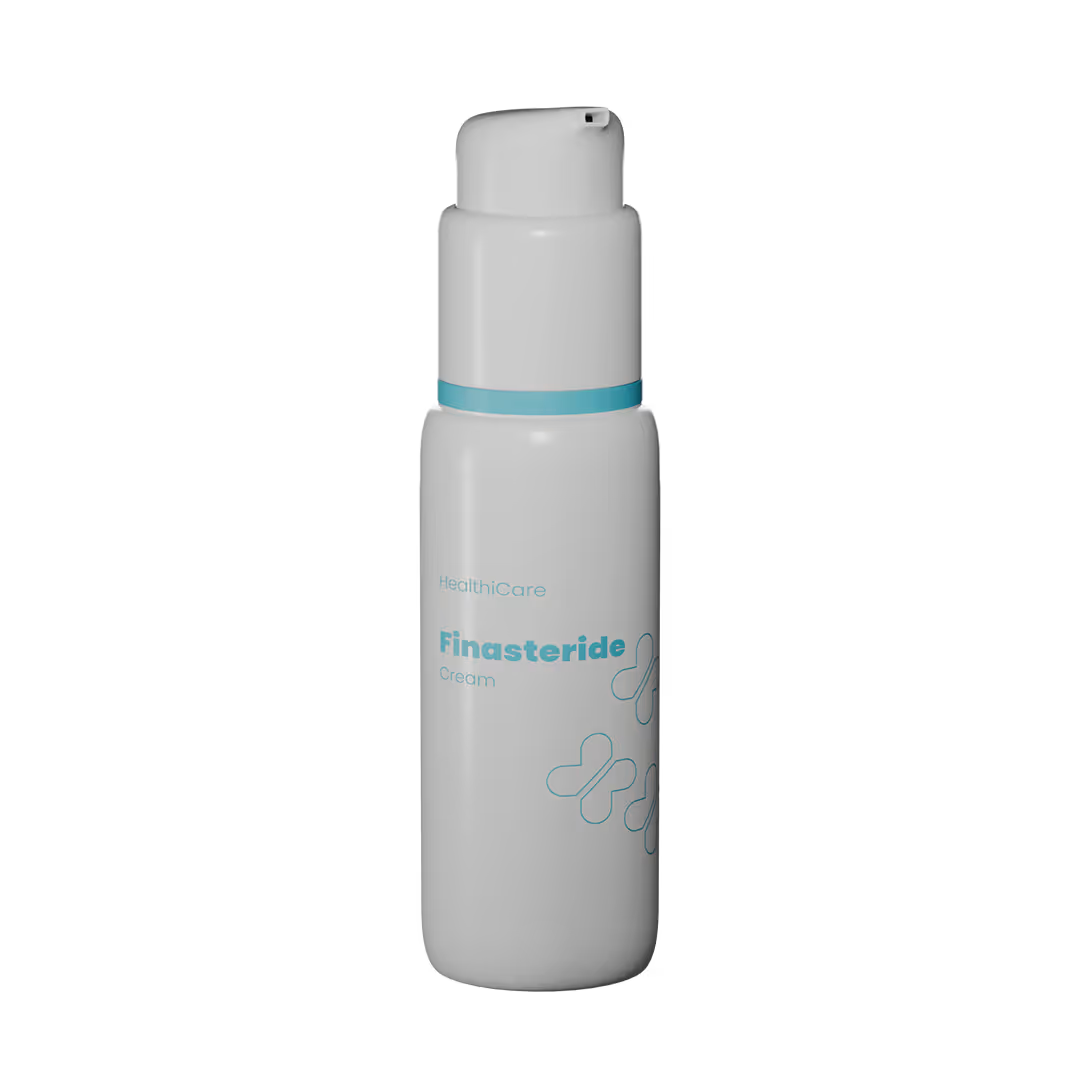
Finasteride Topical Solution
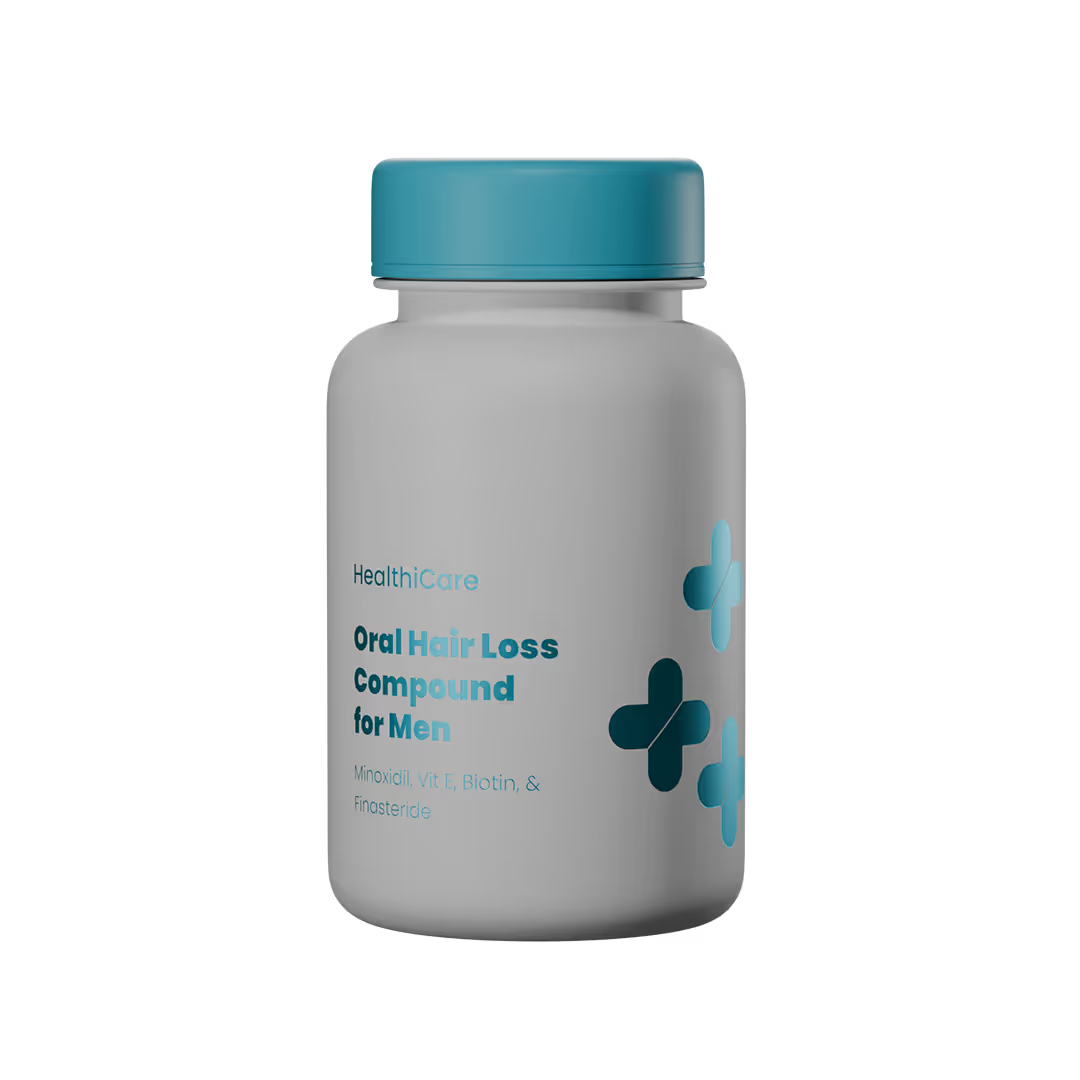
Personalized Oral Hair Loss Treatment for Men
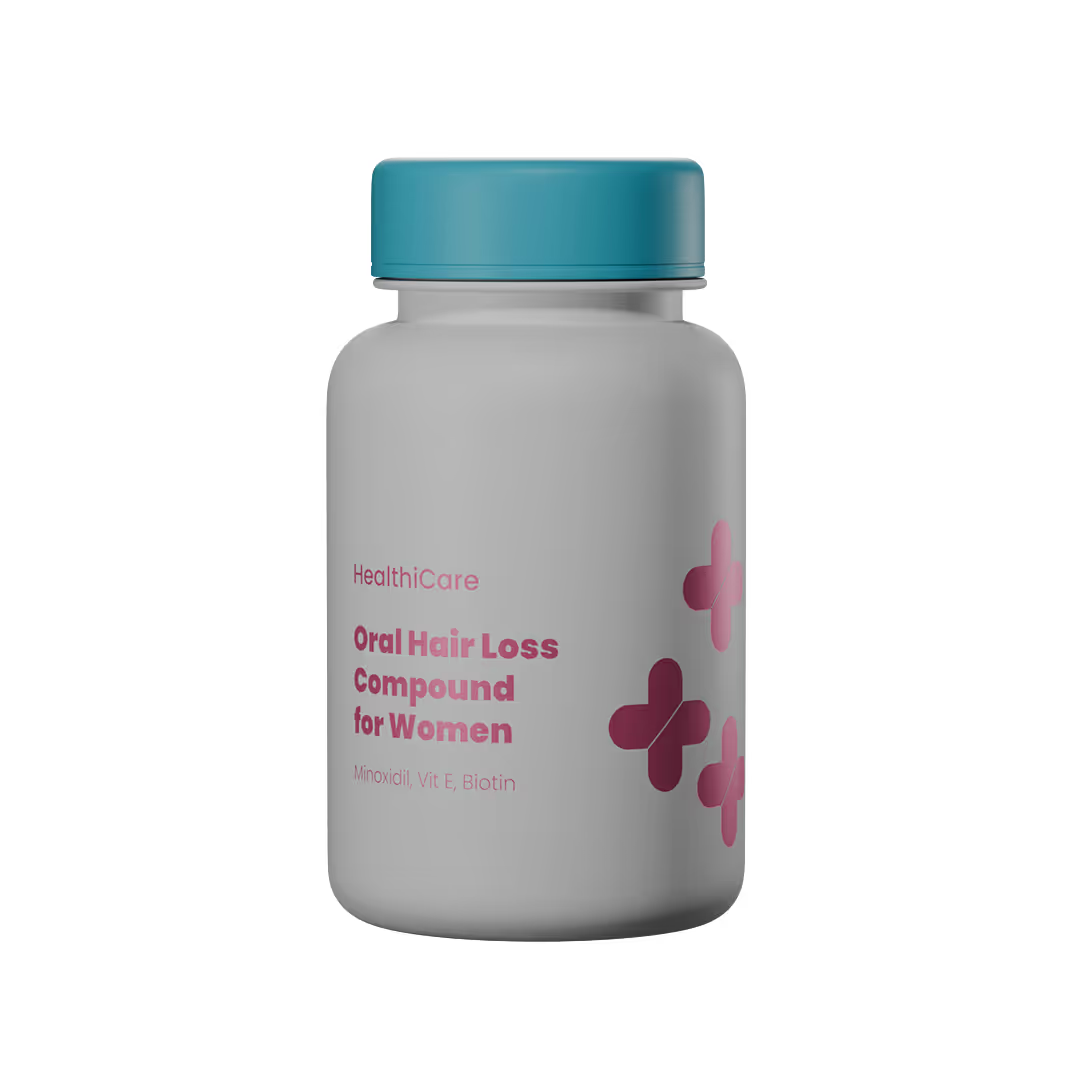
Personalized Oral Hair Loss Treatment for Women
Rx Hair Shampoo
For foundational guidance on the nutrition and habits that support hair health alongside prescription treatment, read Hair Health Starts at the Root: Nutrients and Routines That Help on the HealthiCare blog.
Finasteride is not FDA-approved for women, but it is sometimes prescribed off-label for postmenopausal women with androgenetic alopecia under medical supervision. It is not appropriate for women who are pregnant or could become pregnant. For most women experiencing hair loss, HealthiCare providers recommend the Personalized Oral Hair Loss Treatment for Women, formulated specifically for female hormonal and nutritional needs.
Most people notice reduced daily shedding within the first one to three months. Visible improvements in density typically appear between months three and six, with the most significant regrowth occurring between six and twelve months of consistent use.
In clinical trials, roughly 2 to 4% of men taking oral finasteride at 1 mg daily reported sexual side effects including reduced libido or changes in sexual function. Most resolved after stopping the medication. Topical finasteride reduces systemic DHT levels less dramatically, which may lower this risk. Women who are pregnant or could become pregnant must not use finasteride due to the risk of birth defects.
Neither is universally better. Oral finasteride has a longer evidence base and reduces DHT systemically. Topical delivers the medication locally with lower systemic absorption, which may reduce side effect risk. Many providers recommend combining both for broader coverage.
Yes. Through HealthiCare's telehealth platform, a licensed provider reviews your health history, consults with you remotely, and writes a prescription if appropriate. No in-person appointment required. No prior prescription needed.
Female hair loss most commonly results from a combination of genetic sensitivity to androgens and hormonal changes - particularly the estrogen decline during perimenopause and menopause. Thyroid conditions, iron deficiency, postpartum hormone shifts, and chronic stress can all contribute. Because the causes are varied, treatment works best when a provider assesses your full picture rather than applying a one-size approach.
HealthiCare offers five prescription hair treatments: oral finasteride tablets, a topical finasteride solution, a personalized oral treatment for men, a personalized oral treatment for women, and an Rx hair shampoo. All are prescribed through telehealth and delivered monthly.
Medical disclaimer: This content is for informational purposes only and does not constitute medical advice. Finasteride is a prescription medication. Always consult with a licensed healthcare provider before starting any prescription hair loss treatment. HealthiCare's telehealth providers will assess your individual situation and determine whether treatment is appropriate for you.
August 3, 2026