Weight Loss

All Treatments
Resources


All Treatments
Weight Loss Treatments
Tirzepatide
Semaglutide
Wegovy Pill
Resources
Healthi App
Blog
Member Meetings
Recipes
Podcast
Patient Sign in



Recurring erection difficulty can have physical, medication-related, or psychological causes. Learn how ED is diagnosed and how HealthiCare's online treatment works.
The first time it happens, it is easy to blame the night: too much alcohol, too little sleep, too much on the mind. When it happens again, and then again, that explanation becomes harder to believe, and it is natural to start wondering what is actually going on.
Repeated difficulty getting or keeping an erection can have physical, medication-related, and psychological causes, and the symptom by itself does not reveal which cause is involved. More than one cause can be involved at the same time.
Erectile dysfunction means repeated difficulty getting or keeping an erection firm enough for sex. A single episode of erection difficulty is not enough to diagnose erectile dysfunction (NIDDK).
When the difficulty keeps happening, it is a reason to seek an evaluation, and HealthiCare's sexual-health service is one available route for it.
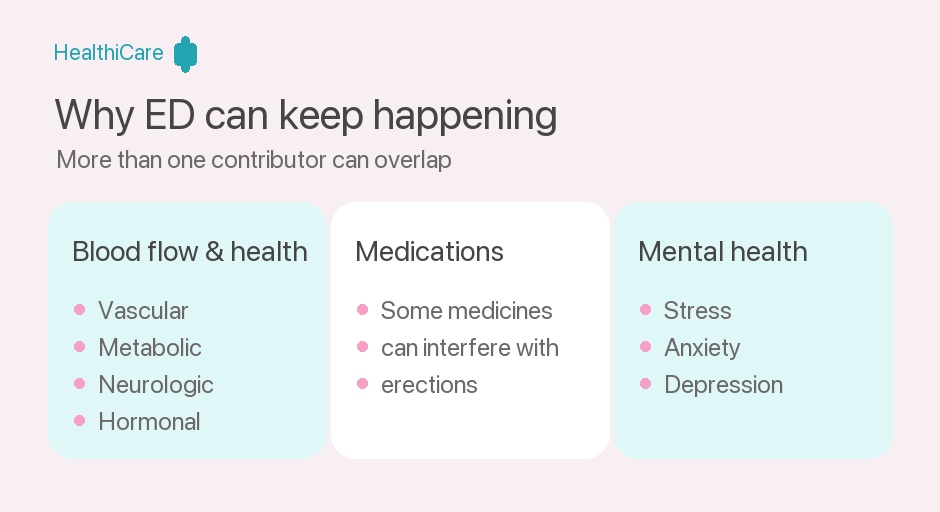
An erection depends on blood flow, nerve signals, and hormones, and it can be affected by medications and psychological factors. Recurring difficulty can have vascular, metabolic, neurologic, hormonal, medication-related, and psychological contributors, and sometimes more than one at once (NIDDK). In practice that can mean a condition affecting blood flow or blood sugar, a medication that interferes, stress or anxiety that gets in the way, or a mix in which a physical problem begins the difficulty and worry about it keeps it going.
Repeated erection problems can sometimes be associated with an underlying health condition that needs medical attention.
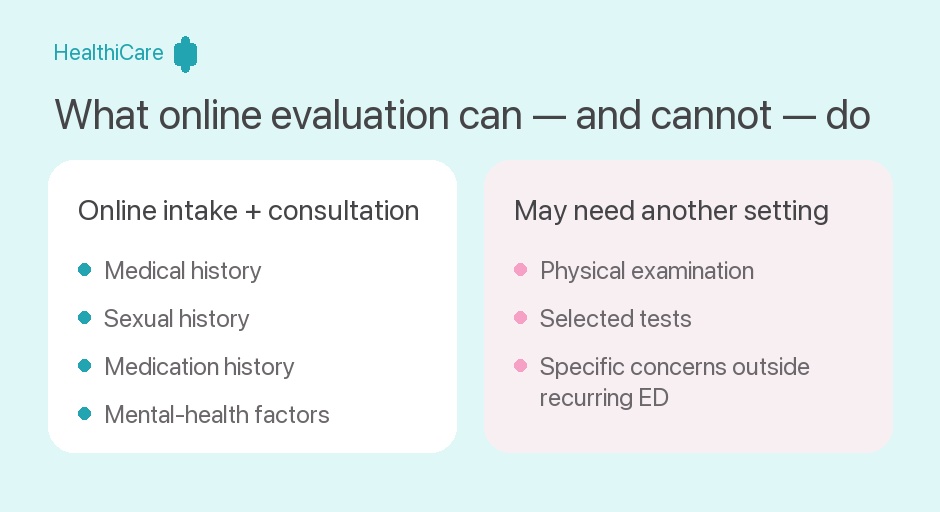
Diagnosis usually starts with history. A medical history can surface conditions that affect blood flow, nerves, or hormones. A sexual history can show how long the difficulty has been present and in what situations it occurs. A medication history can identify drugs that interfere with erections. A mental-health history can bring stress, anxiety, or depression into consideration. A focused physical examination and selected tests may also be part of diagnosis when clinically indicated (NIDDK).
HealthiCare's private online intake collects that history in detail for review. Physical examination and testing are not part of the telehealth service, and in some situations one or both may be needed in another setting.
The appropriate treatment depends on the cause and on your health. It can include addressing an underlying condition, reviewing a current medication, lifestyle changes, counseling, oral medication, devices, or other treatments a doctor may recommend (NIDDK). Medication is one option among several.
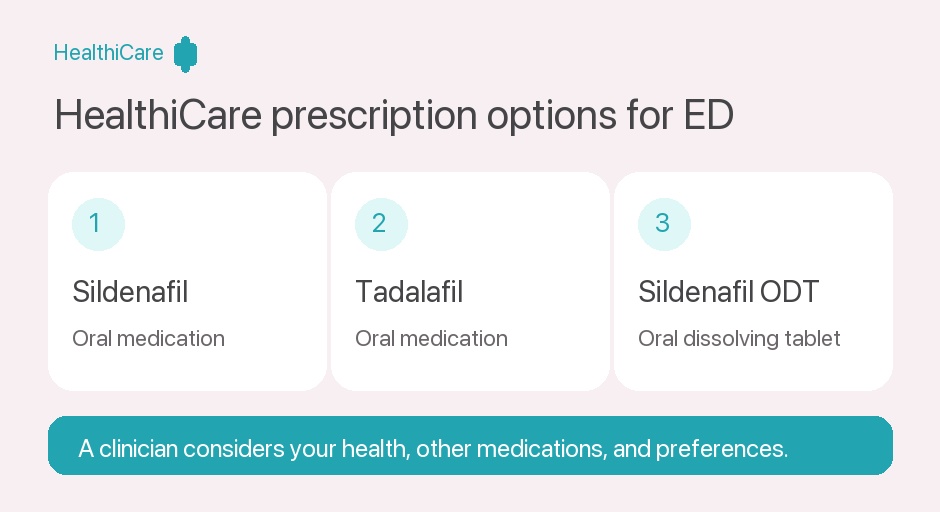
Phosphodiesterase type 5 (PDE5) inhibitors are an established class of oral medication. HealthiCare's prescription options include Sildenafil, Tadalafil, and Sildenafil ODT, which is an oral dissolving tablet. A licensed clinician decides whether medication is appropriate for you and, if so, which one, based on your health, your other medications, and your preferences.
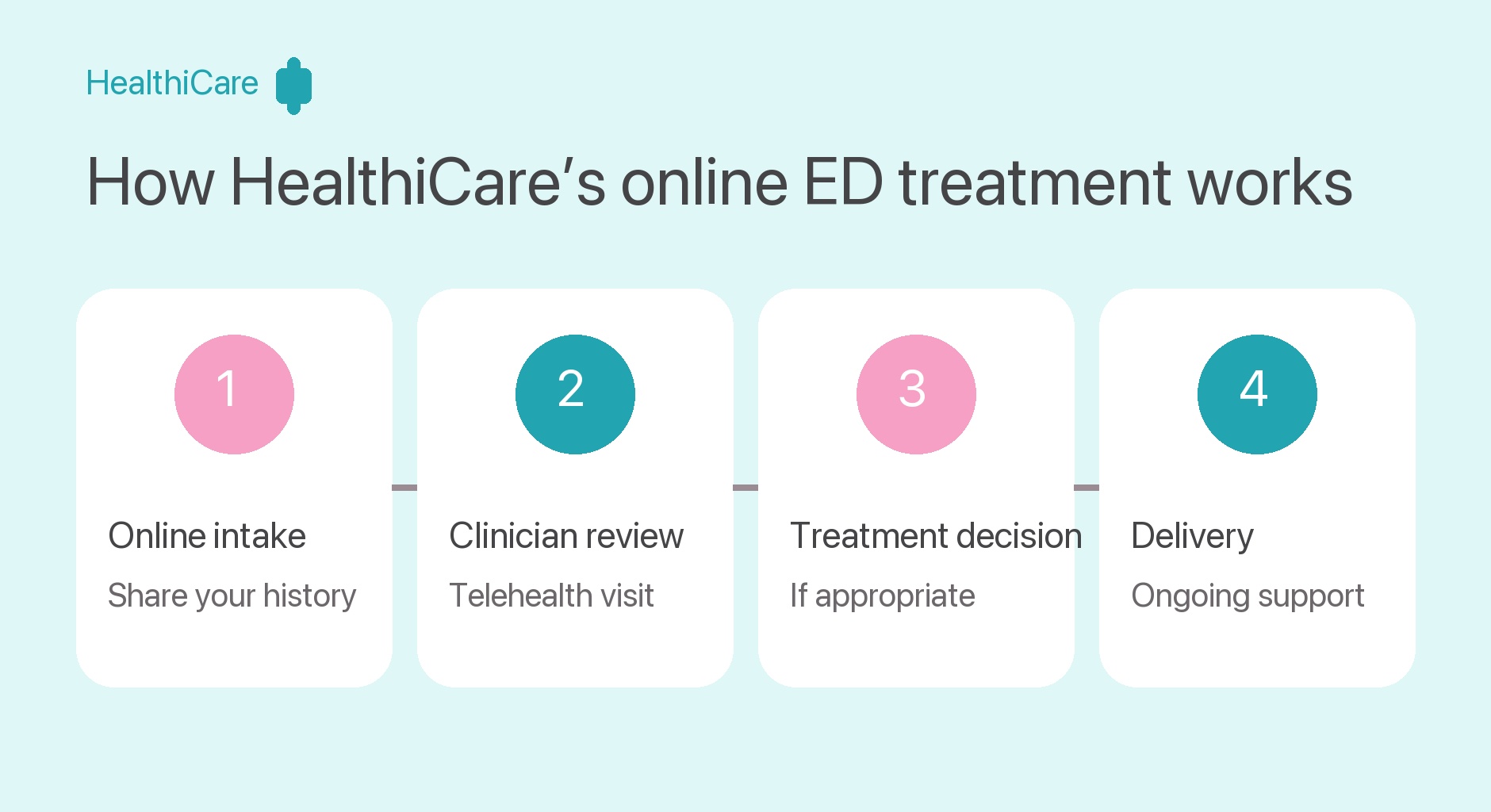
The process begins with a private online intake. You answer detailed questions about your symptoms, your medical and sexual history, the medications you take, and relevant mental-health factors, for review before your telehealth consultation.
You then have a telehealth consultation with a licensed clinician, who reviews your information and decides whether prescription treatment is appropriate for you.
A prescription is written only if appropriate. If medication is prescribed, it is fulfilled by mail. Clinical and coach support remain available afterward.
HealthiCare's online ED service is built for recurring erection difficulty. It is not designed to evaluate persistent low desire, ejaculation concerns, or a new curve or lump in the penis. If one of those is your main concern, a doctor who can examine the specific concern is a more appropriate starting point.
Most erection difficulty is not urgent, but some situations need immediate medical attention. Two examples:
If recurring difficulty is what you have been dealing with, the next step is straightforward: start HealthiCare's online intake and talk with a licensed clinician about whether prescription treatment is appropriate for you. You can begin at HealthiCare's sexual-health service.
August 7, 2026