Weight Loss

All Treatments
Resources


All Treatments
Weight Loss Treatments
Tirzepatide
Semaglutide
Wegovy Pill
Resources
Healthi App
Blog
Member Meetings
Recipes
Podcast
Patient Sign in



Low libido in women can have several causes. Learn how changes in desire are evaluated, what treatment may involve, and when to talk with a doctor.
If your interest in sex has dropped or just feels different than it used to, it is natural to wonder whether something is wrong with you. Sexual desire varies widely from one woman to another, and it changes across your own life. There is no single amount or frequency of desire that counts as normal for everyone (Mayo Clinic, University of Utah Health).
If a change is persistent or recurring, bothers you, or affects your relationship, you can discuss it with a doctor.
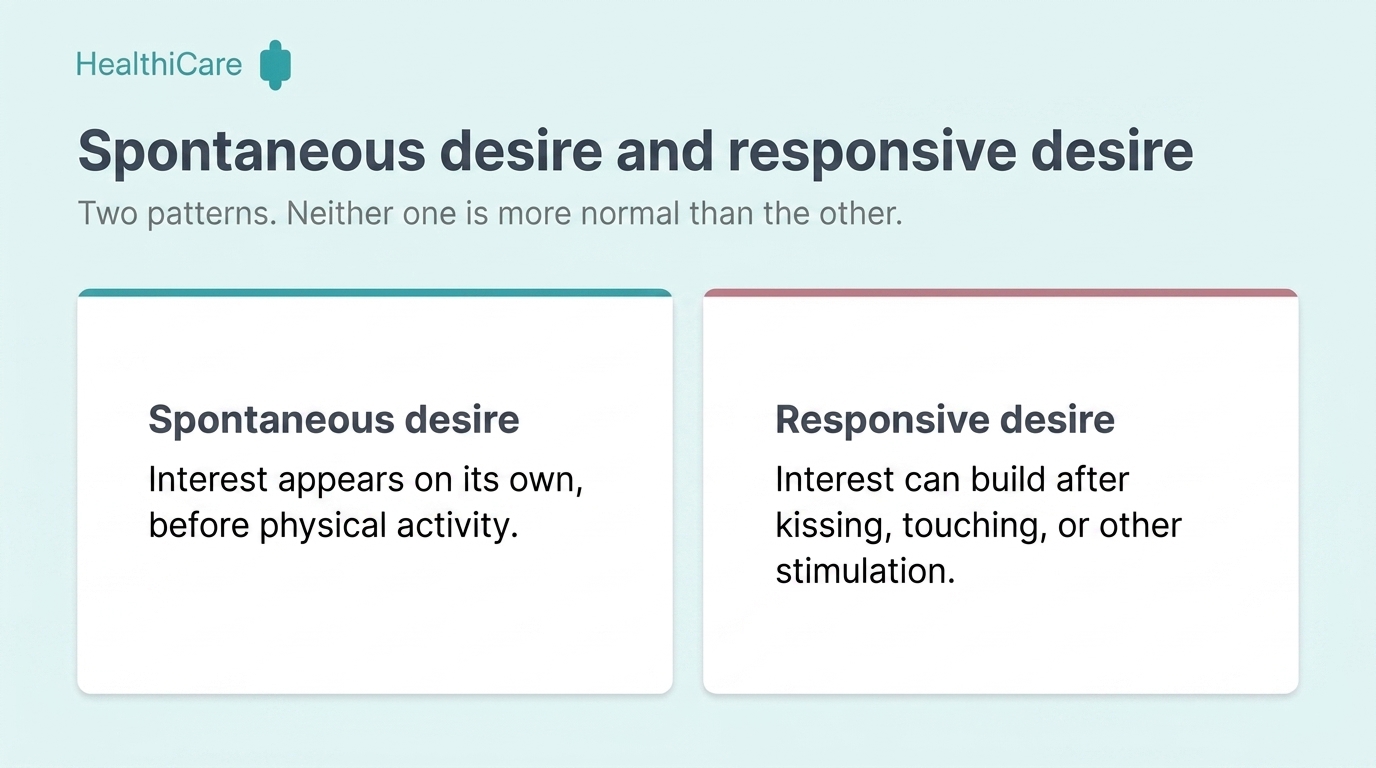
Many women expect desire to appear on its own, before anything physical happens. For some women, interest begins after sexual activity has already started, building in response to kissing, touching, or other stimulation. That can be entirely normal, but it does not explain away a change you find upsetting or unsatisfying. If your experience has changed in a way that troubles you, it deserves to be taken seriously even if someone tells you it happens to a lot of women (University of Utah Health).
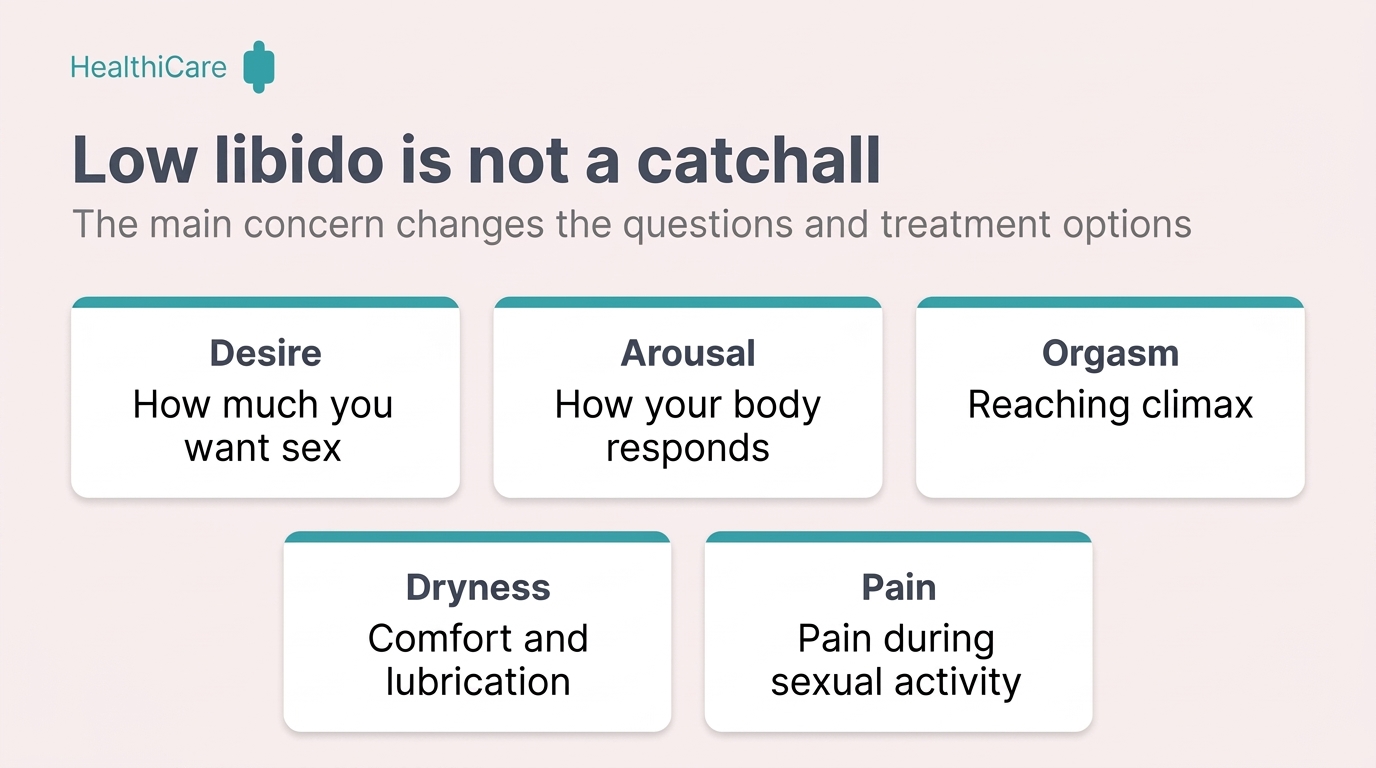
"Low libido" often gets used as a catchall, but it refers to one specific thing: how much you want sex. Arousal is how your body responds during sexual activity. Reaching orgasm, staying comfortable, and feeling satisfied are separate concerns. In practice they affect one another. Pain can make interest fade, and dryness can turn sex into something you start avoiding. Working out which one is your main problem matters, because pain during sex and a loss of desire can lead to different questions and different treatment options (American Academy of Family Physicians, Mayo Clinic).
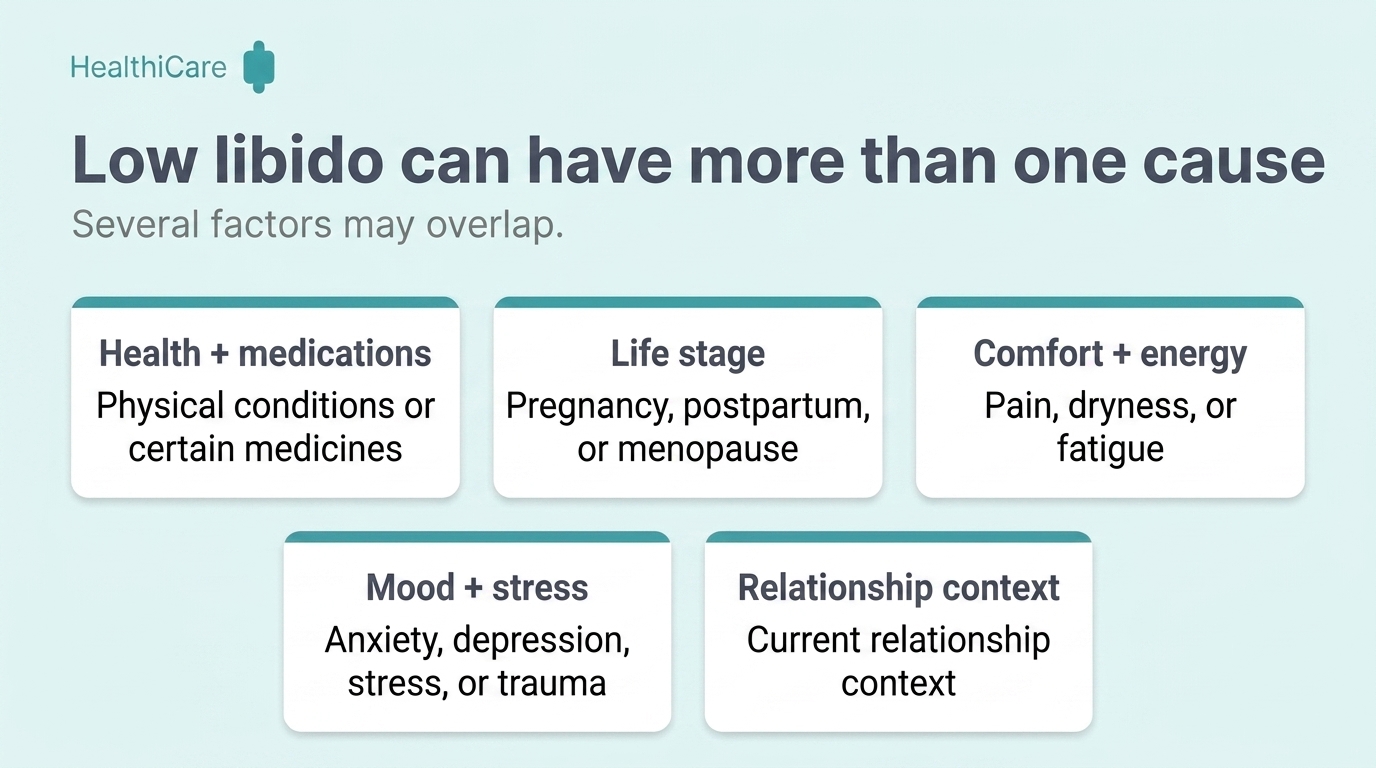
A change in desire rarely comes down to one obvious cause. Physical health conditions and certain medications can play a role. So can pregnancy, the postpartum period, menopause, and other life-stage changes. Stress, anxiety, depression, past trauma, fatigue, and pain can all affect interest in sex, and so can whatever is happening in your relationship at the moment (Mayo Clinic, Cleveland Clinic).
More than one factor may be involved at the same time, and a list like this cannot tell you which ones apply to you. A medical appointment can help identify what is relevant in your situation.
Talk with a doctor when a change in desire bothers you or is creating tension or distance in your relationship. It is also reasonable to ask for help when you are unsure whether the issue is desire itself or something like pain, dryness, arousal, or orgasm. You do not need to be certain something is wrong before starting that conversation.
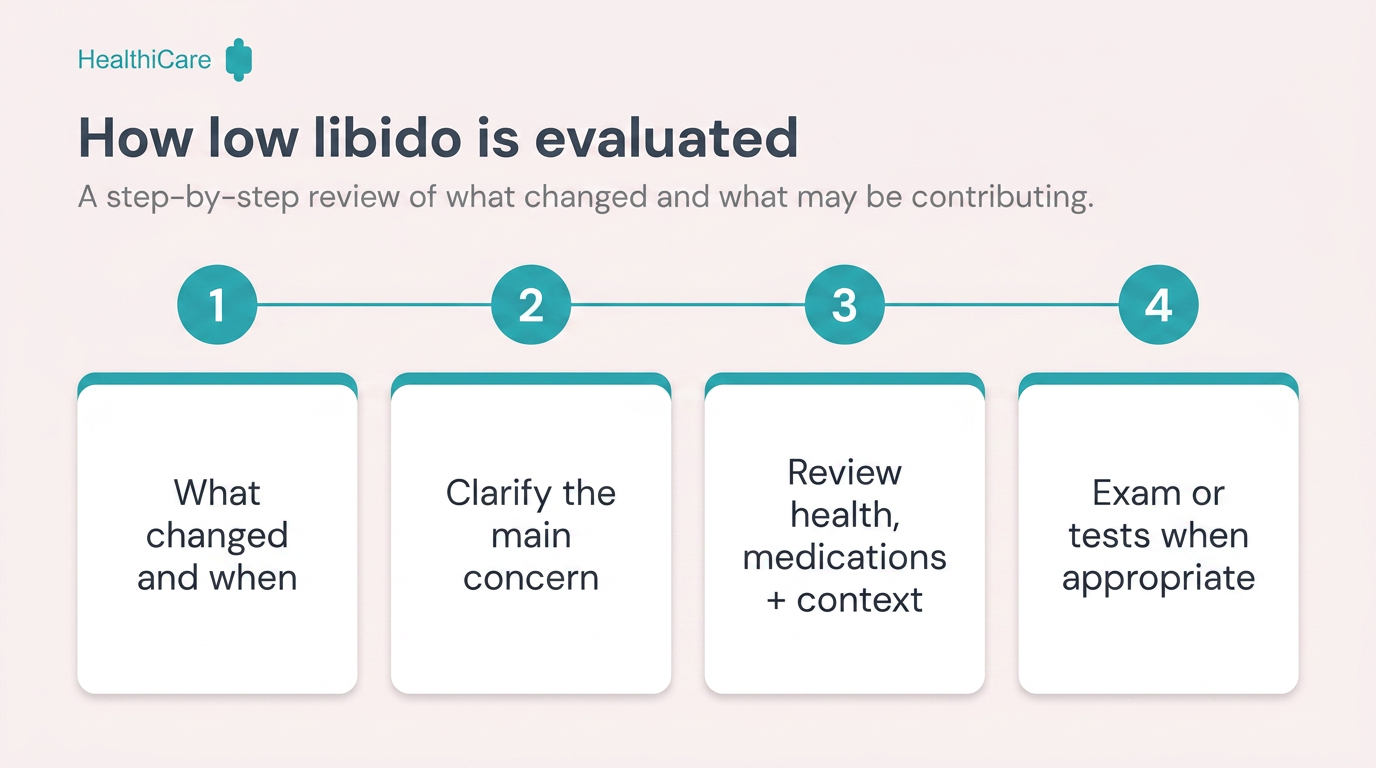
You do not need to diagnose yourself or arrive with a complete explanation before making an appointment. An evaluation usually begins as a conversation. A doctor will ask what changed and when, whether the concern is desire itself or arousal, orgasm, comfort, or satisfaction, and how much it bothers you. Questions about your health conditions, medications, life stage, sleep, mood, and relationship context help build a picture of what may be contributing. A physical exam or testing can be part of the process, though that depends on your individual situation rather than being automatic. No single symptom, quiz, or lab result settles the question (Mayo Clinic).
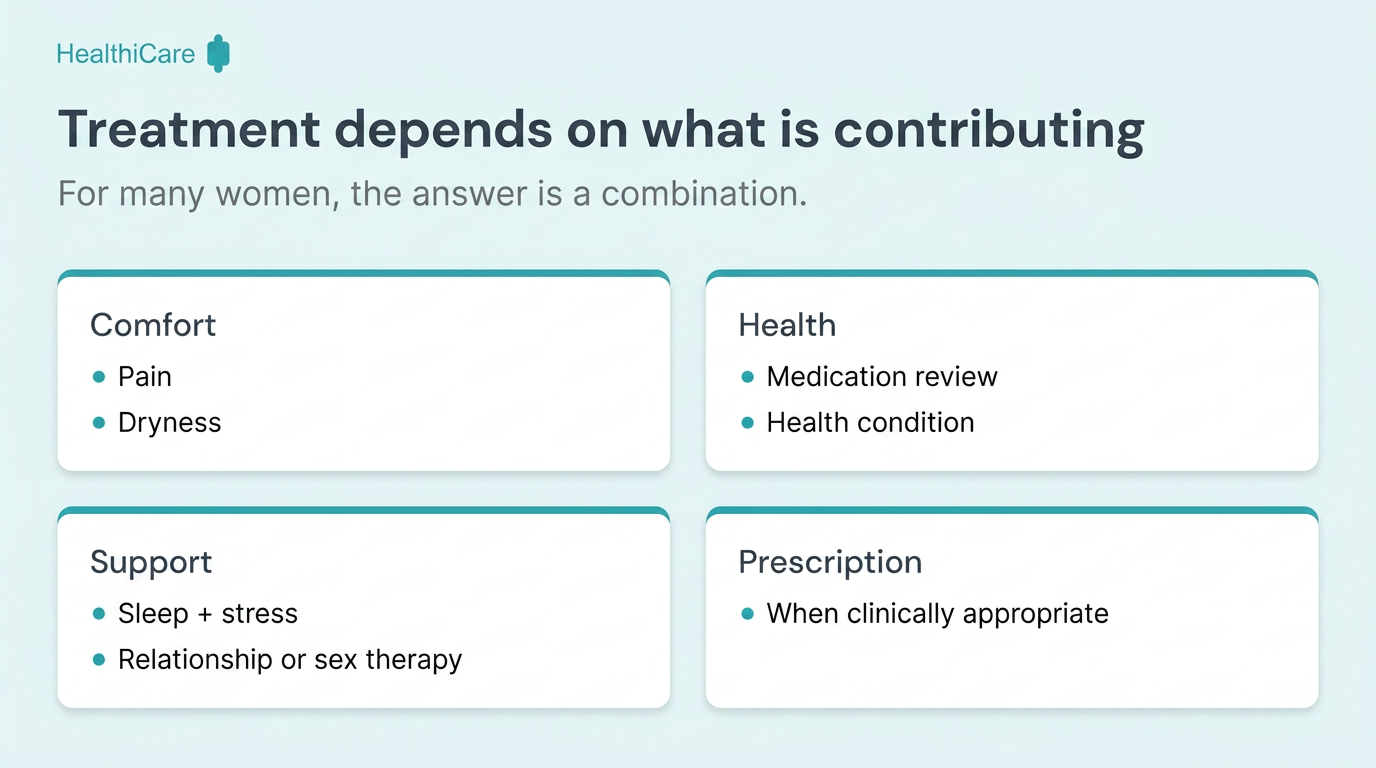
Treatment depends on your main concern and what may be contributing to it. Depending on what the evaluation finds, next steps might include treating pain or dryness, reviewing a medication, addressing a health or mental-health condition, improving sleep or getting better support for stress, relationship or sex therapy, or a prescription treatment when clinically appropriate. For many women the answer is a combination rather than one fix (American Academy of Family Physicians).
HealthiCare offers a private way to have this kind of evaluation from home. You begin with an online sexual-health intake, then meet with a licensed clinician by telehealth.
The intake and consultation give you room to explain what has changed in your own words. From there, a licensed clinician reviews your health history, medications, life stage, and relationship context during the consultation before deciding whether prescription treatment may fit your situation. A prescription is written only if appropriate. If one is provided, it is fulfilled by mail, and clinical and coach support are available along the way.
One option that may come up in your consultation is Women’s Passion Cream, HealthiCare's topical prescription option for women, designed to support intimacy and sensitivity. Whether it fits your situation is a clinical decision, which is why the consultation comes before any prescription.
Start HealthiCare's online intake to talk with a licensed clinician about what has changed and whether treatment could help.
August 7, 2026