
Weight Loss

All Treatments
Resources


All Treatments
Weight Loss Treatments
Tirzepatide
Semaglutide
Wegovy Pill
Resources
Healthi App
Blog
Member Meetings
Recipes
Podcast
Patient Sign in
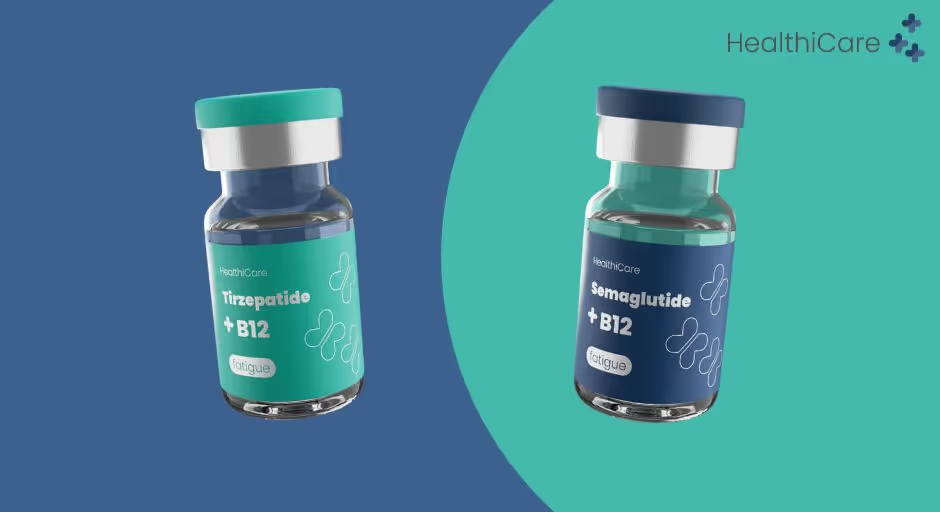


If you’re exploring GLP-1 medications for weight loss or metabolic health, you’ve probably heard the names semaglutide and tirzepatide. Both are great tools, but they are not interchangeable. Understanding how they work, their benefits, and what sets them apart can help you make a confident, informed choice for your health journey.
I've sat across from a lot of patients in the last two years who open with the same line. They've read about Ozempic on social, their friend lost 40 pounds on Mounjaro, their doctor mentioned Wegovy, and now they're staring at me asking which one they should actually be on. Tthe answer almost never comes down to which medication is "better" in some universal sense. It comes down to which one fits the body, the lifestyle, and the affordability situation in front of me.
Semaglutide and tirzepatide are the two GLP-1 medications driving most of that conversation. They're not the same. They don't dose the same, they don't act on the same hormones, and they don't cost the same, or get covered by the same insurance plans. Below is the breakdown I give patients before we choose one — pulled from the head-to-head clinical data, the dosing schedules, and the practical day-to-day stuff that actually matters once you're a few months in.
Key Takeaways:
Quick mechanism primer, since this is where most patients get tripped up. When you eat, your gut releases hormones called incretins. Two of them matter for our purposes: GLP-1 (glucagon-like peptide-1, made in the lower gut) and GIP (glucose-dependent insulinotropic polypeptide, made in the upper gut). They tell your pancreas to put out more insulin, slow how fast food leaves the stomach, and ping your brain with the "I'm full" signal. In type 2 diabetes that signaling gets blunted — that's why these drugs were diabetes drugs first, weight-loss drugs second.
Semaglutide hits one of those receptors (GLP-1). Tirzepatide hits both (GLP-1 plus GIP), which is why you'll hear it called a "dual agonist" if you go down a Reddit rabbit hole. In practice, that extra GIP action seems to translate into a bit more weight loss and a bit more appetite quieting. Whether the quieting is welcome or unsettling depends entirely on the patient — I've had a few who said it felt like food just stopped being interesting, and that bothered them.
Here's what I tell people: in the first 8 to 10 weeks, semaglutide and tirzepatide feel pretty similar. The difference shows up later, somewhere around month 6, when the curves start to separate. So if someone tries one and isn't happy at week 4, that's almost never about the drug — it's about the dose ladder.
For a long time, people compared semaglutide and tirzepatide using separate trials, which is a messy way to draw conclusions. That changed in May 2025 when the SURMOUNT-5 head-to-head trial dropped in the New England Journal of Medicine. It put 751 adults with obesity (without diabetes) on either tirzepatide or semaglutide for 72 weeks, with a target dose of 15 mg tirzepatide or 2.4 mg semaglutide.
The numbers: tirzepatide produced an average weight loss of 50.3 pounds, or 20.2% of body weight. Semaglutide produced 33 pounds, or 13.7%. That's a meaningful gap — about 6.5 percentage points more loss on tirzepatide.
I tell patients those numbers are real, but they're an average. About one-third of semaglutide patients in earlier trials maintained 20% loss or more at the two-year mark, which is right in tirzepatide territory. Individual response varies a lot. I have patients who plateau on tirzepatide at 9 months and patients who hit 25% weight loss on semaglutide. The drug matters, but it's not destiny.
For a broader safety read across both medications, the Fahim 2025 systematic review in Biomedicine & Pharmacotherapy is the cleanest summary I've found. It pulls together cohort data on side effects, discontinuation rates, and rare adverse events.

Learn more about personalized tirzepatide from HealthiCare.
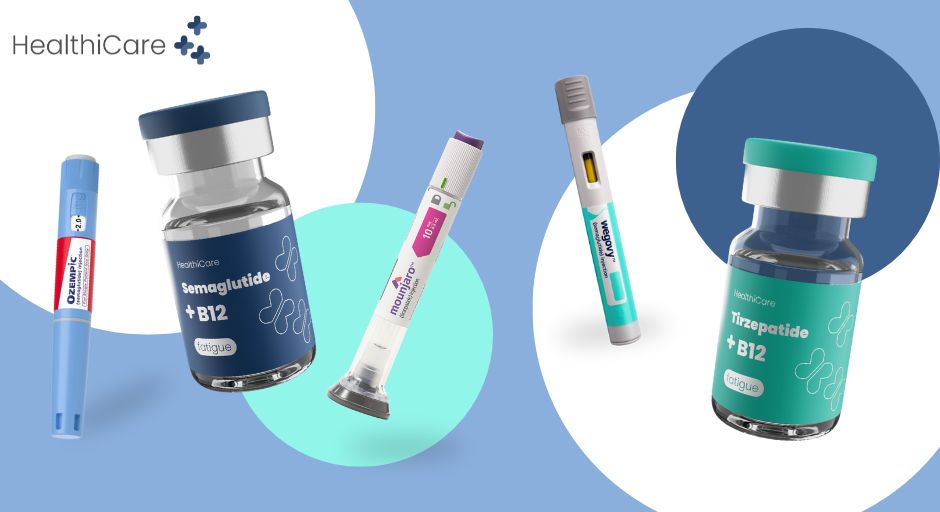
People search "Zepbound vs Wegovy" or "Mounjaro vs Ozempic" almost as often as they search the generic names, so it's worth being clear:
The molecules are the same regardless of brand. The dose ranges, indications, and pricing differ. If your insurance is paying for Mounjaro but not Zepbound, that's a coverage quirk, not a chemistry difference.
The side-effect lists are functionally identical: nausea, constipation, the occasional bout of diarrhea, sometimes vomiting, and reduced appetite that some people love and some people resent. Tirzepatide tends to bring a bit more nausea in the first few weeks, probably because of the GIP piece. The fix is almost always the same — slow down the titration. If your prescriber is racing you up the dose ladder and you're miserable, that's a conversation to have, not a sign the drug is wrong.
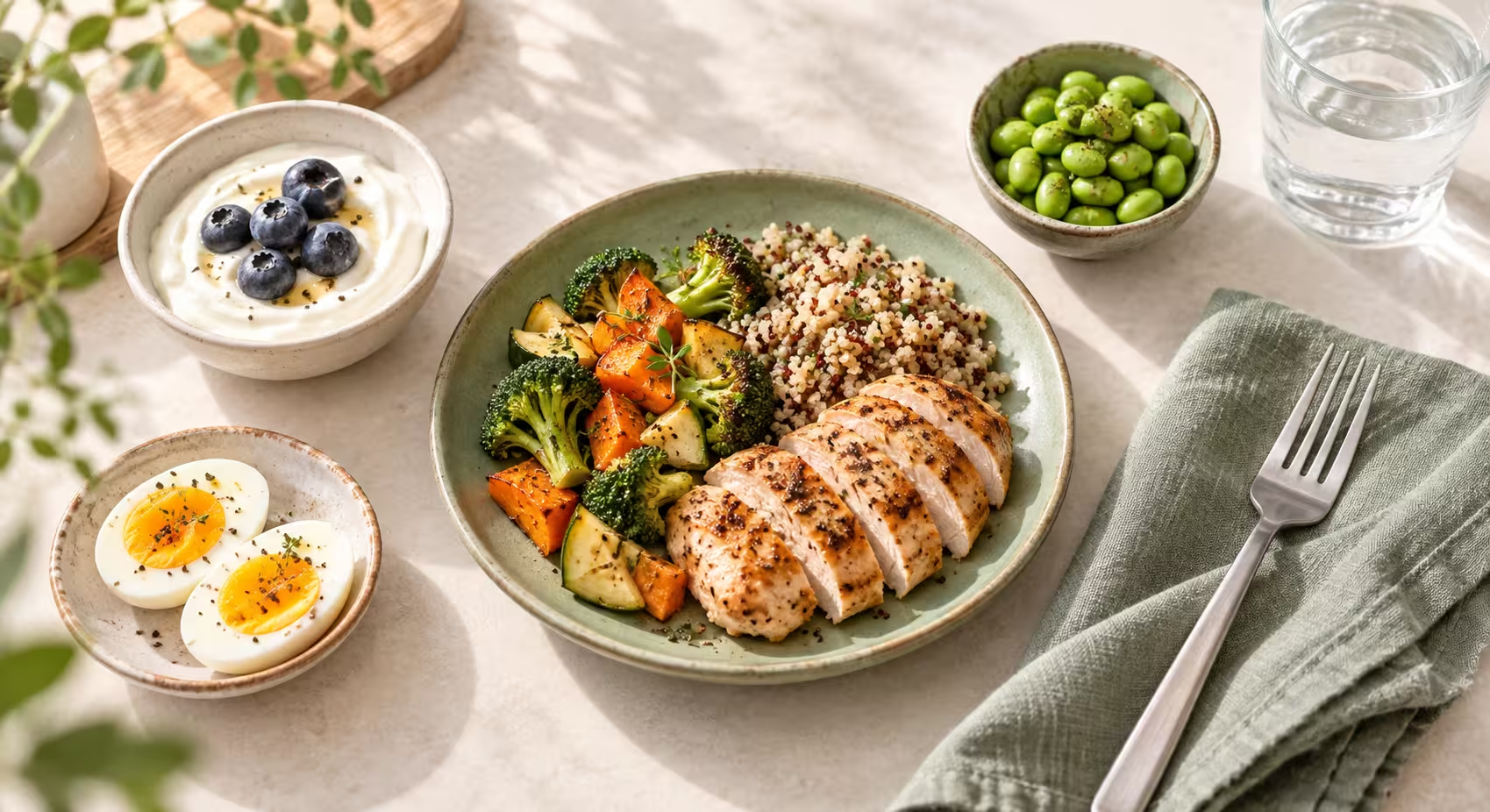
The muscle-loss question is the harder one, and it's the one I get asked about the most. The "Ozempic face" headlines aren't fake — they're just incomplete. Any quick weight loss puts muscle at risk if you're not eating enough protein and not loading muscle through resistance training. The drug doesn't really determine that. The lifestyle around it does. So when patients ask which medication has less muscle loss, my answer is "the one you're eating 0.8 to 1 gram of protein per pound of goal body weight on, while lifting two or three times a week." That's where a normal day of eating on GLP-1 matters — appetite suppression makes hitting your protein number genuinely tricky, and that's where the muscle goes if you're not deliberate about it.
One more data point worth sitting with. In a 2025 cohort of 125,474 adults without diabetes who started a GLP-1, 46.5% had stopped within a year. Read that twice. Roughly half the people who start these drugs aren't on them 12 months later, and most of those are people who couldn't tolerate the side effects or couldn't sustain the cost. The medications work. Staying on them is where most patients lose the plot.
I get this one almost weekly. Short version is that the affordable personalized GLP-1 treatments, such as what HealthiCare provides, use the same active ingredients: Tirzepatide or Semaglutide. The difference is not the medication itself, but how it’s produced and delivered. Brand name products like Zepbound and Wegovy are mass-manufactured, patented versions sold in auto-injector pens. The Personalized GLP-1 medications are custom-prescribed by licensed physicians based on the individual’s needs. Patients typically experience the same clinical benefits when dosing and adherence are comparable. Many patients choose the Personalized GLP-1 option because it provides the same therapeutic effect at a significantly lower cost, with the added benefit of personlized dosing.
Insurance coverage for these medications is messy and shifting fast. Commercial plans range from full coverage with a $25 copay to flat denial with no exception path. The big change for 2026: Medicare is starting to cover GLP-1s and GLP-1/GIPs for weight loss with copays as low as $50 a month, beginning mid-year. State Medicaid programs are following at different speeds.
The insight I share often is that insurance coverage for these types of treatments can be inconsistent and short-term. In many cases, coverage is approved initially but then discontinued just as patients begin to see meaningful progress. Our goal with HealthiCare is to provide reliable, uninterrupted treatments, at affordable prices, so you can stay consistent with your treatment and see the best possible results without unexpected interruptions.
Switching between semaglutide and tirzepatide
If you tolerate semaglutide poorly or hit a plateau, switching to tirzepatide is a real option (and vice versa). A washout period isn't medically required, but most of my patients feel better with a one- to two-week pause between the last dose of the old drug and the first dose of the new one — gives the GI system a reset.
The other thing to know: regardless of what you were on before, you start the new drug at its lowest titration dose. So if you were on 2.4 mg of semaglutide and switch to tirzepatide, you start at 2.5 mg of tirzepatide and titrate up over months. You don't get to skip the ladder.
If you've made it this far, you probably want a recommendation. Here's how I think about it:
None of these are pure science decisions. Your insurance, your needle tolerance, your other medications, and your appetite-noise patterns all play in. That's why I'd rather have a 20-minute conversation with you about your specifics than tell you "tirzepatide is better" in a vacuum. Ready to see the numbers for yourself? Compare all GLP-1 weight loss treatment options and find the plan that fits.
[In-content image: Drive ID or CDN URL. Alt text: "Sarah Klein, RD, sitting at a desk reviewing a patient's GLP-1 treatment plan." Wrap in <a> linking to /treatment/weight-loss. Swap to CDN before publish.]
At HealthiCare, our philosophy is built on two core principles: First, that medication is just one piece of the puzzle; and Second, that true success comes from combining medication with a commitment to Care and a robust support system.
We believe in more than just medication - we believe in Care + Medication. Our Care Team is here to support you throughout your journey, and all HealthiCare Members have access to our team of coaches, treatment guides, live virtual member meetings, and the Healthi weight loss app, you’ll have support every step of the way.
For pure weight loss outcomes in adults without diabetes, the SURMOUNT-5 head-to-head data favors tirzepatide (20.2% vs 13.7% body weight loss at 72 weeks). For broader safety record, oral dosing flexibility, and the cardiovascular indication, semaglutide has the edge. The "better" drug is the one that fits your insurance, tolerance, and treatment goals.
Most patients on tirzepatide lose 5 to 10% of body weight in the first 6 months and continue at a slower rate after that. For someone starting at 200 pounds aiming to lose 20, that typically takes 4 to 7 months at therapeutic dose. People who lose faster usually do so because they're paired with structured nutrition and resistance training, not because of higher dose.
The muscle-loss risk is similar between the two — both cause rapid weight loss, and rapid weight loss in any form puts muscle at risk if protein intake and resistance training aren't dialed in. The bigger driver of muscle preservation is whether you're eating 0.8 to 1 g of protein per pound of goal body weight daily and lifting weights two to three times a week. The drug matters less than the lifestyle around it.
Medically, yes. Practically, most patients feel better with a one- to two-week pause first, particularly if they had GI side effects on the first medication. You'll start the new drug at its lowest titration dose regardless of what your dose was on the previous one.
ABSOLUTELY! Almost all of our patients at HealthiCare are now on our Personalized GLP-1 treatments, which use the same active ingredients: Tirzepatide or Semaglutide. The difference is not the medication itself, but how it’s produced and delivered. Brand-name products like Zepbound and Wegovy are mass-manufactured, patented versions sold in auto-injector pens. Our medications are custom-prescribed by licensed physicians based on your individual needs. Patients typically experience the same clinical benefits when dosing and adherence are comparable. Many patients choose this option because it provides the same therapeutic effect at a significantly lower cost, with the added benefit of personalized dosing.
August 17, 2026


















.avif)