Weight Loss

All Treatments
Resources


All Treatments
Weight Loss Treatments
Tirzepatide
Semaglutide
Wegovy Pill
Resources
Healthi App
Blog
Member Meetings
Recipes
Podcast
Patient Sign in



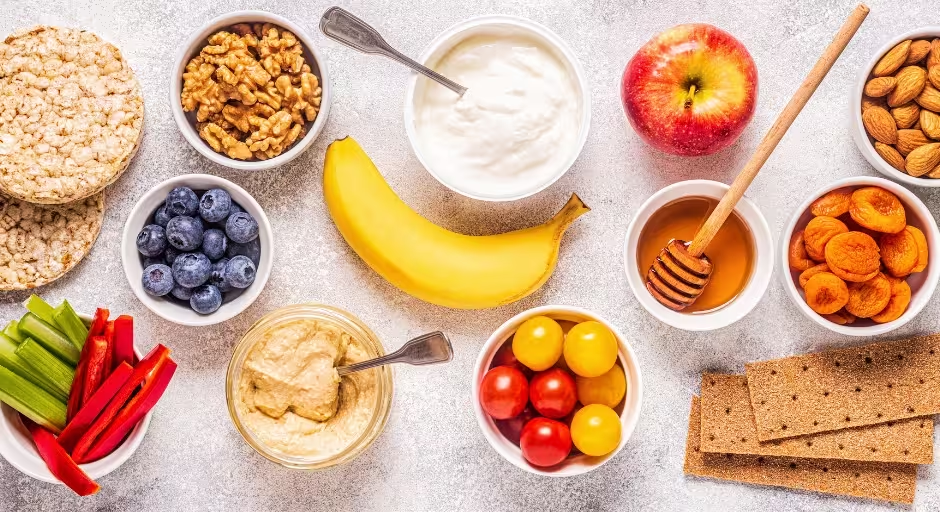
Discover go-to GLP-1 breakfast ideas. The way you start your morning on GLP-1 can shape your energy, hunger, and choices for the rest of the day, and a simple, balanced breakfast can make that feel a whole lot easier.
The first thing HealthiCare patients tell me about breakfast on a GLP-1 is some version of "I just don't want it." And then a beat later, "but I think I should be eating something, right?" That ambivalence is the whole problem. Their old hunger cues stopped firing, so they don't know what to trust. A lot of them have skipped breakfast for two or three weeks before they get to me, and they're starting to feel it. I always say the same thing: you don't have to want breakfast. Just have something ready - so when you get a small window of appetite, you don't waste it.
If you're taking GLP-1s - Semaglutide, Tirzepatide, Ozempic, Wegovy, Zepbound, or Mounjaro - the protein-first breakfast framework in this piece is the closest thing I have to a single answer that works for almost everybody. The first month is disorienting for specific reasons, and understanding those reasons makes the rest of it easier.
Two reasons, and one of them is the part nobody warns about. GLP-1 medications slow gastric emptying - that's the whole mechanism behind appetite suppression. So you wake up still partly digesting last night's dinner. A normal breakfast on top of that feels awful. Hence the morning aversion.
The muscle question is the one that changed how I think about breakfast. A 2025 Endocrine Society study I quote a lot found that around 40% of weight lost on semaglutide comes from lean mass - that includes muscle. It was a smaller study, and the GLP-1 research base is still filling in. But every other paper I read points the same direction, so I'm not waiting for unanimous consensus. Protein at breakfast is the easiest lever for protecting lean mass, because by midday the appetite is often too suppressed to hit the numbers you actually need.

What happens above 30 grams of protein in one sitting? Muscle protein synthesis tops out and the extra protein just makes you fuller - which on a GLP-1 means you've borrowed appetite from lunch. The target is 25 to 30 grams: enough to max out synthesis, not so much you blow your midday window. The 2025 advisory in the American Journal of Clinical Nutrition puts the full-day target at 1.2 to 1.6 grams per kilogram of body weight, spread across meals, which makes breakfast the anchor that determines whether the math for the whole day adds up.
Something that complicates the clean version of this: some HealthiCare patients can't stomach 25 grams before 8am in the first month, especially around dose escalation weeks. For those patients, I drop the target to 15 grams and focus on building the habit before chasing the number. A 15-gram breakfast that happens every day beats a 28-gram breakfast that gets skipped four times a week.
I'm going to be honest about my own kitchen, because I think the picture in people's heads is some kind of perfectly arranged Pinterest spread, and that's not what's happening at my house. I have a five-year-old. The last elaborate breakfast I cooked was probably before she was born. What's in my freezer right now: smoothie packs from Trader Joe's and a tray of egg muffins my husband made on Sunday. The burritos are for the genuinely terrible mornings.
Most weeks I lean on smoothies early in the week, because that's when nausea tends to be worst after Sunday injections. Whey or pea protein, frozen berries, a fistful of spinach, almond milk, occasionally peanut butter if I want it more filling. Roughly 28 grams of protein. I sip mine slowly. The one time I tried to chug a smoothie before a 7am call, I learned that doesn't work.
Mid-week is usually egg muffins reheated for 90 seconds, or a cottage cheese bowl with pineapple. Fridays I tend toward avocado toast with cottage cheese on top, which I know sounds odd, but it's become one of my favorite breakfasts, and I have it 45 weeks out of the year. Weekends I have more time, so I might actually scramble tofu or eggs with whatever roasted vegetables are in the fridge. None of this is exciting. The boring options are doing 90% of the work.
Here's the quick-reference version of the breakfasts that actually work for HealthiCare patients. Screenshot it or stick it on the fridge. Sorted by appetite level so you can pick what fits the morning you're having.
Pattern to notice: nothing on this list takes more than five minutes day-of, and half are make-ahead options. Find two that fit how you actually live. Prep ingredients on one Sunday. The decision-making is done for the week, which is the whole point. And if ten breakfasts aren't enough variety, my colleagues keep the rest of the GLP-1 recipe library stocked - lunch and dinner, same protein-first framework.
Cottage cheese has been working for GLP-1 patients since well before TikTok had any opinion about it - every HealthiCare patient I see right now is asking about it, and the short answer is: yes, it earned the attention. A cup lands at 24 grams of protein with no cooking step, which is what actually matters at 7am. The texture is cool and gentle on a stomach that's been dealing with the last injection, a quality most high-protein options don't have.
A lot of HealthiCare patients tell me they had a bad experience with cottage cheese in their twenties and never went back. That's the wrong stopping point. Whipped cottage cheese is a different product than what they remember - smoother, no curd texture, the kind of thing that sits easy when not much else does. HealthiCare patients who swore they hated cottage cheese for thirty years sometimes end up eating the whipped version four mornings a week. So before you write off the category, try whipped first.
I have to push back on this one a lot. There's a weird cultural idea that liquid calories don't count, or that drinking your breakfast means you didn't really eat - and on a GLP-1, that thinking gets people in trouble. A protein smoothie with 28 grams of protein, frozen berries and spinach for fiber, and peanut butter or chia for fat is a meal. Nutritionally, the format changes nothing.
The build is the thing. A smoothie that's just frozen fruit and yogurt is more dessert than breakfast - the protein source is what turns it into a meal. Whey, pea protein, Greek yogurt, cottage cheese (which blends creamy, even if that sounds wrong). Without the protein anchor, you'll be hungry by 10 and the smoothie will have done nothing for lean mass.

Skip breakfast and the protein math falls apart for the whole day. You can't realistically fit 50 grams of protein into a small lunch on a GLP-1 - the appetite isn't there - and whatever's left to make up at dinner is even less. That morning portion is the one I'd protect over any other.
The high-fat mistake is the one HealthiCare patients figure out the hard way. Bacon and sausage plus avocado plus eggs hits differently when gastric emptying has already slowed down - what you get is two hours of feeling like a brick is sitting in your chest. Turkey sausage instead of pork, eggs with a quarter avocado instead of half. Lean proteins handle better when the gut is already running slow.
Coffee on an empty stomach is where I get the most pushback. GLP-1s already affect stomach acid levels, so black coffee before any food produces reflux and sometimes a nausea wave around 8am that patients then attribute to the medication. Two bites of yogurt before that first sip is enough to change the outcome. Or stir half a scoop of protein powder into the coffee itself, which I admit sounds wrong but works.
Defaulting to cereal or a pastry because it's "easy" is the fourth one - essentially no protein and all fast carbohydrates, which means hunger by 11 and nothing deposited toward lean mass. And the fifth is trying to eat the same portion size you ate before starting. Your stomach is genuinely different now. Cut breakfast in half and stop when full. You can always go back, and most days you won't be.
Liquid is my answer to this every single time. A protein smoothie sipped slowly - over 20 to 30 minutes - gets 25 grams of protein in without the volume problem solid food creates. Even finishing two-thirds of it is progress. Pair it with water. The short walk after seems to help wake up appetite for some HealthiCare patients, though I'll be honest: the evidence there is clinical observation more than published research.
An hour and a half of feeling like a brick is sitting in your chest is what most GLP-1 patients describe after a classic American breakfast plate. GLP-1 has already slowed gastric emptying significantly, and high-fat foods sit on top of that for a long time. The bacon-and-sausage combination is the main offender; hash browns hit the same way - dense in fat and simple carbs, slow to move through a gut that's already running at a fraction of its usual speed. Lean proteins handle better.
Sugary cereal and pastries fall into the same category - essentially no protein and all fast carbohydrates, which means hunger by 11. The blended coffee drinks with syrup are worth calling out separately because they add 40 to 60 grams of sugar before most people have eaten anything real. My actual opinion: the "healthy whole grain" label on most cereals has done more damage to how people understand breakfast macros than almost any other marketing category. Most of those products would look very different if they showed protein grams as prominently as they show fiber.
Big portions are a surprisingly common issue, even for patients who know their stomach has changed - what felt like a normal amount in May can trigger nausea by August, and the adjustment is slower than people expect. Black coffee on a totally empty stomach is the other one, particularly for patients who already tend toward reflux. A 2023 consensus statement in the Journal of Clinical Medicine puts GI side effects at 40 to 70% of GLP-1 users, with nausea being the most common, and food choices account for a significant share of that.
Two foods come up over and over when HealthiCare patients describe taste changes on GLP-1s: eggs and coffee. Eggs are the stranger one - patients describe a metallic quality that wasn't there before, and some can't quite name what changed except that it's off. Coffee tends to flatten, like the flavor just left. Neither is psychosomatic. Taste alterations are a documented side effect of these medications, and from what I've seen in our community, they usually settle down once a dose stabilizes.
Don't try to power through when it happens. If eggs are suddenly inedible, swap to Greek yogurt or cottage cheese for a few weeks and revisit eggs after the next dose adjustment. Forcing yourself to eat food that tastes wrong tends to come back at you by lunch as straight-up nausea, which then makes you even less interested in the next meal. The whole pattern unravels. Better to detour around the problem food until your taste buds catch up.
The patients who stop struggling with breakfast aren't more disciplined. They just buy frozen smoothie packs at Trader Joe's and put together a tray of egg muffins on Sunday afternoon. Twenty minutes of work, six days of breakfast handled. The ones who keep skipping aren't lazier - they're making a food decision at 7am with no appetite and no prep, which is a setup that fails for almost everyone. Decisions made the day before are the ones that actually happen.
Your appetite is going to keep shifting for the first few months on these medications. Expect that, don't try to prevent it. Whatever's working for you right now might stop working in six weeks. The cottage cheese that saved you in week three could taste wrong by week eight, and that's normal, not a failure. Switch foods. There are a dozen protein anchors that work for GLP-1 mornings, and you only need two at a time.
And honestly, breakfast is just one piece. If you're curious how the rest of the day shakes out, my colleague Jenn wrote a piece on what a normal day of eating on GLP-1 actually looks like that's worth a read. Same protein anchors, smaller portions later in the day as appetite drops further.
Lisa Wood is Head Coach at HealthiCare, where she leads the coaching team that supports HealthiCare patients through GLP-1 therapy and sustainable weight management. She runs live member meetings through the Healthi app and works directly with HealthiCare patients on the nutrition and habit side of their weight loss programs.
At HealthiCare, our philosophy is built on two core principles: First, that medication is just one piece of the puzzle; and Second, that true success comes from combining medication with a commitment to Care and a robust support system.
We believe in more than just medication - we believe in Care + Medication. Our Care Team is here to support you throughout your journey, and all HealthiCare Members have access to our team of coaches, treatment guides, live virtual member meetings, and the Healthi weight loss app, you’ll have support every step of the way.
June 29, 2026










.avif)