
Weight Loss

All Treatments
Resources


All Treatments
Weight Loss Treatments
Tirzepatide
Semaglutide
Wegovy Pill
Resources
Healthi App
Blog
Member Meetings
Recipes
Podcast
Patient Sign in



Losing weight is one challenge. Learning how to maintain it in a way that still feels realistic, flexible, and sustainable is an entirely different one.
For a long time, weight loss has been treated like a finish line moment. You follow the plan, the weight comes off, and the assumption is that everything should naturally stay that way afterward. But anyone who has gone through a weight loss journey knows it is rarely that simple.
More conversations are finally starting to focus on what happens after the weight comes off, and honestly, that shift is overdue. Because while losing weight takes effort, maintaining that progress in a way that still feels livable is often the harder part.
This is where many people begin to struggle, not because they suddenly stopped caring, but because most weight loss plans are built entirely around losing. There is structure during the active weight loss phase. There are goals, routines, and clear systems to follow. Then, once the weight comes off, many people are left trying to figure out maintenance on their own without much guidance for what normal life is supposed to look like afterward.
That gap between “losing weight” and “living life while maintaining it” is where progress often starts to feel unstable.

During active weight loss, there's usually a strong sense of focus. You are paying attention to meals, staying aware of habits, and following a plan with a clear goal in mind. Even if the process isn't perfect, there is structure helping guide your decisions each day.
Once weight starts coming off, though, that structure often becomes less consistent. The urgency fades a little. Motivation naturally shifts. People stop tracking as closely, routines loosen, and small habits begin to drift without much notice.
This is often where people blame themselves, assuming they simply lost discipline. But in reality, what usually disappeared was not motivation. It was structure.
The body and mind respond well to consistency. When routines, awareness, and supportive systems slowly fade away, old habits can begin creeping back in almost automatically. That is not failure. It's simply what happens when maintenance is treated like an afterthought instead of an active phase of the journey.
One of the biggest misconceptions about weight loss is the idea that the body simply “settles” once the goal weight is reached.
In reality, the body is still adapting long after active weight loss slows down. Metabolism, appetite cues, energy needs, and activity levels can all continue shifting during maintenance, especially after a long period of calorie restriction or medication-assisted weight loss.
This is why regain can sometimes happen gradually, even when someone feels like they aren't doing anything drastically different. Small increases in portions, reduced movement, less awareness around meals, or inconsistent routines can have a bigger impact than expected when the body is still trying to recalibrate.
Maintenance is not passive. It still requires awareness, flexibility, and some level of structure to support long-term stability.
A lot of weight loss programs are designed around reduction only. The goal is to help someone lose weight as quickly as possible, but there is very little conversation around how to maintain those results realistically afterward.
That creates a difficult transition for many people. They are no longer actively “dieting,” but they also don't feel confident about what balance is supposed to look like anymore. Some stay overly restrictive because they are afraid of regaining weight, while others slowly drift back into old habits because the structure that once supported them disappeared completely. Neither extreme feels sustainable.
Long-term success usually comes from finding a middle ground where healthy habits still exist, but life no longer feels controlled by constant restriction or perfectionism.
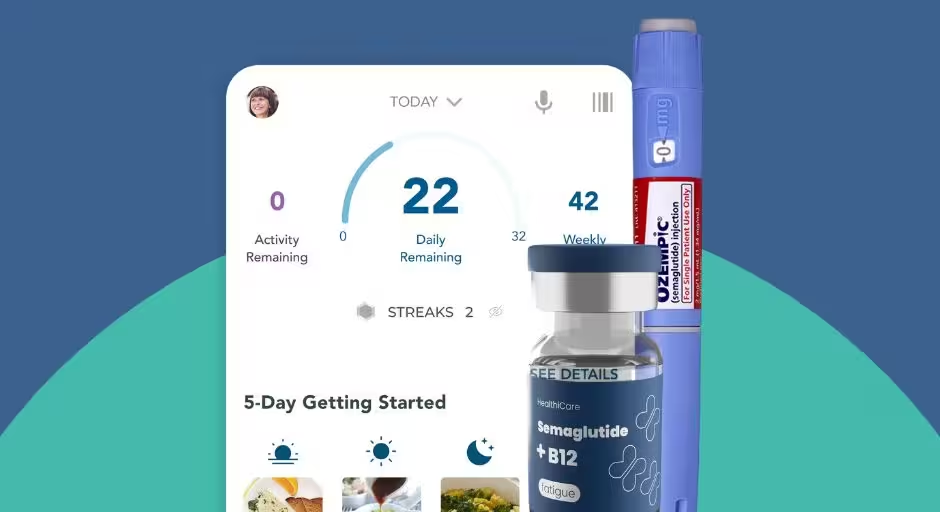
As GLP-1 medications become more common, the conversation around maintenance is becoming even more important. These medications can significantly reduce appetite, quiet food noise, and support meaningful weight loss, but eventually the focus shifts from simply losing weight to learning how to maintain those results over time.
One of the biggest misconceptions people have is thinking the goal is to continuously increase their dose forever or reach the very highest dose possible. But higher does not always mean better, especially long term. For many people, the real goal is finding the lowest effective dose that helps support consistency, appetite control, and sustainable habits while allowing them to maintain their results in a realistic way.
This is where structure matters so much.
GLP-1 medication can absolutely help create the opportunity for fat loss, but long-term maintenance still depends on the habits being built alongside it. When medication is paired with balanced nutrition, protein intake, movement, and consistent routines, maintenance becomes far more stable and manageable over time.
That’s one reason HealthiCare approaches GLP-1 differently. Instead of focusing only on rapid loss or constantly titrating upward, HealthiCare focuses on helping members create sustainable progress they can realistically maintain. With licensed clinicians guiding your care, your plan can evolve based on your body, your goals, and how you’re responding, rather than automatically chasing the next highest dose.
At the same time, the Healthi app, which is included free with HealthiCare, helps you build the structure that supports maintenance long term. Using the BITE system, meal tracking, and plans like Healthi Fresh, you’re able to stay aware of your intake, support protein and fiber goals, and maintain the habits that helped create your results in the first place.
That combination matters because maintenance isn't about relying on medication alone forever. It’s about using GLP-1 as a tool while building routines and awareness that help you confidently maintain your progress long term.
Long-term success doesn't usually look extreme. It rarely looks like constantly dieting, obsessing over every meal, or trying to maintain perfect habits every day.
More often, sustainable maintenance looks quiet and consistent. It looks like having routines that help you stay grounded, meals that feel balanced without feeling restrictive, and systems that reduce the amount of decision-making required every day.
It also means understanding that maintenance is still an active process. Not in an exhausting way, but in a supportive one. Awareness still matters. Structure still matters. Habits still matter.
The difference is that over time, those things begin to feel more natural and less forced.
Weight loss may get most of the attention, but maintenance is where long-term success is truly built. Without continued structure and support, it becomes very easy for habits to slowly drift over time. Not because you failed, but because most people were never taught how to transition from losing weight into maintaining it realistically.
When you have the right systems in place, though, maintenance stops feeling like something fragile or temporary. It starts feeling sustainable.
The goal was never just to lose weight for a few months. The goal was to create habits, routines, and support systems that continue helping you feel strong, balanced, and confident long after the scale changes.
September 24, 2026
















.avif)