
Weight Loss

All Treatments
Resources


All Treatments
Weight Loss Treatments
Tirzepatide
Semaglutide
Wegovy Pill
Resources
Healthi App
Blog
Member Meetings
Recipes
Podcast
Patient Sign in



Thinking about life after GLP-1s? Whether you're considering stopping or just curious about what happens next, this article breaks down what to expect — from potential weight changes to tips on maintaining progress.
Here's the honest answer, straight from the best data we have: most people who stop GLP-1 medications regain a significant portion of the weight they lost. The STEP 4 trial found that participants who stopped semaglutide after 20 weeks regained roughly two-thirds of their lost weight within the following year. SURMOUNT-4 showed similar results for tirzepatide.
We're not going to soften that. You deserve the real picture before making this decision. But here's what that headline leaves out: a meaningful group of patients who stopped didn't regain at that rate. And what separated them is consistent enough across the data that it's worth understanding before you do anything.

You can stop. Yes. Weekly injectable GLP-1s don't cause withdrawal. There's no acute danger, no required tapering the way some medications demand. But what happens in the weeks and months after stopping is where the real story is.
1. Your appetite comes back, usually within 1–2 weeks. The hunger suppression you've been experiencing is only active while the drug is in your system. Once it clears (semaglutide's half-life is about a week; tirzepatide's is a bit shorter), the signals it was modifying reassert themselves. Hunger returns to where it was before you started.
2. Fullness after small meals fades. Part of what made those smaller portions feel satisfying was the medication slowing how quickly food moved through your stomach. That effect goes away within 1–2 weeks of your last injection, so portion tolerance increases even if your intentions don't change.
3. Weight regain typically starts within 4–8 weeks. How fast it happens depends largely on what habits you carried out of treatment. People who built consistent eating and exercise routines while on the medication tend to regain more slowly, and some hold onto a meaningful portion of their results long-term.
4. Blood sugar regulation starts reverting over 4–12 weeks (if you were using GLP-1 for glucose management). This one really does need to be managed with your prescribing provider. Don't go it alone on this piece.
5. You'll get clarity on your relationship with food. This one surprises a lot of people. Many describe the transition off as the first time they could clearly see which eating habits were genuinely theirs versus which ones were medication-assisted. That's actually useful information. It shows you exactly which habits need the most intentional reinforcement going forward.
The weight regain part is probably what brought you to this article. What you're really asking is whether there's a path through it. There is, but it helps to understand why the weight comes back first.
Weight regain after stopping GLP-1 isn't a personal failure. It's a predictable biological response.
GLP-1 receptors in your brain regulate appetite by suppressing hunger hormones and calming the reward signals around food. When the medication is removed, those receptors stop receiving the signal they've been working with. Hunger hormones (ghrelin especially) reassert themselves. Your body moves back toward its defended weight.
This is the "set point" concept: your brain has a physiological baseline it actively defends through hunger cues and metabolic adjustments. GLP-1 medications work partly by overriding some of those defenses. Stop the medication, and the defenses come back online.
The honest question is whether your behavior during treatment actually shifted that defended weight, or whether the medication was suppressing the signals around it without changing the underlying baseline. Real set point modification takes longer than most treatment courses run and requires consistent behavioral repetition, the kind that builds genuinely different habits around eating. That's why the research consistently shows better outcomes after stopping for patients who had structured behavioral support during treatment, compared to medication alone.
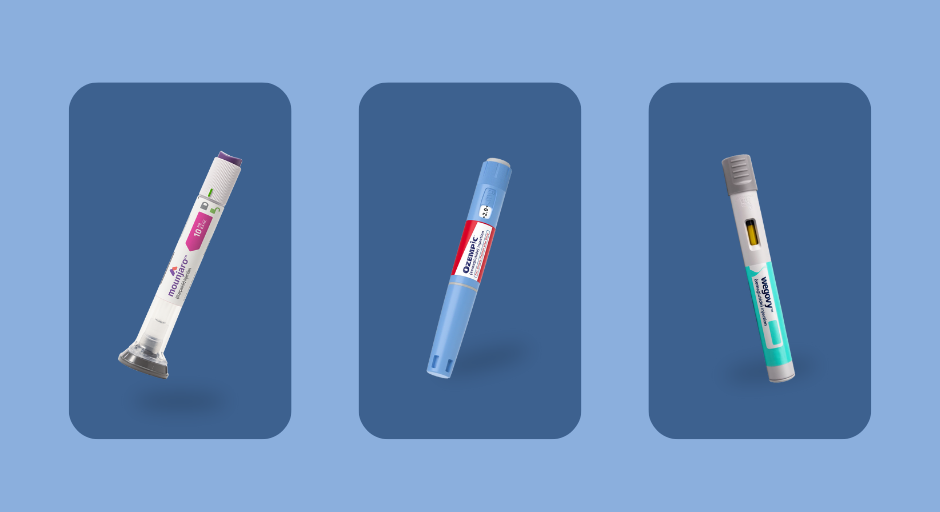
It's not the typical outcome. The trial data is clear about that. But patients who stop GLP-1 and hold most of their results do exist, and the data tells us what they have in common.
They stopped from a place of behavioral stability. Not early in the process when new habits were still fragile, but after months of consistent practice.
They kept doing the specific things the medication had made easier. Prioritizing protein. Staying aware of portions. Strength training regularly. Consistent movement. The medication lowered the difficulty of building those habits. Stopping removed that support, but for these patients, the habits stuck anyway.
The patients who struggle most after stopping are the ones who relied on the medication as the main driver without building parallel habits during treatment. When the medication ended, so did the results. Nothing else had changed.
If you've decided to stop, how and when you stop matters more than most people expect.
Step down your dose first, if possible. Stopping from a lower titration level means appetite reasserts more gradually. It also gives you a reference point for how you handle reduced medication before going to zero. Your prescribing provider can help you structure this.
Give yourself a consolidation window before stopping. The habits you built during treatment are most fragile in the first months after stopping. Going into that window with protein targets already established, a strength training routine already in place, and a meal approach you can execute without thinking. That changes the outcome in a real way.
We'll be honest about what that window promises: it's not a guarantee. Some patients do everything right during treatment and still regain weight after stopping. But a solid behavioral foundation improves the odds meaningfully. It just doesn't eliminate the risk.
One more piece of context worth having: the 2025 cohort data on GLP-1 discontinuation puts the one-year dropout rate at 46.5% among over 125,000 adults. Most of those exits weren't planned. They were driven by cost or side effects, not a deliberate choice. A planned stop with a real behavioral foundation is a genuinely different situation than what most of that dropout data reflects.
This doesn't get talked about enough: many patients use GLP-1 medications indefinitely, and that's not a treatment failure. Obesity is a chronic metabolic condition. Managing it with ongoing medication isn't categorically different from managing blood pressure or cholesterol with medication for years or decades.
The idea that staying on GLP-1 long-term means you're dependent or lacking willpower? We'd push back on that directly. People who've needed insulin for decades aren't failing insulin. Insulin is working. The same logic applies here. The goal of GLP-1 therapy isn't to stop as soon as possible. It's to achieve and maintain the metabolic outcome the treatment is designed for.
For many people, low-dose maintenance is the best available path. For others, stopping after genuine habit consolidation is realistic. Both are legitimate, and that choice belongs to you and your prescribing provider, not to some expectation that treatment should wrap up on a fixed timeline.

The single variable that most reliably separates patients who hold their results after stopping from those who don't is whether treatment included real behavioral support alongside the medication. That's the specific problem HealthiCare is built to solve.
Healthi Fresh, the live member meetings, BITES tracking, and the coaching support woven through the program all exist precisely for the habit consolidation window. That's the period during treatment when the medication makes new behaviors easier to build, and when those behaviors are most likely to carry over after stopping. Protein-first eating and portion awareness aren't add-ons to medication management. They're the piece of the program that changes what happens when the medication eventually ends.
HealthiCare is built on a specific belief: medication creates a window of behavioral opportunity, and most programs don't use it. The programs that take the habit side as seriously as the pharmacological side produce different outcomes at discontinuation, and the data on why patients hold versus regain is consistent enough that this isn't a guess.
Is it safe to stop taking GLP-1 suddenly? Yes. Weekly injectable GLP-1s don't cause clinical withdrawal. There's no acute danger from stopping, and no tapering requirement the way some psychiatric or cardiovascular medications have. Gradually reducing your dose before stopping is about managing the return of appetite and the gradual weight shift, not about preventing a dangerous reaction. The exception is if you're managing type 2 diabetes with GLP-1: blood sugar monitoring after stopping is important, and you'll want your prescribing provider involved.
How quickly does weight come back after stopping GLP-1? In the trial data, meaningful regain typically starts within 4–8 weeks for most patients and continues for roughly 12 months before stabilizing at a new baseline. STEP 4 data shows about two-thirds of lost weight regained within one year of stopping semaglutide. The rate is slower for patients who maintained strong behavioral habits during treatment. In the group with the most durable behavioral changes, some of the original loss held. This is a spectrum, not a binary, and where you land on it is tied more to what happened during treatment than to how you stop.
Can you restart GLP-1 after stopping? Yes, and it's common. Most prescribers treat this like restarting any chronic condition medication. You go back to the starting dose and escalate again over several weeks. Patients who stopped because of side effects often find them more manageable on restart once they apply what they learned about food choices and injection timing the first time around.
What should I eat after stopping GLP-1? The same pattern that worked during treatment (lean proteins in manageable portions, high-fat foods still limited), but now without the appetite suppression that made it easier. Protein becomes especially important after stopping because it's the most satiating macronutrient and hunger returns quickly. People who specifically built a protein-first eating pattern during treatment and kept tracking with something like BITES tend to find the transition off significantly easier than those who didn't build a deliberate new default. The first 12 weeks after stopping are when that foundation either holds or it doesn't.
HealthiCare pairs GLP-1 medication with a community-based support system built around the Healthi app - live member meetings, community coaches, BITES tracking, and Healthi Fresh, a nutrition plan designed specifically for people on GLP-1 therapy. The program is built on the belief that medication alone isn't enough: the support system around it is what drives lasting results. Learn more about HealthiCare's weight loss programs.
July 29, 2026

















.avif)