Weight Loss

All Treatments
Resources


All Treatments
Weight Loss Treatments
Tirzepatide
Semaglutide
Wegovy Pill
Resources
Healthi App
Blog
Member Meetings
Recipes
Podcast
Patient Sign in
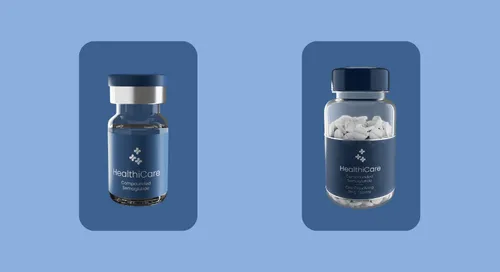


Both cost $147.90/mo at HealthiCare. Here is the clinical difference between personalized semaglutide injectable and oral drops - and which fits your life.
HealthiCare Clinical & Editorial Team
You already know GLP-1 medications work. What you probably haven't figured out yet is whether the injectable or oral form is the better fit for your body and your daily life. That's a more specific question - and it has a more specific answer than most comparison guides give you.
At HealthiCare, personalized semaglutide injectable runs $147.90 per month on the 3-month plan, or $174.00 month-to-month. Oral semaglutide drops start at $149.99 for the first month. Both include your physician consultation, preparation, shipping, and platform access - no membership fee, cancel anytime. The pricing is different between the two forms, but both are a fraction of what brand-name options cost without insurance.
This guide explains how each form actually gets into your bloodstream, what that means for results, and which patients tend to do better on each. HealthiCare's board-certified physicians via Beluga Health review every intake and can walk through the choice with you before you start.
The active compound is the same either way. Semaglutide mimics a hormone your gut produces after eating - it tells your brain you're full, slows how quickly your stomach empties, and improves how your body manages blood sugar. Injectable or oral, the mechanism doesn't change. What changes is how reliably the medication gets from the product into your bloodstream.
Subcutaneous injection bypasses your digestive system entirely. The medication absorbs directly from the tissue just under your skin into your circulation. Bioavailability - the percentage of the dose that actually reaches your bloodstream - is high and stays consistent week to week because nothing is breaking it down on the way in.
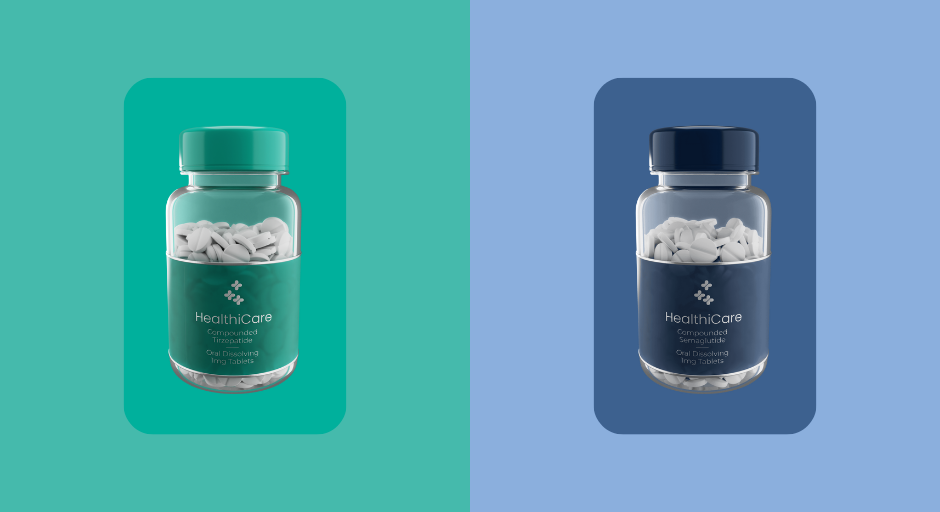
Oral semaglutide faces a harder path. Stomach acid, digestive enzymes, and whatever food is in your gut all degrade peptide molecules before they reach the small intestine. To get any meaningful absorption, oral formulations need an absorption enhancer. The brand-name pill Rybelsus - which is FDA-approved for type 2 diabetes - uses a compound called SNAC that temporarily neutralizes local stomach acid to allow absorption. HealthiCare's personalized oral semaglutide is a liquid drop formulation, not a pill. The liquid format reduces some of the degradation a solid tablet faces, which is part of the distinction between the two.
A real-world comparison study published in PMC found injectable semaglutide consistently delivered stronger bioavailability - meaning more active drug in circulation at equivalent doses. Oral formulations compensate by using higher doses. That's why the dosing numbers look so different between the two forms even though the drug itself is the same.
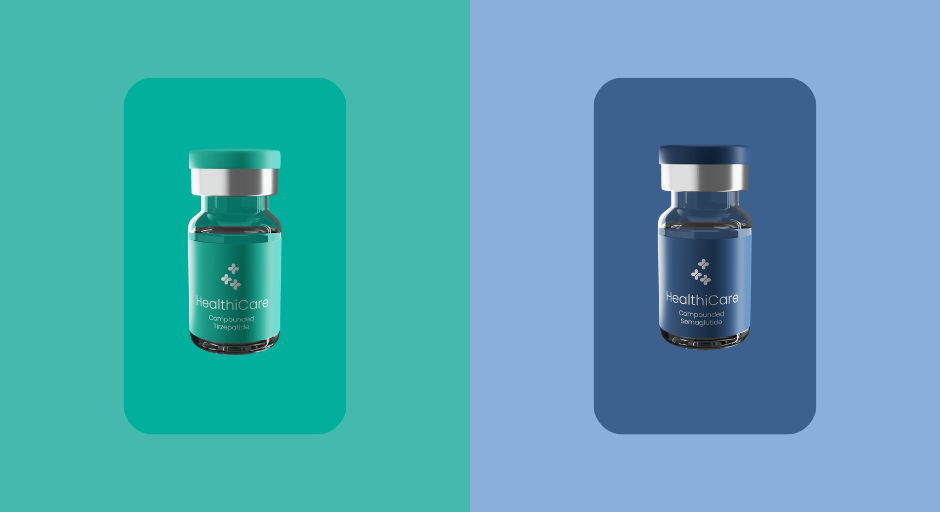
HealthiCare's personalized semaglutide injectable is prepared by F&F Pharmacies Inc., a US-based, FDA-registered compounding pharmacy. The medication is a subcutaneous injection - once per week, just under the skin of the abdomen, thigh, or upper arm. Dosing starts low and titrates upward over several weeks. That gradual increase is what keeps side effects manageable early on.
Worth being direct about something: personalized semaglutide is not Ozempic and it's not Wegovy. Both of those are brand-name semaglutide manufactured at scale by Novo Nordisk. Personalized semaglutide uses the same active ingredient, prepared by a licensed compounding pharmacy rather than a pharmaceutical manufacturer. HealthiCare works exclusively with US-based, FDA-registered partners. The medication is not sourced overseas, and it's not gray-market.
The injectable has the longer track record - HealthiCare has written 15,000+ GLP-1 prescriptions, and the injectable form is the most common starting point. Weekly dosing, predictable absorption, and a well-documented safety history are the main reasons most patients and physicians default to it.
The needle question comes up a lot. Injectable semaglutide uses a small subcutaneous needle - the kind that goes just beneath the skin surface, not into muscle. Most patients who were anxious about it describe the actual injection as much less of an event than they expected. HealthiCare includes instructional materials, and your physician is reachable through the platform if questions come up after you start.
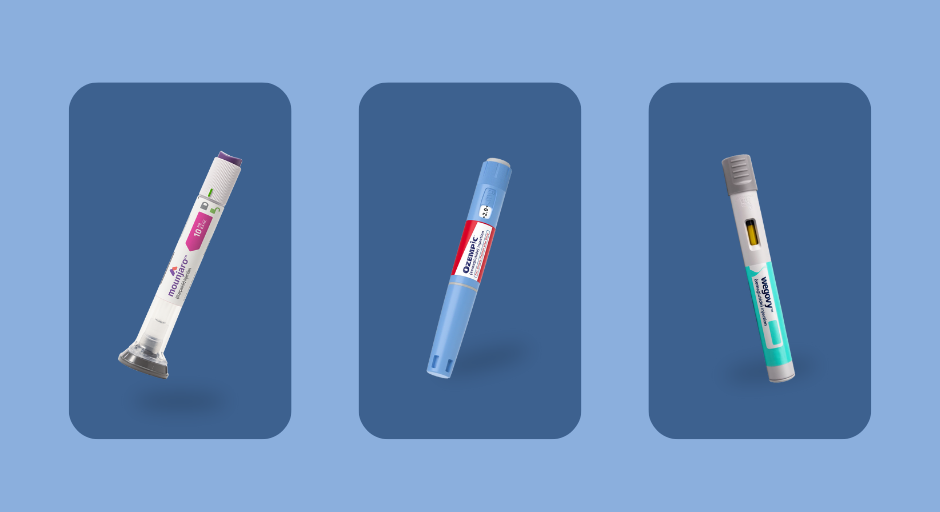
HealthiCare offers two oral semaglutide formats: drops and pills. Both deliver the same active medication and follow the same treatment protocol. The drops are a liquid formulation - already broken down before they reach your stomach, which reduces some of the degradation a solid tablet faces on the way to the small intestine. The pills dissolve in the stomach and rely on an absorption enhancer to get through the acid environment. Either way, the empty-stomach requirement applies to both, and the daily dosing schedule is the same.
The morning routine is where oral semaglutide demands more from you than the injectable does. To get proper absorption:
Travel, early calls, an irregular breakfast schedule - any of these can throw off the morning routine. If your mornings are unpredictable, the injectable is genuinely easier to manage. Once-weekly, no food restrictions, no timing window. The compliance burden is lower.
For patients with needle aversion, though, the oral form is a real clinical option. Does oral semaglutide work? Yes. The OASIS trial published in the New England Journal of Medicine in 2023 showed oral semaglutide at 50mg produced an average weight reduction of 15.1% over 68 weeks compared to placebo. Outcomes at one year can be comparable to the injectable when the daily protocol is followed consistently - the variable is adherence, not the drug itself.
Injectable semaglutide tends to win in a few specific situations. The clearest one is schedule unpredictability. If your mornings vary - travel, early meetings, rotating shifts - the weekly injection removes the daily timing problem entirely. No empty stomach required, no 30-minute window to protect.
Weight loss potential is the second consideration. Higher bioavailability means more active drug reaching the receptors that control appetite. For patients with larger weight loss goals, or for those who tried oral GLP-1 medication before and didn't respond as expected, the injectable form gives the prescribing physician more room to adjust the dose and see a cleaner clinical signal.
Switching from another provider is a third case where the injectable makes the most sense. If you're already on personalized semaglutide injectable through Hims, Ro, or Found and you're switching to HealthiCare's $147.90/month model, continuing on the same form is the most direct transition. Your HealthiCare physician can review your current dose during intake and carry the protocol forward.
Some patients just want the form with the longest safety record behind it. That's the injectable. The data depth on weekly subcutaneous semaglutide spans more patients over more years than any oral formulation. If that matters to your decision, the injectable wins on that count.
Needle aversion is the most straightforward reason to choose the oral drops. Not a mild preference - an actual anxiety around weekly self-injection that would make the injectable hard to maintain. Adherence is the most predictive variable in weight loss outcomes, and a medication that patients reliably take every day outperforms one they dread every week.
Travel patterns can also tip the balance. The injectable requires refrigeration. Oral drops are room temperature stable, which makes them significantly easier to manage on the road - no hunting for a mini-fridge, no stress about TSA, no risk of a dose going bad in a warm hotel room.
First-time GLP-1 patients sometimes prefer starting on oral before committing to injections. That's a reasonable starting position - the physician can always transition you if results are slower than expected or if you change your mind about the needle question after you've had time to consider it.
The cost difference you'd expect at most providers doesn't apply here. HealthiCare charges $147.90/month for both. That price holds at every dose. At most telehealth competitors - Hims, Ro, Found - pricing climbs as the dose increases, and the oral vs injectable split often comes with its own cost gap. None of that is true at HealthiCare. The choice is strictly about which form fits your life and gets you the result.
Most people assume oral GLP-1 should be the cheaper option. In most drug categories, pills cost less than injectables. With semaglutide it works the opposite way. Oral formulations need higher doses to produce the same blood levels the injectable achieves at lower doses - and higher doses mean higher manufacturing costs. Brand-name Rybelsus (oral semaglutide for diabetes) runs $800-$1,200 per month without insurance depending on dose and pharmacy. Brand-name Wegovy oral pill, approved by the FDA in December 2025 for weight loss, is similarly priced.
HealthiCare's personalized semaglutide injectable costs $147.90/month on the 3-month plan - the same price at every dose, from the starting titration through maintenance. Oral semaglutide drops and pills start at $149.99 for the first month. Neither form escalates in price as your dose increases, which is the core difference from competitors like Hims, Ro, and Found where monthly costs climb with every dose step.
Each plan covers the medication, physician consultation through Beluga Health's board-certified network across all 50 states, preparation at F&F Pharmacies Inc., shipping, and platform access. No membership fee on top. Cancel anytime. The full itemized breakdown is published on the HealthiCare website - not buried in an FAQ or hidden behind an intake form.
If you're currently paying $300-$600/month for the same active medication somewhere else, the comparison is straightforward. With 15,000+ GLP-1 prescriptions written through the platform, HealthiCare's pricing structure isn't an introductory offer - it's the model.
You can review your options and start the intake process at HealthiCare's weight loss treatment page. Injectable details are on the personalized semaglutide page, and the oral drops are covered on the oral semaglutide page.
If you haven't decided whether GLP-1 therapy is the right move yet, the oral GLP-1 eligibility guide is the better starting point. And for a full breakdown of what you're actually paying for across providers, the GLP-1 cost breakdown lays it out clearly.
Clinical research says yes - oral semaglutide produces meaningful weight loss. The OASIS trial published in the NEJM showed 15.1% average weight reduction at 68 weeks. Injectable semaglutide typically delivers higher bioavailability, meaning more active drug in your bloodstream per dose, which often translates to stronger appetite suppression. For patients who stick to the daily fasting protocol, one-year outcomes can be comparable. Where adherence slips, the injectable tends to outperform because its weekly absorption is less dependent on the patient's morning routine.
Oral drops are a liquid formulation. A solid pill has to dissolve before any absorption can begin, and the dissolution process happens in an acidic stomach environment that degrades peptide molecules. A liquid is already broken down - it contacts the absorption surface faster and with less degradation in the process. That said, drops still require an empty stomach and the same 30-minute morning wait. The delivery format improves absorption efficiency; it doesn't eliminate the fasting requirement.
At HealthiCare, oral semaglutide drops and pills start at $149.99 for the first month. The injectable runs $147.90/month on the 3-month plan, or $174.00/month billed monthly. Brand-name Rybelsus runs $800-$1,200/month without insurance. Brand-name oral Wegovy (approved December 2025) is similarly priced. HealthiCare's cost is lower because the medication is prepared at F&F Pharmacies Inc., a US-based, FDA-registered compounding pharmacy - not sourced from overseas or gray-market suppliers.
Yes, and it matters more than people expect. Oral GLP-1 medications need an empty stomach to absorb properly. Take your drops first thing in the morning, before eating or drinking anything except a small amount of water, then wait at least 30 minutes before food, other medications, or anything to drink. Skipping this step doesn't just reduce comfort - it significantly cuts how much medication actually enters your bloodstream, which directly reduces results.
Yes. Starting on one form doesn't lock you in. Plenty of patients begin on injectable and later switch to oral drops, or start with oral and move to the injectable when their life circumstances change. Your HealthiCare physician handles the transition during a follow-up consultation - there's no restart fee, no waiting period, and no clinical penalty for switching. It's a decision made with your provider based on how your treatment is going.
Both forms cause the same types of side effects: nausea, bloating, and GI discomfort are most common, particularly in the first few weeks as your dose increases. Some studies note oral semaglutide triggers slightly higher early GI rates - the absorption enhancer itself can be hard on the stomach in some patients. Gradual dose titration reduces this for both forms, and most patients find the side effects significantly improve after the first month or two. The key is not going up in dose too quickly.
September 24, 2026














.avif)