Weight Loss

All Treatments
Resources


All Treatments
Weight Loss Treatments
Tirzepatide
Semaglutide
Wegovy Pill
Resources
Healthi App
Blog
Member Meetings
Recipes
Podcast
Patient Sign in



Eating out on a GLP-1 is doable. Why restaurant meals feel different, what tends to sit well, handling the social side, and when to call your provider.
Holiday party season is about to fill up the calendar with office dinners, birthday brunches, and "let's finally get together" reservations. If you started a GLP-1 this year, restaurant season can feel like a whole new puzzle, because the version of you that used to order an appetizer, an entrée, and dessert without a second thought now gets full after a handful of bites.
Eating out on a GLP-1 is absolutely doable. These medications slow down how quickly your stomach empties, so very large, rich, or greasy restaurant meals are the ones most likely to leave you uncomfortable, while smaller portions, a protein-forward order, a slower pace, and a plan for leftovers tend to make the night a lot more enjoyable.
If you're with HealthiCare, your care team can help you think through what's been sitting well for you so far.

Restaurants are built for appetites that GLP-1s quietly turn down. Portions are generous, sauces are rich, bread arrives before you've opened the menu, and the whole experience is designed to keep food coming. That used to feel like a treat. Now it can feel like a lot.
Part of the reason is that the medication keeps food in your stomach longer; the Wegovy label notes that it delays gastric emptying. That's a big part of why you feel full sooner, and it's also why a heavy meal can linger in a way it didn't before. Stomach side effects are common on these medications, too. In the Zepbound weight-loss trials, for example, nausea was reported by 29% of adults on the 10 mg dose versus 8% on placebo, and indigestion by 9% versus 4% (Zepbound prescribing information).
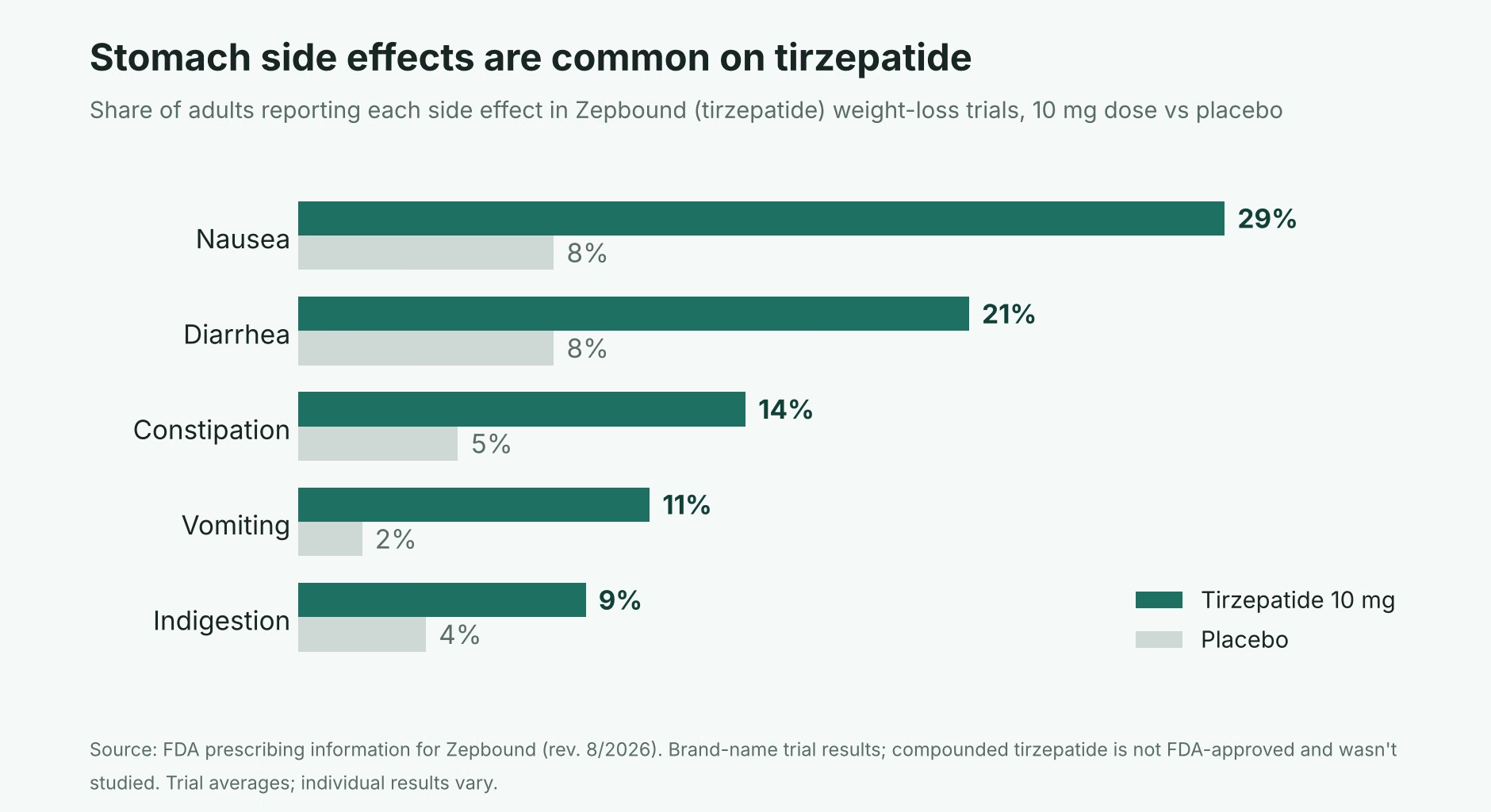
Those numbers come from trials of brand-name, FDA-approved medications. Personalized (compounded) semaglutide and tirzepatide are not FDA-approved and weren't studied in those trials, but many people on any GLP-1 find that big, rich meals are where they feel these effects most.
Eating out isn't a rare event, either. In CDC survey data, about 37% of US adults ate fast food on a given day, and that's before counting sit-down restaurants (CDC). So learning how restaurants fit your new normal isn't a side quest. It's part of real life.
A lot of people are surprised by how emotional this part can be. You order something you've been looking forward to all week, take five bites, and you're done. Maybe you feel a little sad about it. Maybe you feel guilty about the money, or awkward when the server asks if everything was okay because your plate looks barely touched.
All of that is normal. For many people, food has been tied up with celebration, comfort, and connection for decades, and a medication that changes your appetite doesn't automatically change those meanings. It can help to remember why you're at the table in the first place. Is it really about the food, or is it about the people, the laughter, the break from the week? For a lot of us, it's mostly the second one, and that part doesn't shrink at all.
Here's a question worth asking yourself before your next dinner out: what would make this meal feel good tomorrow morning, not just tonight?
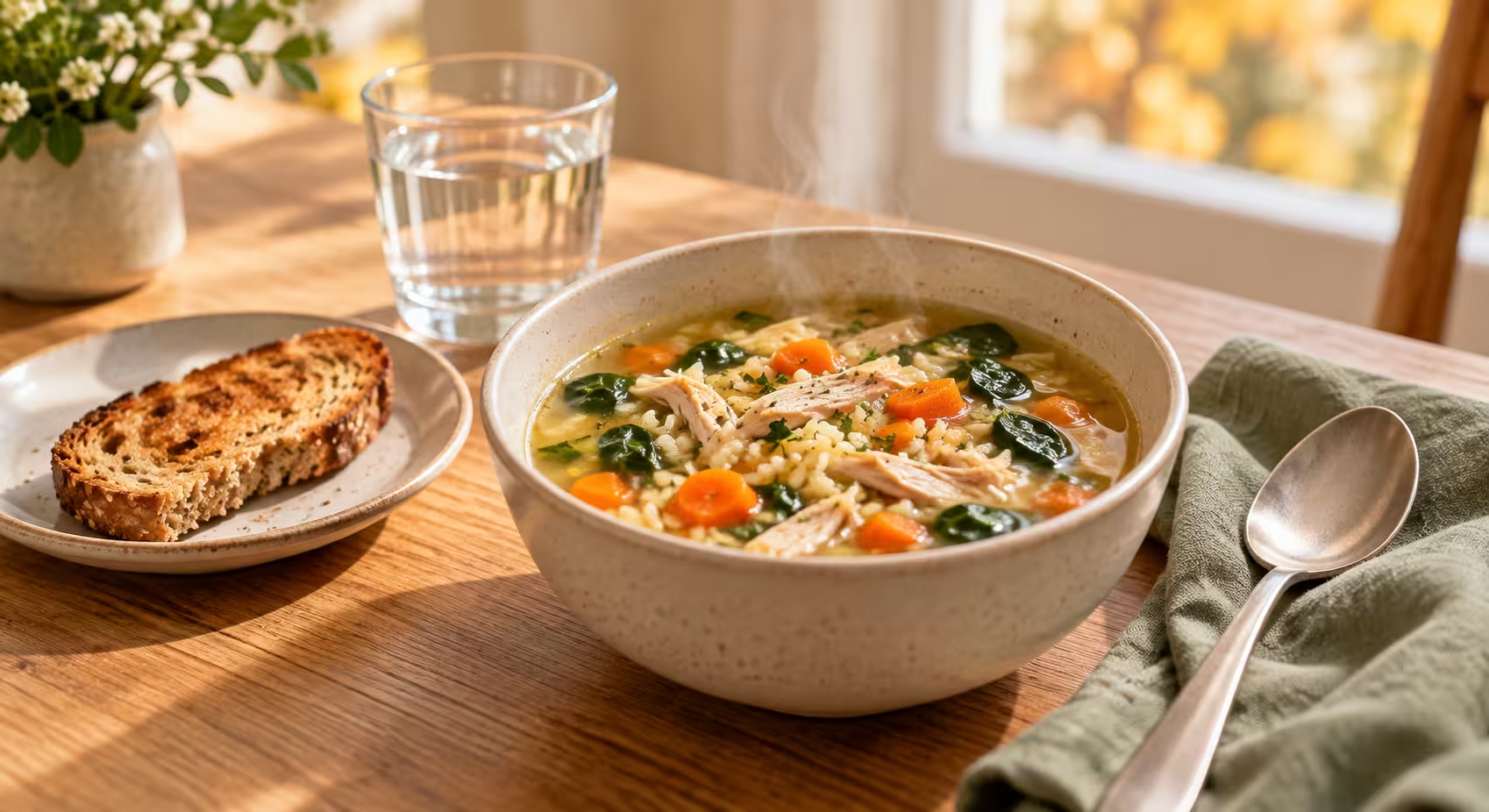
There's no official restaurant menu for GLP-1s, and everyone's stomach is a little different. Still, some patterns come up again and again when people compare notes. Dishes that often sit well include:
On the other side, very fried, creamy, or greasy dishes, and very large portions eaten quickly, are the ones people most often say they regret later. That doesn't mean they're off the table forever. It just means a few bites might be plenty, and that's okay.
Starting with protein can be a nice strategy too, since it's easy to get full before you've had enough of it. Our guide on getting enough protein on a GLP-1 explains why it matters. And if drinks are part of the evening, it's worth reading what to know about GLP-1s and alcohol before you order.

Sometimes the trickiest part of eating out isn't the food. It's the commentary. A friend notices your half-full plate. A relative insists you try the dessert. A coworker asks why you're "only having soup."
You don't owe anyone a medical explanation. Some people are comfortable sharing that they're on a GLP-1, and others prefer to keep it private. Either way, a few simple, friendly lines can do a lot of work: "I'm saving room for later," "I had a big lunch," or just "I'm good, but this is delicious." Most people move on within seconds. They're usually more focused on their own plate than yours.
Sharing can be a lovely middle ground too. Splitting an entrée or a dessert lets you join in without overdoing it, and it often turns into the kind of easy, together moment that makes eating out fun in the first place. Our GLP-1 holiday eating guide has more ideas for gatherings where the food just keeps coming.
One of the simplest mindset shifts is deciding, before you even order, that a to-go box is part of the plan. Some people ask for half the meal boxed up right away so the decision is already made. Others order something they know will be just as good tomorrow.
This takes a surprising amount of pressure off. You get to enjoy the meal, stop when you're satisfied, and look forward to round two at lunch the next day. Restaurant portions often stretch into two or even three meals now, which is a pretty good deal.
Slowing down helps here too. Putting your fork down between bites and leaning into conversation gives fullness a chance to register before you've gone past comfortable. If you'd like to read more on that, our sister blog has a thoughtful piece on eating out without "starting over" tomorrow.
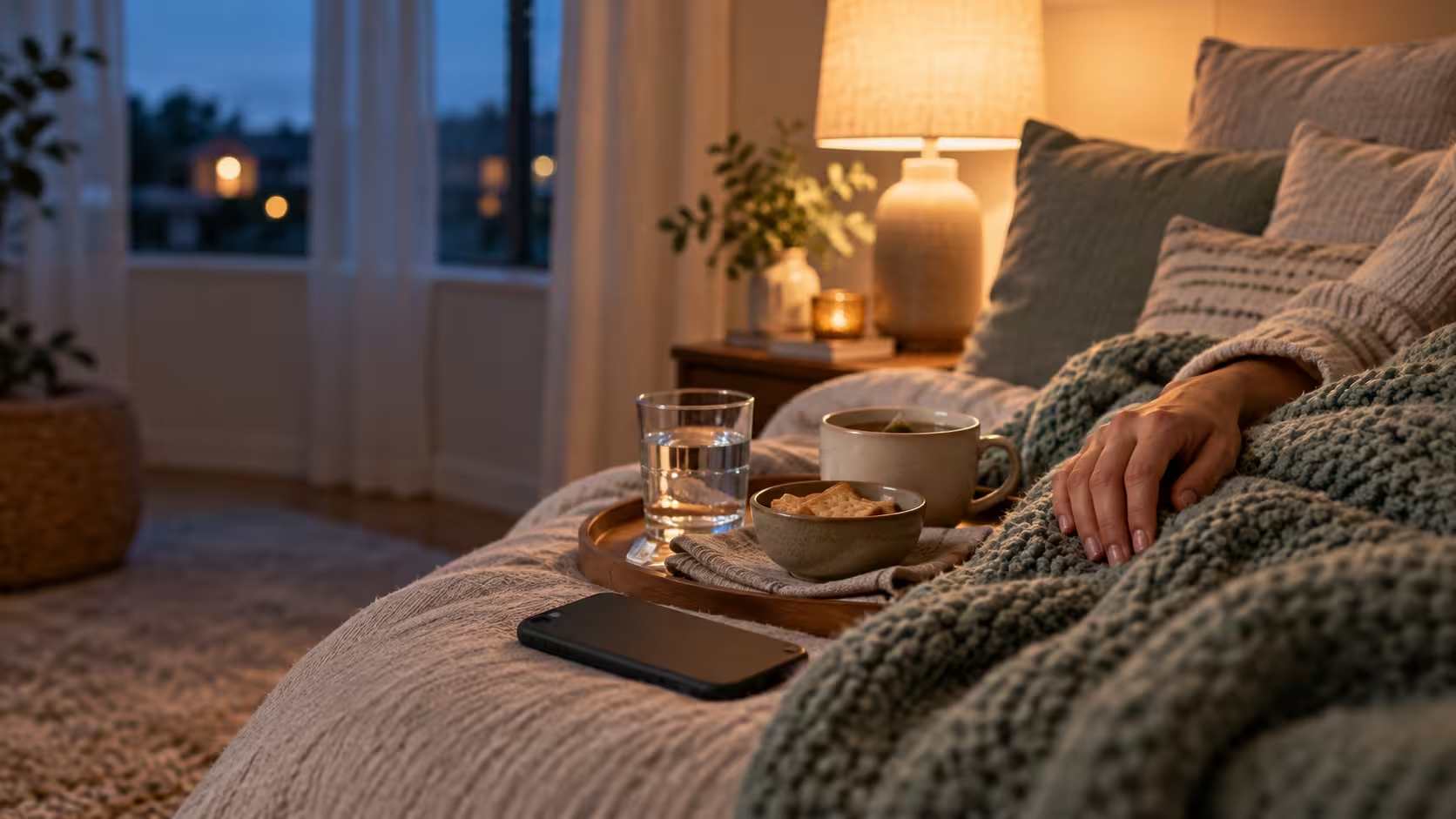
Feeling overly full or a bit queasy after a big meal is common and usually passes. But some symptoms deserve a call to your provider or prompt medical care. The Wegovy label describes persistent or severe abdominal pain, sometimes radiating to the back and with or without nausea or vomiting, as a possible sign of pancreatitis. If that happens, get medical care right away. Also get help if you have vomiting that won't stop, can't keep fluids down, or notice signs of dehydration like very little urine, dizziness, or confusion.
And if you find yourself wondering whether to skip or change a dose so you can enjoy a big upcoming dinner, please talk with your prescriber first rather than adjusting on your own. If nausea is a regular visitor after meals, our guide to managing nausea and fullness on GLP-1 has more ideas.
Starting a GLP-1 doesn't mean giving up restaurants, celebrations, or that little thrill of trying a new place. It just means the night might look a bit different: a smaller plate, a shared dessert, a to-go box, and a lot more attention on the people across the table. Plenty of people find they enjoy eating out more this way, not less.
If you'd like a hand planning for the busy season ahead, HealthiCare's care team is here to help you think it through. And if you're curious whether a GLP-1 program is right for you, you can start an online visit anytime. Now go book that reservation.
This article is for general information and isn't a substitute for medical advice. Compounded (personalized) semaglutide and tirzepatide are not FDA-approved. Never start, stop, or change a medication dose without talking to your prescriber, and seek medical care right away for the warning signs above.
Yes. Many people enjoy restaurants on a GLP-1 by ordering smaller portions, choosing protein-forward dishes, eating slowly, and planning to take leftovers home. Very large, greasy, or rich meals are the ones most likely to leave you uncomfortable.
Dishes that often sit well include grilled or roasted proteins, broth-based soups, roasted vegetables, and appetizer-sized or half portions. Asking for sauce on the side gives you more control. Everyone's stomach is different, so notice what works for you.
These medications slow how quickly your stomach empties, so a big or rich meal can sit with you longer than it used to. Nausea and indigestion are common side effects in the trials. Smaller portions and a slower pace help many people.
Please don't change or skip a dose on your own. If you're worried about an upcoming event, talk with your prescriber, who can help you plan based on your medication and how you've been feeling.
Get medical care right away for persistent or severe abdominal pain, especially if it spreads to your back, vomiting that won't stop, or not being able to keep fluids down. Signs of dehydration, like very little urine, dizziness, or confusion, also need attention.
October 27, 2026