Weight Loss

All Treatments
Resources


All Treatments
Weight Loss Treatments
Tirzepatide
Semaglutide
Wegovy Pill
Resources
Healthi App
Blog
Member Meetings
Recipes
Podcast
Patient Sign in



Sick on a GLP-1? When a cold changes nothing, when vomiting means calling your prescriber, missed-dose rules by medication, and the warning signs to watch.
It's Thursday night. You've got a fever, you've eaten half a sleeve of crackers all day, and tomorrow is your dose day. You're lying there wondering whether taking your shot is the responsible thing to do or the thing that makes a bad weekend worse.
Here's the clearest way to think about being sick on a GLP-1: a regular cold usually doesn't change your medication plan, but vomiting, diarrhea, or not being able to keep fluids down does change the picture, because the biggest risk when you're ill on these medications is dehydration. Don't skip, delay, or adjust a dose on your own. A quick message to your prescriber is the right move, and it's exactly what they're there for. If you're with HealthiCare, your care team can help you think through your specific situation and your specific medication.
Now let's talk about why this question comes up so often, what the labels actually say, and how to take care of yourself until you're back to normal.
If you've been on semaglutide or tirzepatide for a while, you already know these medications can make your stomach a little opinionated. Nausea, vomiting, diarrhea, and constipation are the most common side effects in the trials. In the Wegovy label, for example, nausea was reported by 44% of adults on the 2.4 mg dose versus 16% on placebo, and vomiting by 24% versus 6%, per the Wegovy prescribing information. The Zepbound label shows the same pattern at lower rates, with nausea in 25% to 29% of people depending on dose, per the Zepbound prescribing information.
Now layer a stomach virus or a flu on top of that. You're already eating less, maybe sweating through a fever, and if you're vomiting or have diarrhea, you're losing fluid faster than you're taking it in. That's the part that matters most.
Both labels carry a warning about this. Cases of acute kidney injury have been reported in people on these medications, and most of those cases involved GI side effects such as nausea, vomiting, or diarrhea that led to dehydration, according to the Wegovy label and the Zepbound label. The labels ask prescribers to keep an eye on kidney function in anyone reporting reactions that could cause fluid loss. In plain English: the medication itself isn't the danger when you're sick. Getting dehydrated is. Which is why "keep sipping" is going to come up a lot in this article.
This deserves a direct answer, so here it is in two parts.
If you have a head cold, a sore throat, or a mild bug with no vomiting or diarrhea, and you're eating and drinking close to normally, there's nothing in the labels that says to pause for that. Many people take their regular dose and rest. That said, if you're unsure, asking your prescriber is never the wrong call.
If you're vomiting, having diarrhea, can't keep fluids down, or you feel significantly weaker and dizzier than a normal cold would explain, contact your prescriber before your next dose. They may tell you to take it as scheduled, to wait until you're keeping fluids down, or to come in (or to check with your in person physician). That decision depends on your medication, your dose, how long you've been on it, and how sick you are, and it isn't one to make from the couch with a search bar. The one thing you shouldn't do is quietly change your dose yourself.
If you do end up missing a dose because you were sick, the labels spell out what happens next, and it's different for each medication:
Those rules are a helpful map. Your prescriber is still the one who confirms the route.

When you're sick and nauseated, the instinct is often to stop drinking because everything feels like too much. That's the moment to flip it around. For the first day or two of a bug, fluid is the priority, and food can wait until your stomach settles.
What that looks like for most people is small, frequent sips rather than big glasses. Water, of course, but also broth, which gives you salt along with fluid. Diluted juice, herbal tea, ice chips, popsicles, and electrolyte drinks all count. If plain water tastes terrible right now (very common), something with a little flavor is better than nothing. We have more ideas in What to Drink on GLP-1 Besides Water, and yes, they work in October too.
A simple check that a lot of people find reassuring: are you urinating roughly as often as usual, and is it pale rather than dark? If the answer is no, or if you're not urinating much at all, that's a signal to call, not to wait.
One of the quieter challenges of being ill on a GLP-1 is that your appetite was already turned down. Now it's basically off. A lot of people go a full day on a few crackers without really noticing, and then feel shaky and awful by evening.
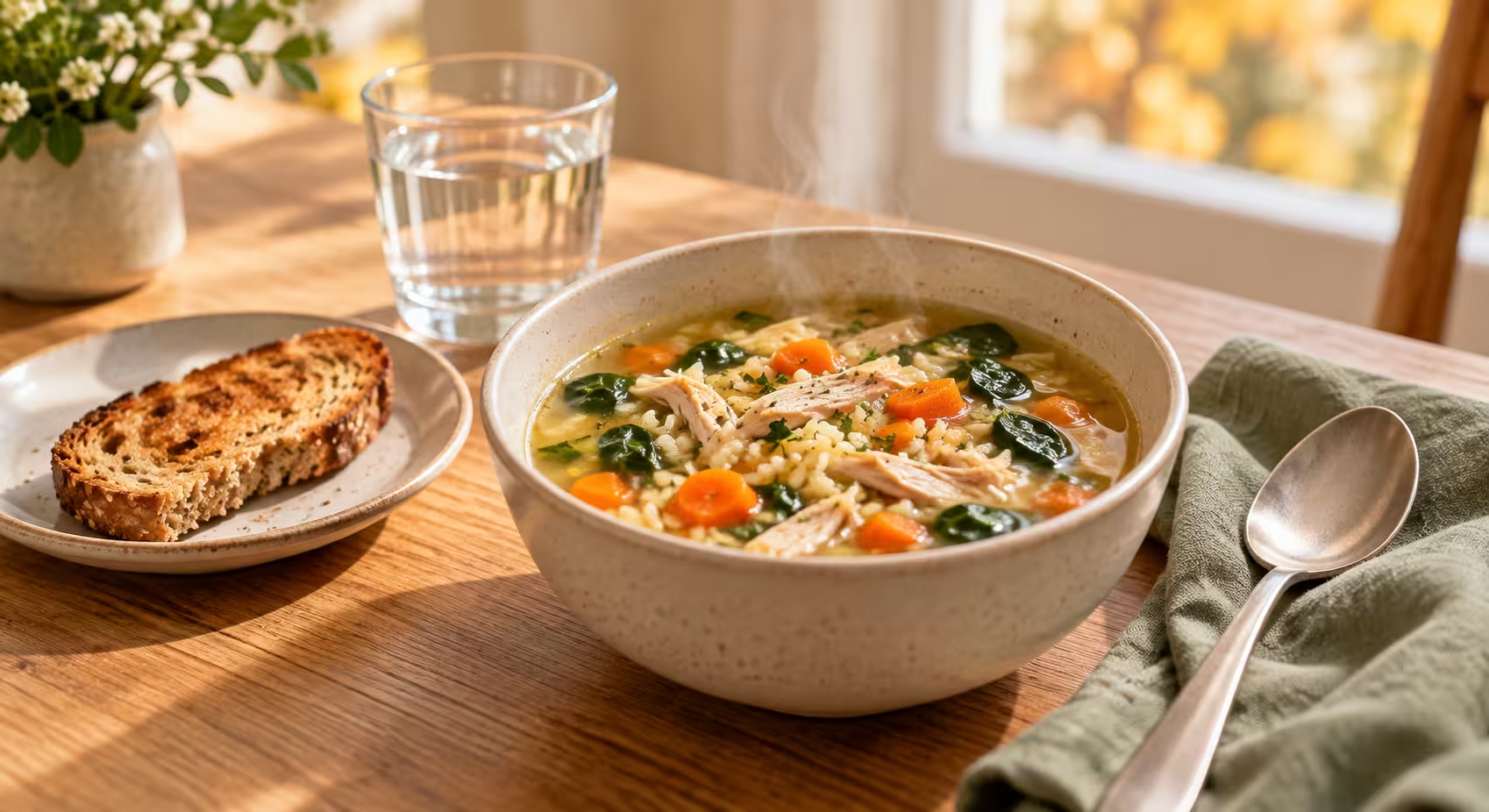
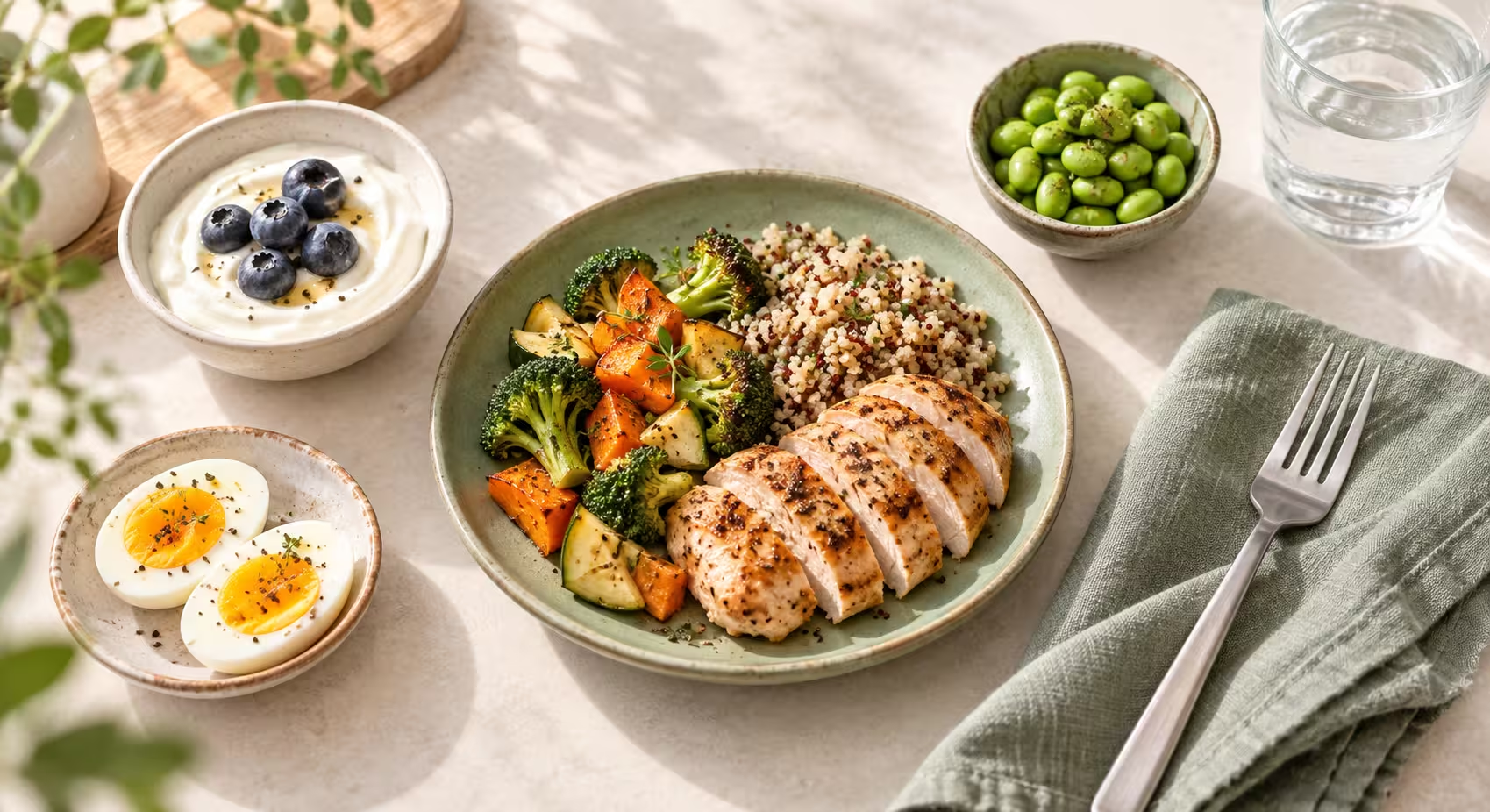
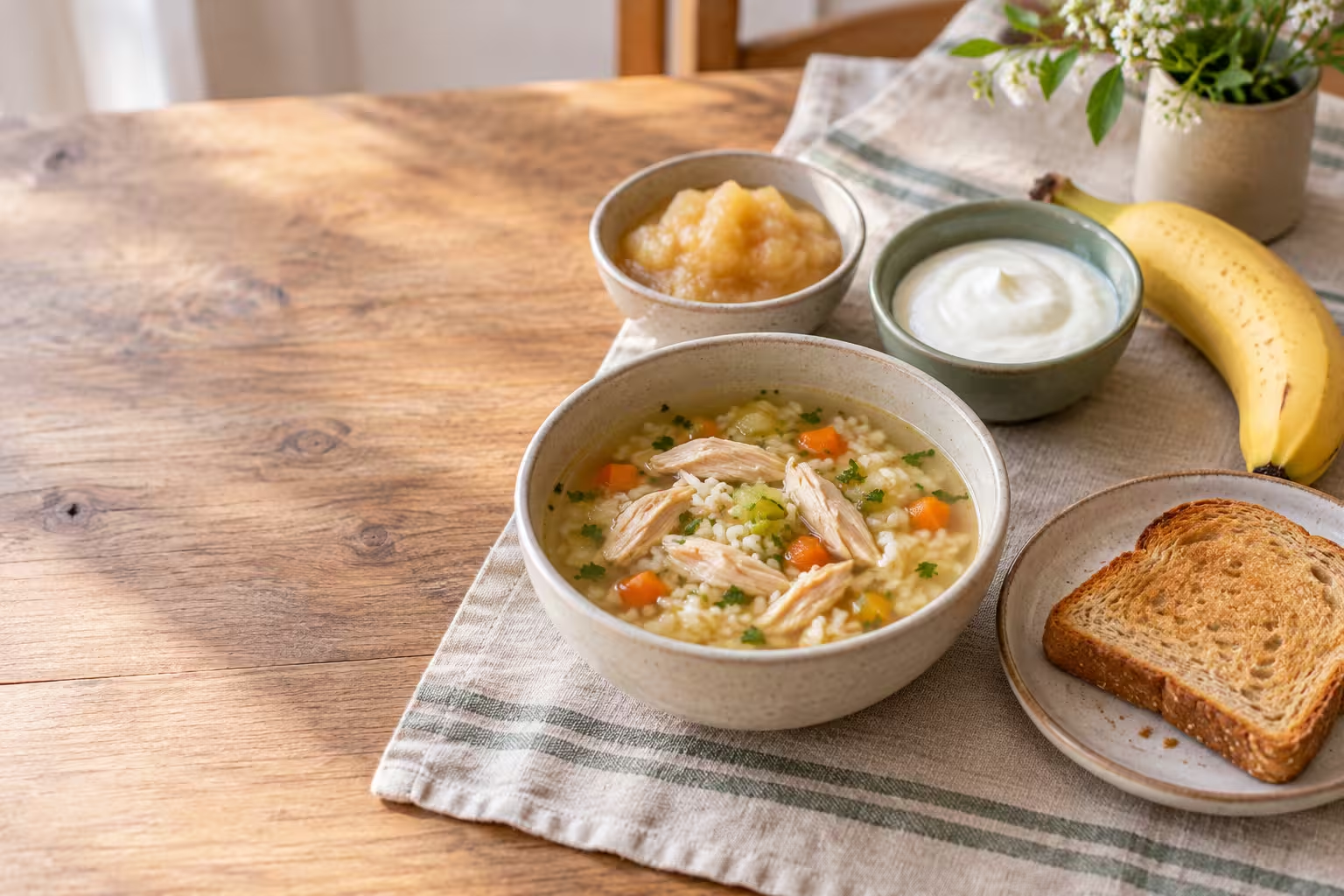
Bland, soft, easy foods are your friends here. Toast, rice, bananas, applesauce, plain crackers, oatmeal, yogurt, and brothy soups tend to sit well. Smaller portions, more often, are usually easier on a queasy stomach than a real meal. We cover this gently in Managing Nausea and Fullness on GLP-1 Medications and Not Hungry on a GLP-1? How to Make Your Meals Count. Once the worst passes, protein helps you feel like a person again, even if it's just an egg or a cup of Greek yogurt.
And please don't treat a sick week as a bonus weight loss week. Whatever the scale does during a stomach bug is mostly fluid, and your body needs that fluid back.
People often ask whether it's okay to take over-the-counter cold and flu medicine while on a GLP-1. Your pharmacist is the best person to answer that for your specific products, and they're usually happy to. It's a two-minute conversation at the counter.
There's one timing detail worth knowing if you take the Wegovy pill. The label says to take it in the morning on an empty stomach with no more than 4 ounces of plain water, and to wait at least 30 minutes before eating, drinking anything else, or taking other oral medications, per the Wegovy prescribing information. So on a sick morning, the pill still goes first, and the cough syrup, tea, and crackers wait their half hour.
And since it's the season: the CDC recommends an annual flu vaccine for essentially everyone six months and older, and says September and October are the ideal window for most people, with vaccination still worthwhile as long as flu is circulating, according to its 2026-2027 influenza vaccine guidance. If you have questions about timing it around your dose day, your care team can help, but there's no reason a GLP-1 should keep you from protecting yourself this season. Fewer sick weeks means fewer of these Thursday-night dilemmas. For some gentle everyday ideas on staying well this fall, our sister blog has Immunity Boosting for Fall.
Most colds and stomach bugs pass on their own with rest and fluids, even on a GLP-1. But some things need medical attention promptly, and we'd rather say them plainly:
If any of those are happening, please get care now. You can sort out your dose schedule later.
Being sick is miserable enough without a side of "am I doing this wrong." You're not. The plan is sips, rest, soft food, and a quick check-in with the person who prescribed your medication. That's it.
Once you're eating and drinking normally again, the goal is simply to return to your routine, not to make up for lost time. If a dose was delayed or missed, your prescriber will tell you whether to pick up where you left off or step back down for a bit. Give your appetite and energy a few days to find their footing, and keep the fluids coming through that first dose back.
If you'd like a hand with any of this, HealthiCare's care team can talk through your symptoms, your dose, and your next steps, and you can reach them without getting off the couch. If you're not with us yet and are curious whether a GLP-1 program is right for you, you can start an online visit whenever you're feeling up to it. For now, go drink something. We'll be here.
This article is for general information and isn't a substitute for medical advice. Compounded (personalized) semaglutide and tirzepatide are not FDA-approved. Never start, stop, or change a medication dose without talking to your prescriber, and seek medical care right away for the warning signs above.
A regular cold with no vomiting or diarrhea usually doesn't change your schedule, and nothing in the FDA labels says to pause for one. If you're unsure, or you feel much worse than a cold should make you feel, message your prescriber before your dose.
Don't decide that on your own. Vomiting and diarrhea raise your risk of dehydration, which is the main concern on these medications, so contact your prescriber before your next dose. They may have you take it as scheduled, wait until you're keeping fluids down, or come in to be seen.
It depends on your medication. For Wegovy injections, take the missed dose if your next one is more than 2 days away; otherwise skip it. For Zepbound, take it within 4 days (96 hours); after that, skip it. For the Wegovy pill, skip it and take the next dose the following day. For personalized (compounded) semaglutide or tirzepatide, follow your prescriber's instructions.
Yes. The CDC recommends an annual flu vaccine for essentially everyone 6 months and older, ideally in September or October. If you have questions about timing it around your dose day, your care team can help.
Small, frequent sips of water, broth, diluted juice, herbal tea, or an electrolyte drink. Pale urine at a normal frequency is a good sign you're keeping up. Dark urine, or not urinating much, means it's time to call your provider.
Right away for vomiting that won't stop or not being able to keep fluids down for more than a day, severe or persistent abdominal pain (especially if it radiates to your back), not urinating, confusion or persistent dizziness, trouble breathing, or chest pain or pressure.
October 14, 2026