Weight Loss

All Treatments
Resources


All Treatments
Weight Loss Treatments
Tirzepatide
Semaglutide
Wegovy Pill
Resources
Healthi App
Blog
Member Meetings
Recipes
Podcast
Patient Sign in
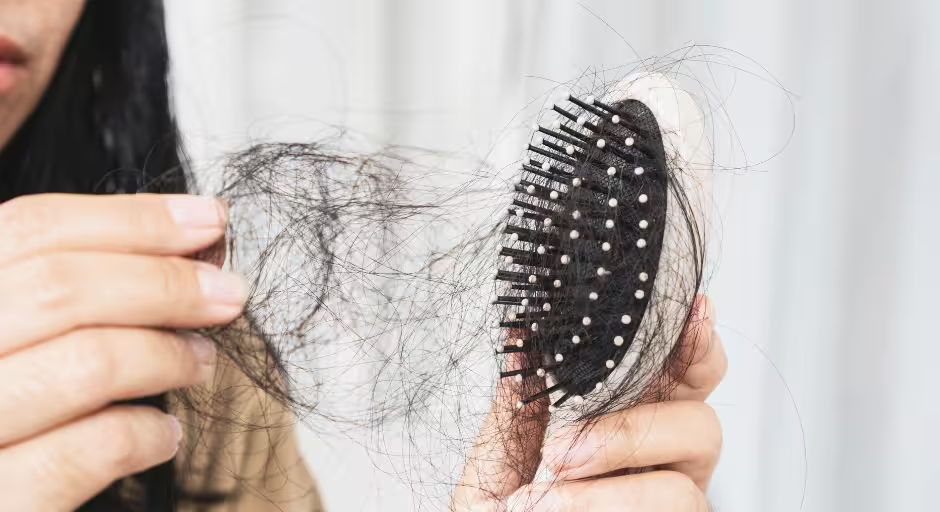


Hair loss on GLP-1 is usually temporary shedding from rapid weight loss. Why it shows up months after you start, when it regrows, and what actually helps.
You're a few months in on a GLP-1. The scale is finally cooperating, your jeans are looser, and then one morning you notice the shower drain. Or the hairbrush. Or the ponytail that feels thinner in your hand than it used to. And a very specific kind of worry sets in: is the medication doing this, and is it going to stop?
Here's the honest answer about GLP-1 hair loss: it's a real and recognized side effect, it's usually a temporary type of shedding called telogen effluvium that's triggered by rapid weight loss rather than by the medication attacking your hair, and for most people it slows down and regrows over several months. Hair loss was reported by about 3% of adults on Wegovy versus 1% on placebo in the clinical trials, and by 4% to 5% of people on Zepbound versus 1% on placebo, according to the Wegovy prescribing information and the Zepbound prescribing information. If you're with HealthiCare, this is something worth mentioning to your care team early, so they can help you look at nutrition, pacing, and whether anything else might be going on.
Let's walk through what's happening on your scalp, why it tends to show up when it does, and what actually helps while you wait it out.
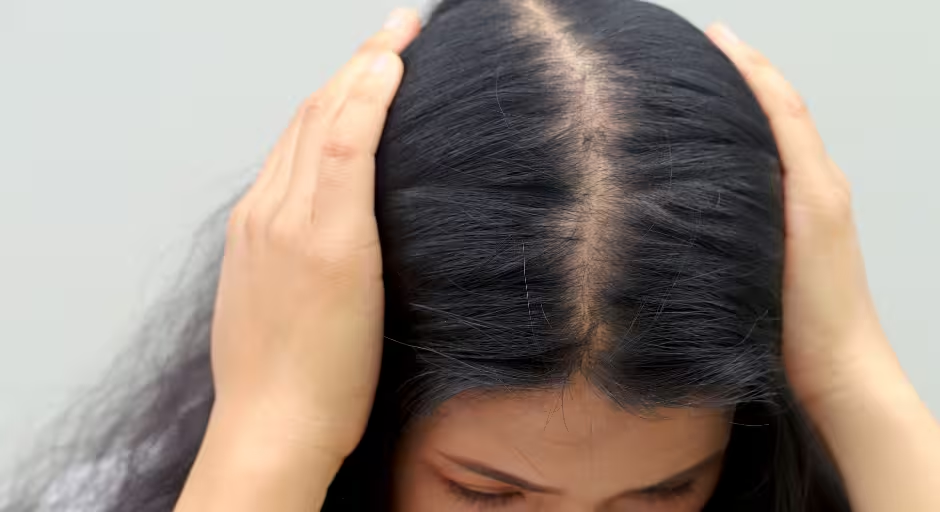
Hair grows in cycles. At any given moment, most of your hair is in a growing phase and a small share is resting, getting ready to shed and be replaced. The American Academy of Dermatology notes that shedding 50 to 100 hairs a day is completely normal, and that when something stressful happens to the body, a larger share of hairs shift into the resting phase at once, so a few months later they shed together. That's telogen effluvium. Among the triggers the AAD lists are childbirth, high fever, surgery, major stress, and losing 20 pounds or more, per the AAD's guide to hair shedding.
Losing a lot of weight quickly is, as far as your body is concerned, a significant event. It doesn't know you wanted this. It just notices that energy and nutrients are tighter than they were and reallocates away from things it considers optional. Hair, unfortunately, is on the optional list.
The AAD's take on GLP-1 medications specifically is that dermatologists believe the hair loss is driven by the sudden weight loss these drugs produce, possibly compounded by eating less of the protein, vitamins, and nutrients hair needs, and that researchers are still working out whether the medications have any direct effect on hair of their own, according to the AAD's page on GLP-1 drugs and hair. In other words, this is mostly a weight-loss story, not a medication story, and people who lose a lot of weight by any method, including surgery, run into the same thing.
Here's what catches people off guard. The shedding doesn't start when you start the medication. The AAD notes that most people notice excessive shedding a few months after the triggering event, per the same guide. So the hair you're seeing in the drain in month four was likely nudged into its resting phase back in month one or two, when the weight was coming off fastest.
That timing matters for two reasons. First, it means the shedding you see today reflects what happened a while ago, not what's happening now. Second, it means that by the time you notice it, the process is often already partway through. A lot of people find real relief in simply understanding that lag, because it reframes the drain from "it's getting worse" to "this is the delayed echo of the hardest stretch."
It's also worth knowing who tends to notice it more. In the Zepbound trials, hair loss was reported far more often by women than men (7.1% versus 0.5%), per the Zepbound label, and the Wegovy label shows the rate rising with dose, from 3% at 2.4 mg to 6% at the higher 7.2 mg dose, per the Wegovy label. Faster, larger weight loss seems to be the common thread.
For telogen effluvium, the AAD's answer is encouraging: as your body readjusts, the excessive shedding stops, and hair typically regains its usual fullness within roughly six to nine months, though shedding can last longer if the stressor continues, according to the AAD. In practical terms, that often means the shedding eases as your weight loss slows toward a steadier pace, and new growth (those little baby hairs along your hairline and part) starts to fill in over the following months.
What that doesn't mean is that every case of hair thinning on a GLP-1 is telogen effluvium. Other things can be happening at the same time, including hereditary pattern hair loss, thyroid changes, low iron, or hormonal shifts like perimenopause, and those don't resolve on their own. This is why the AAD recommends partnering with a dermatologist to diagnose the exact type of hair loss, especially if you were already prone to it, per the AAD. If the shedding is dramatic, patchy, comes with scalp pain or itching, or just isn't easing after several months, that's a good reason to be seen rather than to keep waiting.
There's no shampoo that fixes telogen effluvium, and anyone selling you one is selling you hope. But there are a few things that genuinely matter, and most of them are about giving your body the raw materials and the breathing room to recover.
Protein is the big one. Hair is made of it, and on a GLP-1 it's easy to under-eat without noticing. Getting a solid serving at each small meal, even when you're not hungry, is one of the most useful things you can do for your hair, your muscle, and your energy at the same time. We go deep on how to make that work with a small appetite in How to Get Enough Protein on GLP-1 and Why Protein Becomes a Priority on Semaglutide and Tirzepatide.
Overall nutrition matters too. When your total food is small, variety shrinks with it, and the AAD specifically mentions the risk of missing the vitamins and nutrients hair needs. A dermatologist quoted on the AAD page suggests a standard daily multivitamin as a reasonable backstop when you're eating less, per the AAD. Before adding high-dose "hair, skin, and nails" supplements, though, talk with your care team; some of those contain very large amounts of single nutrients, and more isn't better.
Pacing matters, and this one is a conversation, not a decision to make alone. The AAD notes that people prone to hair loss do better losing weight gradually on these medications. If you've been dropping weight very quickly and your hair is thinning, it's entirely reasonable to tell your prescriber. They may decide to hold your dose steady for a while rather than stepping up, or they may not, but it should be their call with your input, never a change you make yourself. We touch on how plans evolve in Why Your GLP-1 Routine May Need to Change Over Time.
And then there's the gentle stuff: looser hairstyles, less heat, a wide-tooth comb, not over-washing, and not staring at the drain every single morning. None of that regrows hair, but all of it stops you from making a temporary situation feel worse. If you're curious about everyday hair care and nutrients, Hair Health Starts at the Root is a good companion read.
Can we acknowledge how unfair this feels? You did the hard thing. You're healthier. And your reward is a thinner ponytail, right when you'd like to feel good in photos. It's a real loss, even if it's temporary, and it's okay to be upset about it. A lot of people also notice their skin changing at the same time, which we talk about in The Truth About Loose Skin After Weight Loss on GLP-1, and the emotional weight of those changes is worth naming.
What helps many people is zooming out to the timeline. The shedding is the echo of the fastest weight loss. It typically peaks, then eases, then the regrowth comes in. Six to nine months feels long in the moment and surprisingly short in hindsight. You will very likely look back on this stretch from a place where both the weight and the hair have settled.
If you're seeing more hair than usual on a GLP-1, you're not imagining it, you're not doing anything wrong, and in most cases it's a temporary phase your body moves through on its way to a new normal. Protein at every meal, a sensible multivitamin if your care team agrees, a conversation about pacing, and a dermatologist's eye if it's severe or lingering cover almost everything that's in your control.
If you'd like a hand thinking it through, HealthiCare's care team can look at your nutrition, your dose schedule, and your timeline together, and can point you toward the right next step, whether that's reassurance, a lab check, or a specialist. If you're not with us yet and are weighing whether a GLP-1 program is right for you, you can start an online visit whenever you're ready. Your hair is going to be okay. So are you.
This article is for general information and isn't a substitute for medical advice. Compounded (personalized) semaglutide and tirzepatide are not FDA-approved. Never start, stop, or change a medication dose without talking to your prescriber. See a dermatologist or your provider for hair loss that is sudden, patchy, painful, or persistent.
Hair loss is a listed side effect in both labels: about 3% of adults on Wegovy 2.4 mg versus 1% on placebo, and 4% to 5% on Zepbound versus 1% on placebo. Dermatologists believe it's mostly driven by rapid weight loss rather than by the medication acting directly on hair.
Most weight-loss hair shedding is telogen effluvium. A body stressor (like losing 20 pounds or more) shifts more hairs into the resting phase at once, and they shed together a few months later. The hair you see now usually reflects the fastest weight loss from a couple of months ago.
For telogen effluvium, yes for most people. The American Academy of Dermatology notes the excessive shedding stops as the body readjusts, with hair typically regaining its usual fullness in about six to nine months. Other causes of hair thinning, like hereditary pattern hair loss or thyroid issues, don't resolve on their own and need a diagnosis.
Focus on protein at every meal, overall nutrition, and a standard multivitamin if your care team agrees. Talk with your prescriber about pacing if weight is coming off very quickly, and see a dermatologist if shedding is severe, patchy, painful, or lasts more than several months. Don't change your dose on your own.
There's no supplement that fixes telogen effluvium. A standard multivitamin can be a reasonable backstop when you're eating less, but high-dose hair, skin, and nails products contain large amounts of single nutrients and aren't a substitute for enough protein and food. Ask your care team before adding them.
In the Zepbound trials, hair loss was reported by 7.1% of women versus 0.5% of men. The Wegovy label also shows the rate rising with dose. Faster, larger weight loss appears to be the common thread.
October 30, 2026