
Weight Loss

All Treatments
Resources


All Treatments
Weight Loss Treatments
Tirzepatide
Semaglutide
Wegovy Pill
Resources
Healthi App
Blog
Member Meetings
Recipes
Podcast
Patient Sign in
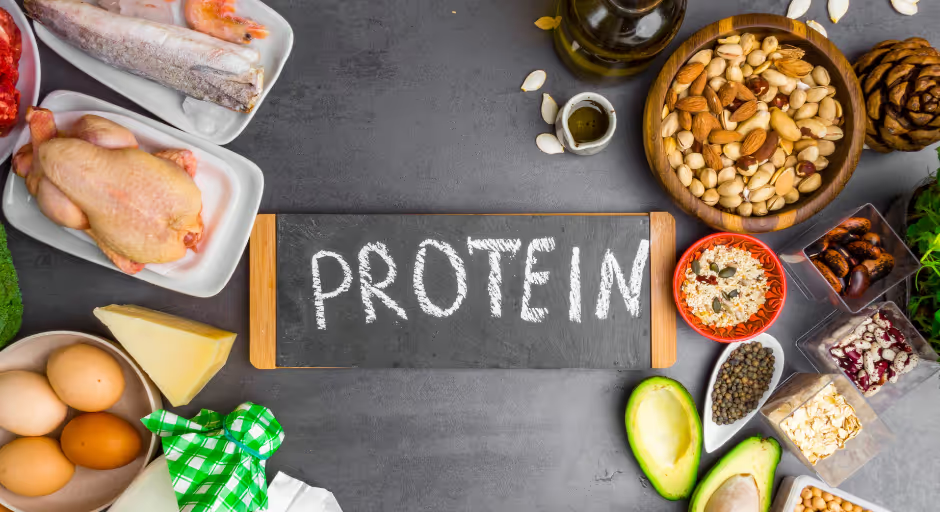


Let’s get real—weight loss isn’t easy, and GLP-1 meds add a whole new layer. Suddenly, protein is the star of the show… but why? If you’re navigating your journey with GLP-1, this one’s for you. We’re breaking down why protein matters more than ever, how to get enough without turning into a bodybuilder, and the best tips (and recipes!) to stay on track—without the stress.
If you have started semaglutide or tirzepatide and noticed your appetite is not what it used to be, you are not imagining it. These medications quiet hunger signals and slow digestion, which helps with weight loss but also makes it easier to eat too little protein without noticing. Here is a practical look at why protein deserves more attention during GLP-1 treatment, how much is a reasonable starting point, and how to get enough when eating feels like a project.
During active weight reduction, higher protein targets such as 1.2 to 1.6 grams per kilogram of body weight per day have been proposed, compared with the general adult reference point of 0.8 grams per kilogram. That range is a starting point to bring to your care team, not a universal prescription for every patient on semaglutide or tirzepatide. Below is what that range looks like in grams at different body weights.
Semaglutide and tirzepatide are powerful tools for weight loss, and they still operate within the basic rules of nutrition science. When a GLP-1 reduces how much you eat, protein earns a more deliberate place in the food you do eat.

The 1.2 to 1.6 grams per kilogram range comes from a 2025 joint clinical advisory on GLP-1 nutrition from the American College of Lifestyle Medicine, the American Society for Nutrition, the Obesity Medicine Association, and The Obesity Society, which flags muscle and bone loss as one of the main nutritional challenges of GLP-1 therapy. The advisory proposes this higher range as a target during active weight reduction, well above the general adult reference of 0.8 grams per kilogram per day. Translated into pounds, the proposed range is about 0.55 to 0.73 grams of protein per pound of body weight.
Here is what that looks like in practice:
These are starting points, not hard rules. Protein calculations during obesity treatment can be based on your current, target, ideal, or adjusted body weight, and a clinician or dietitian can help select the right basis for you. If you are managing kidney disease or another condition that affects protein needs, talk with your care team before increasing your intake on your own.
Semaglutide and tirzepatide slow digestion and quiet appetite, and for some people that can make a full, balanced meal feel like more than they want. Fewer calories overall is the point of the medication. When you are eating less, the protein inside that smaller intake starts to matter more.
Protein does three jobs that become more important, not less, while you are losing weight quickly:
Protects muscle tissue
During weight loss, some of the weight you lose can come from lean mass, which includes skeletal muscle along with other tissues. Getting enough protein is one practical way to support your muscles while you are in a calorie deficit, though it is not a guarantee against losing lean mass.
Supports satiety
Protein is generally satiating, so building a meal or snack around it can help a smaller amount of food feel more satisfying when your appetite is limited.
Skipping protein will not make your medication work better. It can make it harder to hold on to muscle while the number on the scale drops, which works against what most people want from treatment.
One 2026 pooled analysis reported that lean mass made up about 28 percent of the weight lost across the GLP-1 studies it examined. That figure is a pooled estimate within that study's scope, not a forecast of your own results, and lean mass includes more than skeletal muscle, so it should not be read as a universal muscle-loss percentage. Estimates vary by medication, population, and how lean mass is measured.
A 2026 study published in Cell Reports Medicine00082-0) looked more closely at that lean-mass change. Across the studies it examined, GLP-1 medicines were associated with a small decrease in absolute lean body mass, while relative muscle strength and function improved as body fat came down. The analysis also reported that changes in organ mass, including the liver, accounted for more of the lean-tissue change than skeletal muscle did. These findings come from that particular analysis and do not predict what any one medicine or patient will experience.
The takeaway is not that muscle loss on a GLP-1 is something to panic about. It is that adequate protein and resistance exercise are reasonable priorities during active weight loss, even though their exact preventive effects in GLP-1 patients are still being studied. A small study presented at ENDO 2025 found an association between lower protein intake and greater lean-mass decrease in a semaglutide group, but an association like this does not prove that any particular protein target prevents muscle loss.
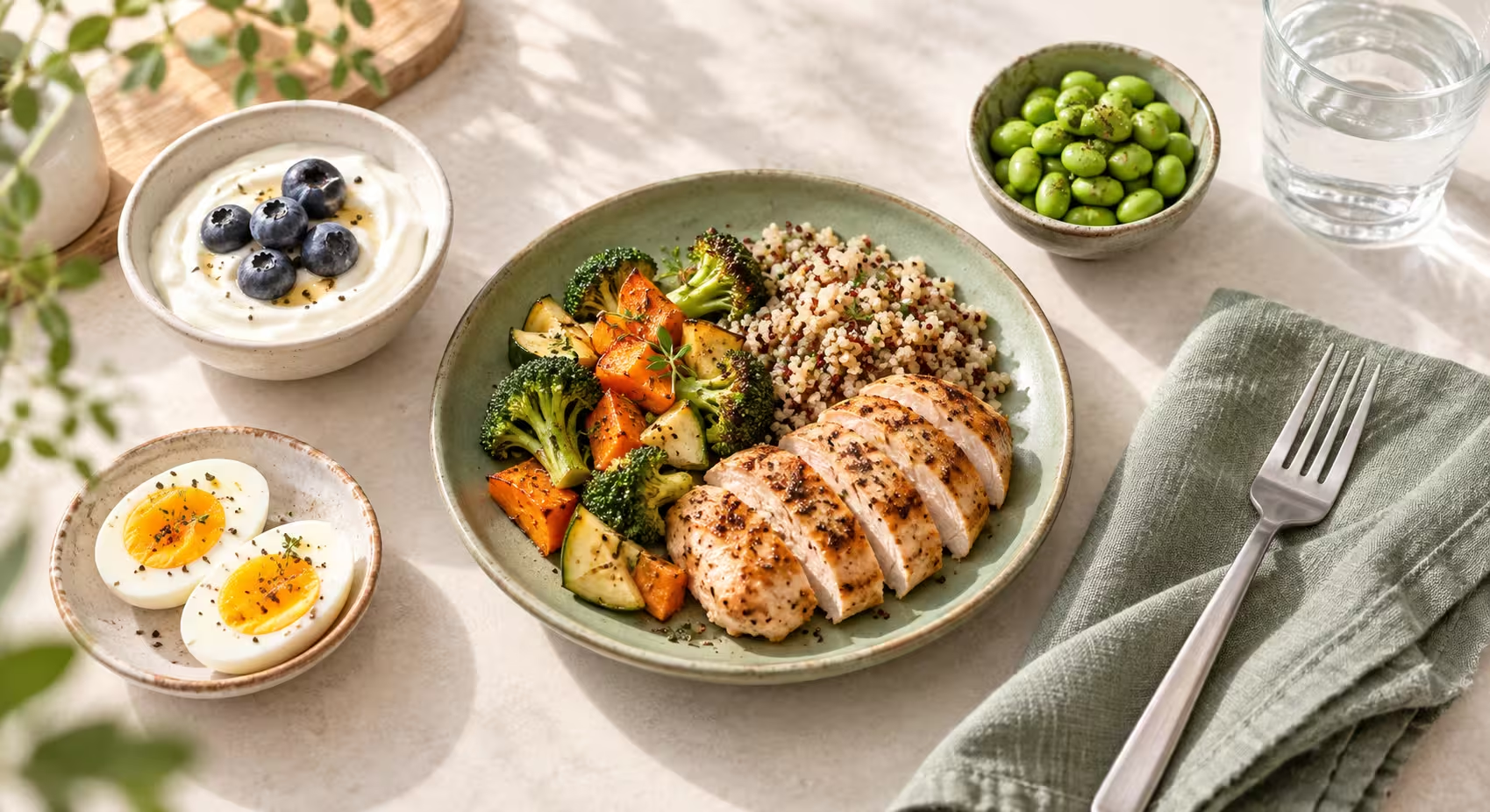
Appetite and tolerance vary from person to person on these medications, so the best protein source is often whatever you can comfortably eat that day. A practical rotation to try includes:

If you are shopping for a protein powder, look for a short ingredient list, at least 20 grams of protein per serving, and independent testing (such as NSF or Informed Choice certification) rather than marketing claims on the label. For the foods that tend to work against you instead of for you, see our guide to foods to avoid while on a GLP-1.
If persistent nausea, trouble eating enough over time, weakness, or similar symptoms are making it hard to meet your nutrition needs, contact your care team rather than trying to manage it alone. They can look at your specific situation and tailor guidance to you.
HealthiCare's programs include clinical and coach support, so patients are not left to figure out the details of eating well on a GLP-1 alone.
Patients who want help tracking can use the Healthi app, which supports daily food tracking, barcode scanning, voice recognition, recipes, meal planning, and in-app community support. Logging meals makes it easier to see whether you are reaching your protein target instead of guessing, and it can be especially useful on days when your appetite is low. For more ideas on those days, see our guide on how to eat more protein when your appetite is low on a GLP-1.
On the treatment side, HealthiCare offers Personalized Semaglutide and Personalized Tirzepatide programs with clinical and coach support, no membership fees, and cancel-anytime terms. The process starts with an intake questionnaire followed by a telehealth consultation, and when a clinician determines a prescription is appropriate, the medication is delivered by mail.
Semaglutide and tirzepatide can do a lot of the heavy lifting on weight loss, but they cannot decide what is on your plate. Getting enough protein, ideally with some resistance training alongside it, is one of the few things fully in your control, and it is a practical way to support your body while the weight comes off.
If you are ready to explore treatment, you can learn more about HealthiCare's Personalized Semaglutide and Personalized Tirzepatide programs, or read more about the team behind HealthiCare.
This content is for informational purposes and does not replace professional medical advice. Talk with your physician before changing your protein intake, especially if you have kidney disease or another condition affecting protein metabolism.
Weight loss on a GLP-1 can include some lean mass along with fat, and lean mass includes skeletal muscle among other tissues. Adequate protein and regular activity, especially resistance exercise, are reasonable priorities for supporting muscle during weight loss, which is one reason clinicians pay attention to both. Your own results will depend on many factors, so it is worth discussing your intake and activity plan with your care team.
A food-logging app that shows protein grams alongside calories is often easier than estimating by eye. The Healthi app, for example, supports daily food tracking with barcode scanning and voice recognition, which can make logging quicker when your appetite or energy is low.
There is no established semaglutide-specific protein target. The higher range you will often see discussed, 1.2 to 1.6 grams per kilogram per day, is proposed guidance for active weight loss in general, not a prescription tied to this medication. Because the right calculation can depend on which body weight is used and on your health history, ask a clinician or dietitian to help set your individual target.
Based on the current evidence, no. The research available does not establish a separate protein target for tirzepatide, so the same general active-weight-loss guidance applies as a starting point. Appetite suppression feels different from person to person on either medication, so if you notice you are eating much less, it is worth paying extra attention to protein and discussing your target with your care team. For a broader look at options, see our breakdown of personalized GLP-1s versus brand-name options.
It is possible, yes. Some lean-mass loss can occur during any significant weight loss, and neither protein nor exercise is proven to prevent it entirely on a GLP-1. Resistance training is still a recommended priority because it gives your muscles a reason to hold on to tissue during a calorie deficit, and adequate protein supports that effort. Even simple options like bodyweight movements or resistance bands are a reasonable place to start, and a clinician or trainer can help you scale from there.
Some people find that cold or room-temperature foods sit better than hot, heavy meals when nausea is an issue. Options that some patients tolerate include Greek yogurt, cottage cheese, protein shakes, and hard-boiled eggs. What works will vary, so start small and see how you feel. For more on managing this side effect specifically, see our guide to GLP-1 side effects and how to manage them.
Days like that happen for some people on semaglutide and tirzepatide. One practical option is to try small, frequent, protein-forward snacks instead of forcing a full meal, though what feels manageable will vary from person to person. Our guide on what to eat when you do not feel hungry covers specific ideas.
August 21, 2026












.avif)