Weight Loss

All Treatments
Resources


All Treatments
Weight Loss Treatments
Tirzepatide
Semaglutide
Wegovy Pill
Resources
Healthi App
Blog
Member Meetings
Recipes
Podcast
Patient Sign in


Headaches on a GLP-1 are usually tied to fluids, food, and caffeine changes. What the labels show, what tends to help, and when to get medical care.
Few things take the shine off a good week like a dull, nagging headache that settles in right as your new medication starts doing its job. You finally feel in control of your appetite, and now your head is throbbing by mid-afternoon. It's frustrating, and it's completely fair to wonder what's going on.
Here's the short answer: headaches can happen on a GLP-1, and they're usually tied to the everyday changes these medications bring, like drinking less, eating less, having less caffeine than usual, or losing fluids to stomach side effects. In the Wegovy weight-loss trials, 14% of adults on semaglutide 2.4 mg reported headache versus 10% on placebo, according to the FDA label, so it's a real but modest bump, and for many people it eases once fluids, food, and sleep get a little attention.
If you're with HealthiCare, your care team can help you figure out what's behind yours and what makes sense for your plan.

The best numbers we have come from the large trials behind the FDA-approved brand-name medications. In the Wegovy trials, headache was reported by 14% of adults on semaglutide 2.4 mg and 10% on placebo. Fatigue (11% vs 5%) and dizziness (8% vs 4%) showed a similar pattern (Wegovy prescribing information).
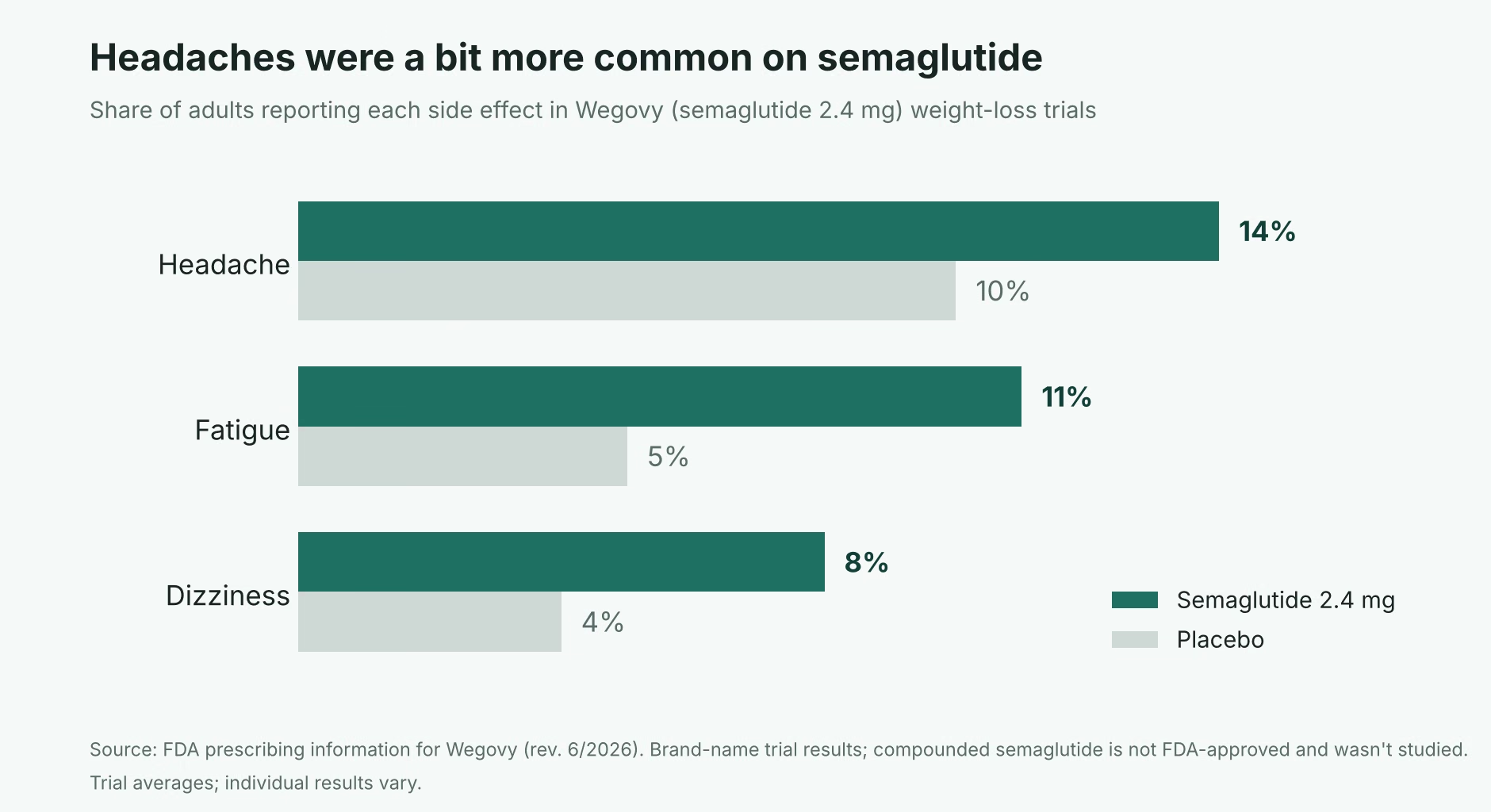
Notice that one in ten people on placebo reported headaches too. Headaches are just common in everyday life, so not every headache that shows up after you start a GLP-1 is caused by it.
For tirzepatide, the Zepbound label doesn't list headache among the side effects that showed up more often than placebo in its weight-loss trials, though dizziness (4% to 5% vs 2%) and fatigue (5% to 7% vs 3%) did (Zepbound prescribing information). That doesn't mean people on tirzepatide never get headaches. It means the difference from placebo wasn't big enough to make the list.
One important note: these numbers come from trials of brand-name medications. Personalized (compounded) semaglutide and tirzepatide are not FDA-approved and weren't studied in those trials, so the numbers are a helpful guide rather than a promise of what you'll experience.
Most of the likely culprits aren't mysterious at all. They're the ripple effects of a medication that changes how much you want to eat and drink.
You're drinking less without noticing. When you're not hungry, you're often not thirsty either, and a lot of everyday fluid used to come along with meals. Add nausea, vomiting, or diarrhea, which are common early side effects, and it's easy to slip behind. The labels specifically warn that stomach side effects can lead to dehydration (Wegovy prescribing information).
You're eating less, or eating later. Missing meals is a well-known headache trigger (MedlinePlus). On a GLP-1, it can happen almost by accident: you're simply not hungry until 2 p.m., and by then your head has already filed a complaint.
Your coffee habit quietly changed. Some people find their usual morning coffee doesn't sit as well, or they just forget it. If you're used to caffeine, cutting back suddenly can bring on withdrawal headaches that usually pass in a couple of days (MedlinePlus).
Low blood sugar, for some people. The labels note that these medications lower blood sugar and can cause hypoglycemia, a risk that matters most if you also take insulin or certain diabetes pills (Wegovy prescribing information). Headache can be one of the symptoms, along with shakiness, dizziness, and confusion (NIDDK). This one deserves a call to your provider rather than a wait-and-see.
Headaches on a GLP-1 often have a rhythm, and spotting it can be surprisingly useful. Some people notice them a day or so after their dose, when they feel queasiest and have barely sipped anything. Others get them in the late afternoon on days when breakfast was coffee and lunch was "a few bites of something." Some notice a pattern in the first week or two after a dose increase.
Think about a typical Saturday: you slept in, skipped your usual latte, ran errands, and realized at 3 p.m. that the only thing you'd had all day was half a granola bar and a few sips of water. That headache isn't random. It's your body sending a pretty reasonable memo.
If you can, jot down when a headache starts, what you'd eaten and had to drink, and how close it was to your dose day. Even a week of notes can make the pattern obvious, and it's exactly the kind of detail your care team will find helpful.

Because most of the causes are about fluids, food, and routine, most of the fixes are pretty gentle. A few ideas people often find useful:
If plain water gets boring (it does), our list of what to drink on a GLP-1 besides water works any time of year. And if your coffee routine has gotten complicated, our sister blog breaks down what the research says about coffee.
As for pain relievers, ask your provider or pharmacist which over-the-counter option fits you, especially if you have other health conditions or take other medications. And please don't skip, delay, or change your GLP-1 dose on your own to make a headache go away. If headaches are getting in the way of your life, that's a conversation for your prescriber, who can look at the whole picture.
Most GLP-1 headaches are a nuisance, not an emergency. But some headaches need attention right away, whether or not you're on a medication. Get medical help right away for:
If you've been sick with a stomach bug on top of your medication, our guide to being sick on a GLP-1 walks through fluids and when to call your prescriber. For a broader look at what's common and what isn't, see GLP-1 side effects: what's common, what's concerning, and what to do next.

A headache can make you second-guess everything, including a treatment that's otherwise going well. Try to give it a little grace. For a lot of people, these headaches are a sign their routine needs a small adjustment, not that something is wrong with them or their plan. A few more sips, a real lunch, and an earlier bedtime can go a long way.
If you'd like support sorting it out, HealthiCare's care team can talk through your symptoms and your plan with you. And if you're curious whether a GLP-1 program could be a fit, you can start an online visit whenever you're ready. In the meantime, go refill that glass.
This article is for general information and isn't a substitute for medical advice. Compounded (personalized) semaglutide and tirzepatide are not FDA-approved. Never start, stop, or change a medication dose without talking to your prescriber, and seek medical care right away for the warning signs above.
It can. In the Wegovy weight-loss trials, 14% of adults on semaglutide 2.4 mg reported headache compared with 10% on placebo. For many people, headaches are linked to drinking less, eating less, or stomach side effects, and they often ease as routines settle.
Headache isn't listed among the side effects that showed up more often than placebo in the Zepbound weight-loss trials, though dizziness and fatigue were. Headaches can still happen on tirzepatide, often for the same everyday reasons, like dehydration or skipped meals.
There's no set timeline. Many people find headaches show up early on or around dose increases and fade as they find a steady rhythm with fluids, food, and sleep. If they keep coming back or get worse, talk with your prescriber.
Steady sips of fluids, a small meal or snack with some protein, keeping caffeine consistent, and good sleep help a lot of people. Ask your provider or pharmacist which over-the-counter pain reliever fits you, and don't change your GLP-1 dose on your own.
Get medical help right away for a sudden, severe headache, a headache after a head injury, or a headache with a stiff neck, fever, confusion, fainting, or eye or ear pain. Also get care for signs of serious dehydration or low blood sugar, like very little urine, shakiness, or confusion.
November 5, 2026