
Weight Loss

All Treatments
Resources


All Treatments
Weight Loss Treatments
Tirzepatide
Semaglutide
Wegovy Pill
Resources
Healthi App
Blog
Member Meetings
Recipes
Podcast
Patient Sign in



GLP-1s + Traditional Dieting = a personalized, powerful approach to weight loss—guided every step of the way with Healthi.
A GLP-1 diet plan isn't a separate diet you follow on top of your medication. It's a way of eating that works with what semaglutide and tirzepatide are already doing in your body.
Because appetite is lower, meals need to work harder per bite. A GLP-1 diet plan typically prioritizes:
None of this replaces the medication's job. It supports it. Think of semaglutide or tirzepatide as the tool that turns down the volume on hunger and food noise - the diet plan is what you do with that quieter moment. If appetite drops so low that eating enough becomes its own challenge, our guide on what to eat when you don't feel hungry walks through practical fixes, and knowing which foods to avoid on GLP-1 can prevent a lot of unnecessary nausea.
Traditional dieting and a GLP-1 diet plan aim at the same goal but rely on different mechanisms to get there:
| Factor | Traditional Dieting Alone | Personalized GLP-1 Diet Plan |
|---|---|---|
| Primary driver | Willpower and calorie tracking | Reduced appetite plus structured nutrition |
| Hunger management | Relies on discipline through cravings | Medication lowers hunger signals directly |
| Muscle preservation | Depends entirely on protein intake and training | Same requirement, higher stakes due to lower food volume |
| Typical result without support | Plateaus, rebound weight gain | Steady progress when paired with adequate protein |
Neither approach on its own tells the full story. The medication addresses appetite. The diet plan addresses what your body is actually built from while that appetite is lower.
With less food coming in, junk calories cost you more than they used to. So I keep it almost boringly simple. Protein and fiber first, a little healthy fat, and more water than you think you need. The table below is what I hand people at the first visit.
| Priority | Reach for | Why it matters on a GLP-1 |
|---|---|---|
| Protein, every meal | Chicken, fish, eggs, Greek yogurt, cottage cheese, tofu, lentils | Protects muscle while the scale drops. Aim for 25 to 30 grams per meal. |
| Fiber | Berries, apples with the skin, beans, oats, broccoli | Eases the constipation that comes with slower digestion, and keeps you full on less. |
| Healthy fats, small amounts | Olive oil, a handful of nuts, a quarter of an avocado | Helps you absorb vitamins A, D, E, and K. Big fatty meals can worsen nausea. |
| Water and electrolytes | Eight cups a day, sipped between meals | Nausea and diarrhea in the early weeks dehydrate you fast. |
Some foods make the side effects worse, and you will figure out yours fast. Fried, greasy plates sit heavy and stir up nausea. Sugar and white carbs spike your blood sugar, then drop it, and the hunger comes roaring back. Spicy food, for some people, means heartburn.
Honestly, no single food is ever fully off the table. Not one. You are learning what your own body tolerates and adjusting as you go. Need quick meal ideas that hit your protein target without a lot of cooking or cleanup? Our GLP-1 recipe library was built for exactly that.
Knowing which foods to prioritize gets you partway there; the rest is deciding what actually goes on the plate. A simple way to assemble a meal is to think in four roles:
Treat this as a flexible framework rather than a fixed formula. There is no single portion ratio that works for everyone taking a GLP-1 medication. Portion size and food tolerance vary from person to person, and both can change over the course of treatment, so a plate that feels right one week may need to be smaller or simpler the next.
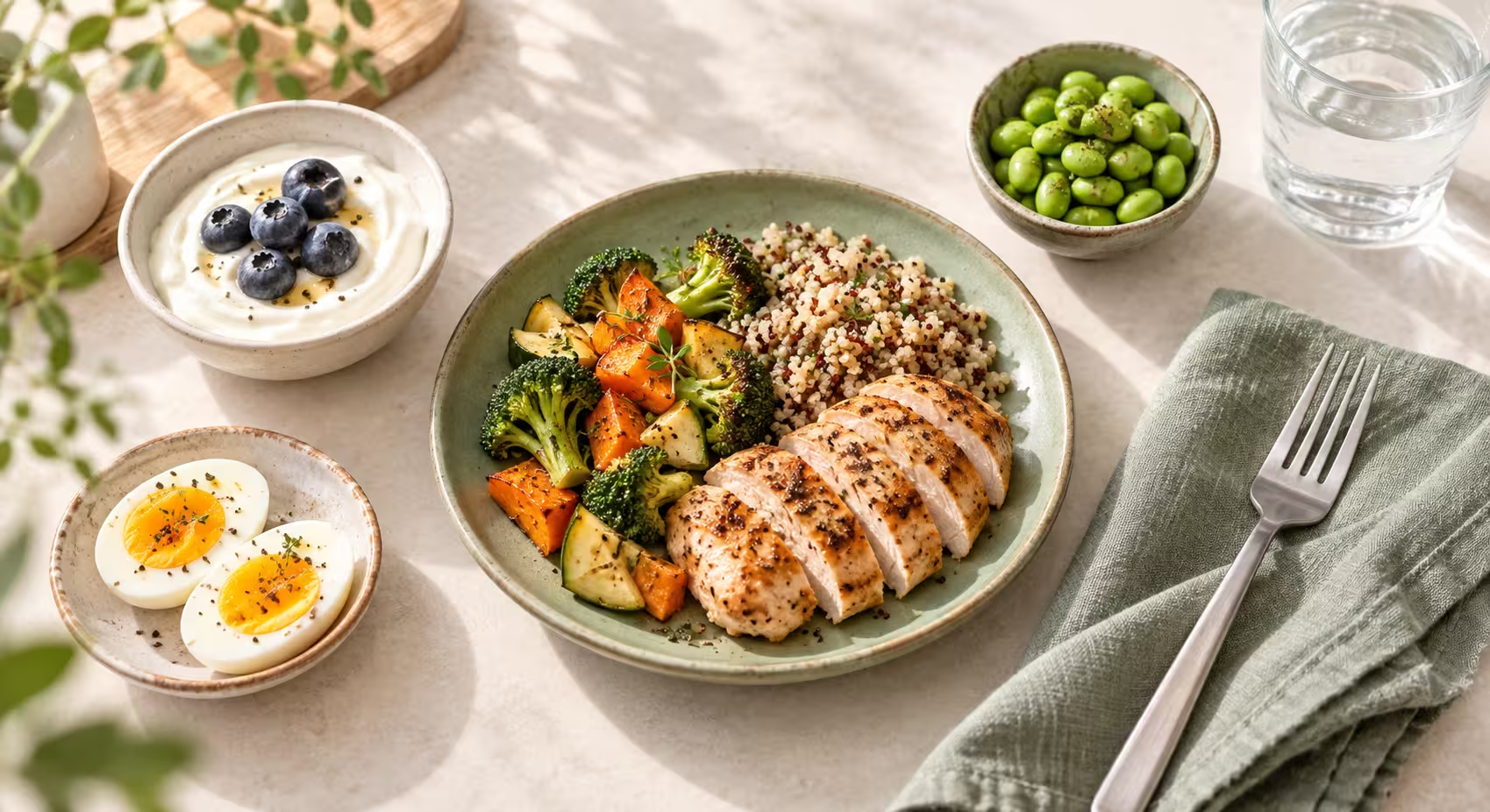
In practice, the four roles might come together as salmon with roasted vegetables and sweet potato, or a chicken-and-quinoa vegetable bowl. On days when appetite is low and a full plate feels like too much, Greek yogurt with berries and seeds can serve as a smaller, simpler meal or snack.
However the plate looks, eating slowly, pausing partway through the meal, and stopping before fullness becomes uncomfortable can help you find the amount that works for you right now. Smaller meals spaced through the day are often easier to tolerate than a few large ones, and fluids still matter when food intake drops. If digestive symptoms persist no matter how you adjust, bring that to your doctor so your eating pattern can be tailored to your tolerance and response.
For a look at how meals like these can fit together from morning to night, see what a normal day of eating on GLP-1 actually looks like. Then start with your next tolerable meal and adjust from there.
When you eat less, your body pulls energy from wherever it can find it - and if you aren't eating enough protein, some of that will come from muscle instead of fat.
Recent research on people using GLP-1 medications found that most patients fell short of the protein intake needed to protect lean mass during active weight loss (source). We've written before about why protein becomes a priority with GLP-1, and the short version is this: a commonly cited target in clinical nutrition guidance for GLP-1 patients is roughly 0.7 to 1 gram of protein per pound of goal body weight per day, spread across meals rather than concentrated in one sitting. For someone with a goal weight of 150 pounds, that works out to about 105-150 grams of protein a day. If your appetite is too low to comfortably hit that number, our guide on eating more protein when your appetite is low covers practical workarounds.
Treat that as a starting point to bring into your first conversation with your HealthiCare provider, who can help set a specific target based on your labs, activity level, and goals.
Protein alone isn't the whole answer either. Resistance training two to three times a week gives your muscles a reason to stay, even while overall calorie intake drops (source). You don't need a gym membership or a complicated program - bodyweight squats, resistance bands, and carrying groceries all count as long as you're doing them consistently.
Three habits, paired with your medication, cover most of what a GLP-1 diet plan needs to do:
These three habits work as a set. Skipping the protein or the movement doesn't cancel out the medication, but it does change what kind of weight comes off.
Walk into any pharmacy and you will see gummies and powders promising to raise your GLP-1 the natural way. They cost less and need no prescription, so I understand the appeal. But save your money.
Geisinger obesity physician Christopher Still puts it plainly. The pills hold ingredients like berberine, probiotics, and fiber, but none of them contain the hormone your body makes. They barely move your own GLP-1. There is little proof they drive real weight loss, and berberine (the most studied of the bunch) is still early science. The FDA has warned that over-the-counter GLP-1 pills and drops are not approved medications and can carry real risks.
A few supplements do earn a place, for a different reason. Eat this little, and some nutrients simply run low. A 2025 review in Obesity Pillars names the ones to watch, from vitamin B12 and iron to vitamin D and the fat-soluble vitamins. Add fiber if your food keeps falling short. Our personalized medications come paired with B12 for exactly that reason.
One caution, though. Do not start any supplement on your own. Too much iron or potassium can cause serious problems, so get your levels checked first, then add only what your prescriber recommends.
Semaglutide and tirzepatide commonly cause nausea, changes in digestion, and an appetite so low that eating enough protein takes work. Most of it eases as your body settles in. Give it time.
If you are three days into a dose increase and cannot look at chicken, you are not failing at this. The drug is doing its job. Reach for a protein shake instead of skipping the meal entirely, even a small one.
Here the real risk flips. For years, dieting failed you because you restricted too hard and could not keep it up. Now your appetite is already gone, so the trap is eating too little and losing the muscle you need. A few hundred calories of protein beat a day of barely eating.
A real care team pays off right here. Your prescriber watches your dose, checks in on side effects, and adjusts as your needs shift. No unsupervised online source can do that.
HealthiCare's model is built around the idea that medication and nutrition support work better together than either does alone:
A personalized tirzepatide treatment plan through HealthiCare pairs your prescription with the coaching and food-tracking tools that make the diet side of this equation realistic to follow day to day.
A GLP-1 diet plan earns real weight when it gets treated like an actual plan from day one, built alongside the medication instead of bolted on after the fact. Combining semaglutide or tirzepatide with adequate protein and regular movement gives your body what it needs to lose fat while holding onto the muscle that keeps your metabolism working for you long after treatment ends.
HealthiCare's board-certified physicians, transparent pricing, and the Healthi app's coaching and tracking tools are built to support both halves of that plan at once. If you're ready to see what a personalized GLP-1 diet plan looks like for your goals, start with a consultation to get a plan built around your labs, your goals, and your life.
Yes, traditional dieting can produce weight loss on its own. For many people it's harder to sustain because it relies entirely on managing hunger through willpower. GLP-1 medication doesn't replace the need for a diet plan - it makes the diet plan easier to stick to.
This depends on your health history and how much support you've already tried. A conversation with a board-certified physician, like the ones in HealthiCare's Beluga Health network, is the fastest way to get a straight answer for your specific situation rather than a generic one.
Not necessarily. Exercise and a solid diet plan can produce meaningful results on their own. GLP-1 medication tends to help most when appetite, cravings, or food noise are the main obstacles standing between your effort and your results.
A commonly cited range in clinical nutrition guidance is roughly 0.7 to 1 gram of protein per pound of goal body weight per day, spread across meals. Your HealthiCare provider can help set a specific target based on your labs and activity level.
No. Medication and nutrition solve different problems - stopping the diet side removes the muscle protection and nutrient intake your body needs while appetite is suppressed. The two are meant to run together for the full length of treatment.
September 23, 2026















.avif)